


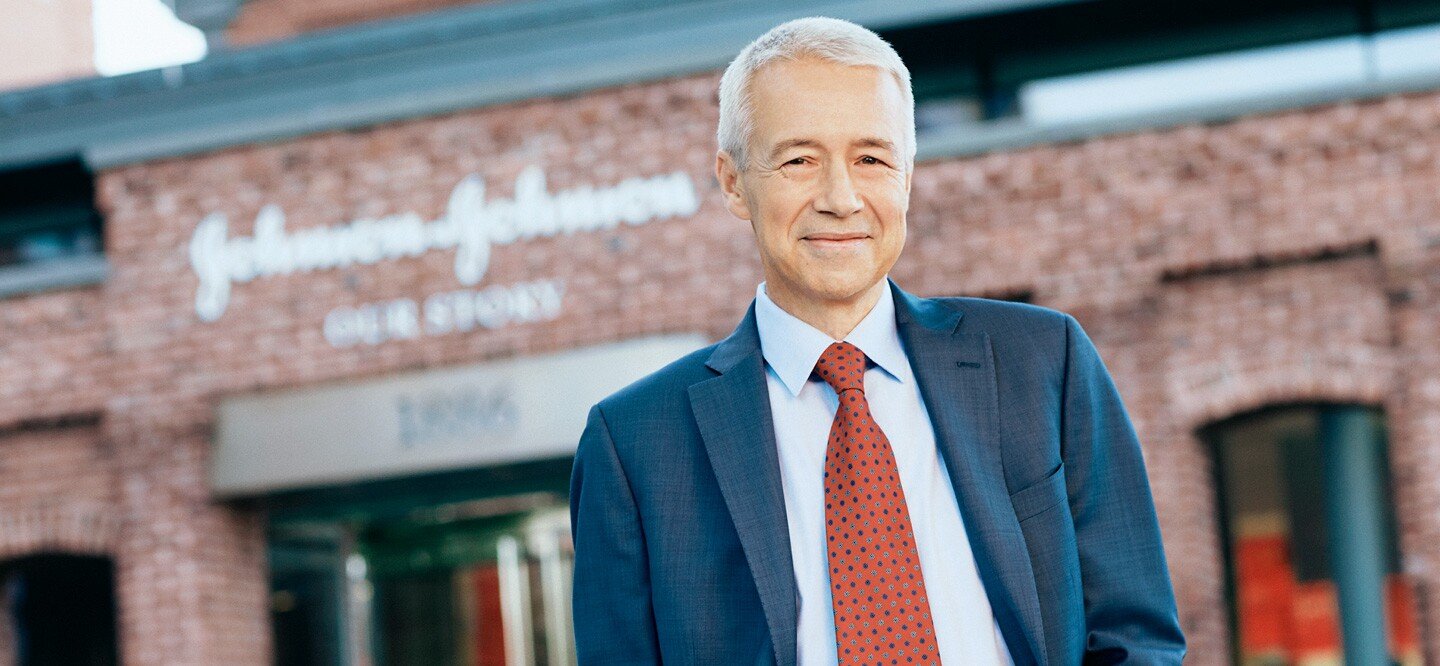
As many drug companies tally their CEO compensation for 2025, another major drug executive has amassed more than the $30 million threshold.
Johnson & Johnson CEO Joaquin Duato will earn approximately $32.8 million in salary in 2025, significantly more than the $24.3 million he earned in 2024. Duato took the helm as J&J’s CEO in early 2022.
By the numbers, Duato received a $1.6 million salary, the same salary he earned in 2024, and nearly $21 million in stock and option awards. Non-equity incentive compensation for the period was approximately $4.3 million.
Duato collected about $600,000 in the “other compensation” category. For some companies, this group includes travel, security, and other expenses, but J&J notes in its payroll report that these expenses are recorded separately and not factored into executive compensation.
Meanwhile, changes to the calculation of Mr. Duato’s pension value and deferred compensation income will result in the division’s CEO salary reaching $5.3 million in 2025.
Justifying Mr. Duato’s compensation, which was about 30% above his 2024 compensation, J&J’s board argued that the company exceeded its 2025 strategic and financial goals, triggering an annual performance bonus for the CEO at 118.3% of target and long-term incentives at 145% of target.
The board also credited Duato with helping J&J overcome a significant loss of exclusivity for its autoimmune drug Stelara, and praised the CEO’s business development strategy and stewardship of the company’s 2025 pipeline.
Mr. Duat has high hopes for his company’s future, with J&J telegraphing earlier this year that it projected sales of $100 billion to $101 billion in 2026 and the potential for double-digit revenue growth by the end of the decade.
Those lofty ambitions follow what Mr. Duato described as a “breakthrough year” for the company in 2025 during a recent earnings call, during which J&J expects 12-month sales to rise 6% to $94.2 billion.
Stelara currently faces competition from biosimilars, and J&J’s main cash cow these days is its multiple myeloma drug Darzalex, with sales of approximately $14.4 billion (PDF) in 2025, a significant 23% increase compared to 2024.
Meanwhile, other J&J drugs such as Tremfya, Spravato, and CAR-T Carvykti continue to grow their sales past the $1 billion threshold.
“We are different from other companies,” Duato told analysts on an earnings call in January. “We are not focused on one or two growth drivers.”
Mr. Duato’s pay puts him in competition with other Big Pharma leaders who have lowered their 2025 compensation to more than $30 million.
AbbVie’s Robert Michael, who was appointed in 2024, received a huge pay raise of $32.5 million, a 75% increase, based on his performance last year, quickly moving him up to the top of the CEO compensation ladder.
And although top executives at European drug companies are typically paid less than their U.S. peers, Switzerland’s Novartis announced earlier this year that it would give executive director Vasu Narasimhan 24.9 million Swiss francs, or about $32.4 million in realized fees. Mr. Narasimhan benefited from long-term incentives associated with a three-year cycle.
For now, and unsurprisingly, Eli Lilly CEO David Ricks is at the top of the 2025 salary list with an income of $36.7 million.
The award is due to the strong performance of Lilly’s GIP/GLP-1 treatments Mounjaro and Zepbound for diabetes and obesity, and Lilly noted in its salary breakdown that the company has experienced approximately 207% revenue growth since Rix’s tenure began in 2017.
