


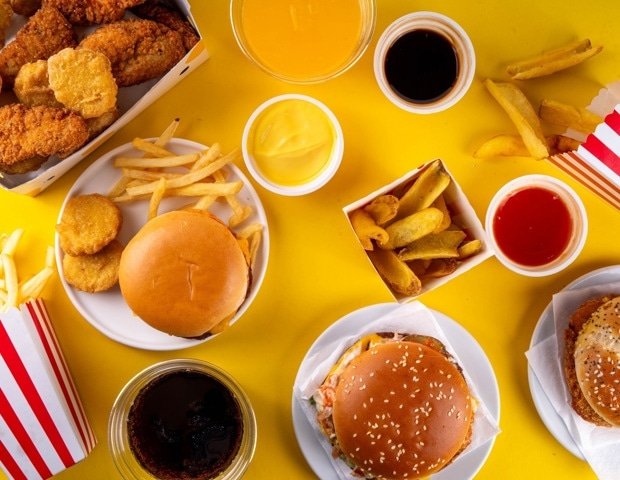
From flavored yogurt to frozen pizza, breakfast cereals and instant oats, ultra-processed foods are convenient and often inexpensive products designed for snacking. In recent years, overconsumption of these foods has also been linked to health risks such as diabetes, cardiovascular disease, and some types of cancer.
Eating more ultra-processed foods may also be harmful to your bones, according to new research from Tulane University.
This research British Journal of Nutritionfound that people who ate more ultra-processed foods (UPF) had lower bone density and higher risk of hip fractures.
The study, which involved more than 160,000 participants from the UK Biobank database, found that people consumed an average of about eight servings of ultra-processed food per day. For every 3.7 extra servings eaten per day, the risk of hip fracture increased by 10.5%. The amount of the meal will vary depending on the type of food, but it could be a frozen dinner appetizer, a cookie, or a soda.
Our study cohort was followed for more than 12 years and we found that high intake of ultra-processed foods was associated with decreased bone density in several regions, including critical areas of the upper femur and lumbar region. Recent studies have shown that eating ultra-processed foods can affect bone health, but this is the first time this relationship has been directly investigated in humans. ”
Lu Qi, Co-corresponding author, HCA Regents Distinguished Chair, and Professor, Celia Scott Weatherhead School of Public Health and Tropical Medicine, Tulane University
Ultra-processed foods are industrial products made with large amounts of salt, sweeteners, and unhealthy fats. These tend to be energy-dense and contain little or no whole foods, which are foods that are close to their original state without additives. Ultra-processed foods are more commonly consumed in lower- and middle-class households and will account for about 55% of the total calories consumed by youth and adults as of 2023, according to the Centers for Disease Control and Prevention.
“Ultra-processed foods can be easily found anywhere you go to the grocery store. These findings further raise concerns about how they affect our bone health,” Qi said.
The study found that the negative effects of ultra-processed foods on bone density were most pronounced in people under age 65 and underweight (BMI less than 18.5).
Low BMI is a risk factor for bone health and can exacerbate the effects of ultra-processed foods on bone density. The link may be stronger in people under 65 because their digestive systems are stronger and they absorb more of the unhealthy ingredients found in ultra-processed foods, Chee said.
This study builds on previous research that investigated the association between ultra-processed food intake and bone health. A 2024 study found that high intake of these foods is associated with an increased risk of osteoporosis. Another 2016 study of pregnant women and their children found that living near fast food restaurants was associated with lower bone mineral content in infants.
“Our results are not surprising,” Chee said. “Ultra-processed foods are consistently associated with a variety of nutrition-related diseases, and bone health depends on proper nutrition.”
sauce:
Reference magazines:
Sigh. , others. (2026) Association between ultra-processed food intake and bone density and fractures in the UK Biobank. British Journal of Nutrition. DOI: 10.1017/S0007114526106710. https://www.cambridge.org/core/journals/british-journal-of-nutrition/article/associations-of-ultraprocessed-food-intake-with-bone-mineral-density-and-fractures-in-the-uk-biobank/7CA7969F214AF653D5DDD3F5D35C2795
