


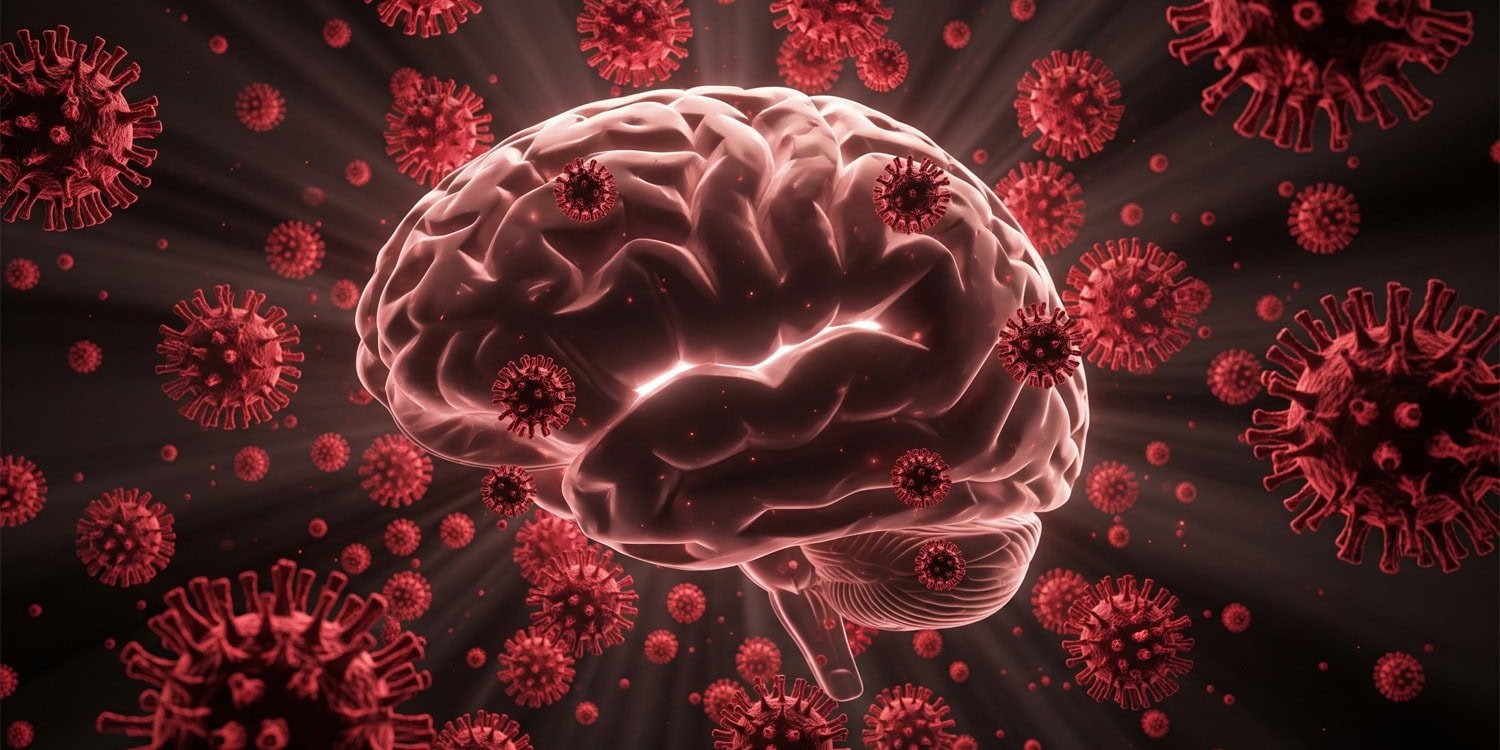
Viral infections often leave a lasting imprint on a person’s memory and thinking abilities by changing the balance of the immune system. A comprehensive review of recent medical data reveals that certain inflammatory immune responses slow mental processing and impair memory in a variety of viral diseases. These findings were published in the journal Neuroscience and Biobehavioral Reviews.
When a virus enters the body, the immune system activates a defense mechanism that includes a series of cells and chemical messengers. Some of these messengers are known as pro-inflammatory cytokines. These are small proteins that sound an alert and promote inflammation to clear the infection.
Once the threat passes, the body typically releases anti-inflammatory signals to calm the response and restore normal operation. In some cases, this protective response is not turned off properly, leading to prolonged systemic inflammation.
Medical professionals routinely observe this phenomenon in people who have recovered from viruses like the one that causes coronavirus disease (COVID-19). Patients often report persistent brain fog, including difficulty concentrating, poor thinking, and memory loss. Similar cognitive problems frequently appear in people with human immunodeficiency virus, herpes, and hepatitis.
Different areas of the brain manage different cognitive tasks. The outer layer of the brain, known as the cortex, handles complex thought processes and memory storage. Other areas deep in the brain, such as the basal ganglia, help regulate motor learning and emotional responses.
Historically, the study of how immune activity affects the brain has been rooted in a field called psychoneuroimmunology. Early studies established that activation of peripheral immunity causes behavioral changes such as social withdrawal and fatigue. Researchers refer to this physiological response as sickness behavior.
This acute response serves as an initial model to predict the chronic cognitive impairment observed during long-term viral infections. Previously, researchers investigated these cognitive problems by studying one specific disease at a time. They also tended to use broader cognitive tests that assess overall brain function rather than specific mental skills.
This piecemeal approach made it difficult to see whether different viruses triggered the same underlying immune response in the brain. The emergence of the coronavirus disease (COVID-19) pandemic has renewed global interest in how exposure to the virus can broadly impact certain mental domains. “Our goal was to go beyond the fragmented perspectives that prevail in this field and take an interdisciplinary approach,” explains Julie Perron, Associate Professor at the University of Geneva.
To address this gap, a team of researchers sought to uncover common biological patterns linking immune activity and brain function. Anthony Nouber Champier, a doctoral student at the University of Geneva and Geneva University Hospital in Switzerland, led the research effort.
Nuber-Champier and his colleagues wanted to look beyond the boundaries of individual diseases. They aimed to identify precise immune markers that correspond to specific cognitive changes, regardless of the underlying viral infection.
To conduct the study, the research team conducted a systematic review of existing medical literature. They initially collected 931 scientific papers that investigated the link between the immune system and cognitive function. They filtered this collection to 32 highly specific studies that met strict inclusion criteria.
This final data pool included more than 25,000 adult patients. The researchers excluded studies that included patients with comorbidities such as cancer or mental illness. This step confirmed that the observed cognitive changes were directly related to the viral infection and subsequent immune response.
The included studies covered a wide range of viral infections, including coronavirus disease (COVID-19), human immunodeficiency virus, herpes, and viral infections that cause hepatitis. The research team extracted data on each patient’s immune markers. Immune markers are measurable indicators of immune system activity found in the blood.
They also recorded the results of targeted neuropsychological tests. These tests measured specific mental abilities such as episodic memory, which is the ability to recall specific events from the past. We also tracked processing speed, which measures how quickly a person understands and reacts to information.
By examining these various diseases together, researchers have identified distinct biological signs associated with cognitive decline. They found a strong link between persistent inflammation and apparent memory and concentration problems. A specific type of white blood cell known as activated monocytes was associated with negative outcomes.
High levels of these circulating monocytes slow processing speed and reduce mental flexibility. The research team found similar results when looking at specific chemical messengers. Proinflammatory cytokines such as interleukin-6 and tumor necrosis factor were correlated with worsening episodic memory.
High levels of these proteins were also associated with a general decline in mental processing. Nuber-Champier and his team observed that these inflammatory markers had a significant impact on patient performance on targeted neurological tests.
Elevated antibody production was also a signal of potential cognitive impairment in the data reviewed. Researchers have found that high levels of immunoglobulin G, a type of common antibody, negatively impact memory and attention span. A reduction in certain defense cells known as T cells and B cells combined to predict a similar lack of alertness.
These patterns reflect common biological changes in the brains of very old people who face cognitive decline. However, not all immune activity is associated with mental decline. Researchers have found that certain regulatory immune markers appear to protect cognitive abilities.
Increased levels of CD4 T cells, white blood cells that help regulate immune responses, were associated with increased mental processing speed. A specific anti-inflammatory messenger called interleukin-10 consistently supported strong memory and executive function. Executive function refers to the mental skills needed to plan, focus attention, and multitask.
These protective markers highlight the importance of harmony within the body’s defense system. A finely tuned balance between pro- and anti-inflammatory signaling appears to be essential for optimal cognitive health. “However, the immune response differs from person to person. What is critical seems to be the balance between these different inflammatory signals in maintaining long-term cognitive stability,” the researchers note.
Although this review provides a broad perspective on brain-immune interactions, the researchers noted several limitations in the available data. Most of the studies analyzed relied on immune markers taken from peripheral blood samples rather than from cerebrospinal fluid. Cerebrospinal fluid fills the brain and spinal cord and is a more direct indicator of the health of the central nervous system.
It is not entirely clear whether blood markers fully reflect the inflammatory activity occurring deep in the brain. The data pool also included variations in different study design methods. Some of the original studies lacked detailed demographic information, such as participants’ educational background.
Educational level can influence cognitive reserve, the brain’s ability to improvise and find alternative ways to accomplish tasks. High cognitive reserve can mask early signs of mental decline. Furthermore, the majority of available data has come from studies specifically focused on human immunodeficiency virus.
This heavy reliance on one disease may affect the general applicability of some study results. The researchers also noted that many older studies used basic screening tools that only superficially indicated cognitive health. These simple tests lack the sensitivity needed to pick up subtle changes in specific mental areas.
The research team emphasizes the need for more accurate and uniform cognitive tests in the future. Future research should combine detailed psychological assessments with advanced brain imaging techniques. This approach will help scientists understand exactly how systemic inflammation changes specific neural circuits in the brain.
They also suggest investigating how social factors, genetics, and the environment influence the immune system’s influence on thinking and memory. Understanding these biological pathways may ultimately lead to new treatments. Doctors may one day use immune profiles to identify patients at high risk for accelerated brain aging and dementia. By targeting specific immune imbalances early, healthcare providers may be able to preserve cognitive abilities in patients recovering from viral infections.
The study, “Immune-cognitive relationships across viral infections: A transnasal systematic review,” was authored by Anthony Nuber-Champier, Gautier Bréville, Patrice H. Lalive, Frédéric Assal, and Julie A. Péron.
