


Most people think of Alzheimer’s disease as a disease of aging. But in reality, the changes that characterize the brain begin much earlier, around the third decade of life.
In the early stages of these changes, protein tangles called tau begin to accumulate in a small region deep in the brain called the locus coeruleus, which is involved in sleep, attention, and wakefulness. Tau later spreads to other parts of the brain.
The occurrence of tau tangles does not mean that a person has Alzheimer’s disease. In fact, Alzheimer’s disease affects nearly everyone to varying degrees. But because these changes begin in the locus coeruleus, some brain researchers, including myself, believe this region is the canary in the coal mine for developing Alzheimer’s disease.
We are studying whether stopping or slowing tau tangles in this brain region, or otherwise maintaining brain health, may be a way to halt the eventual development of the disease and prevent other aspects of cognitive aging.
Emerging research from my lab and others is investigating the idea that a treatment called vagus nerve stimulation, already widely used for other health conditions, may be one way to keep the locus coeruleus functioning properly.
Locus coeruleus and Alzheimer’s disease
The locus coeruleus is located in the brainstem, the lowest part of the brain. The name “blue spot” comes from the pigment called neuromelanin that its cells produce.
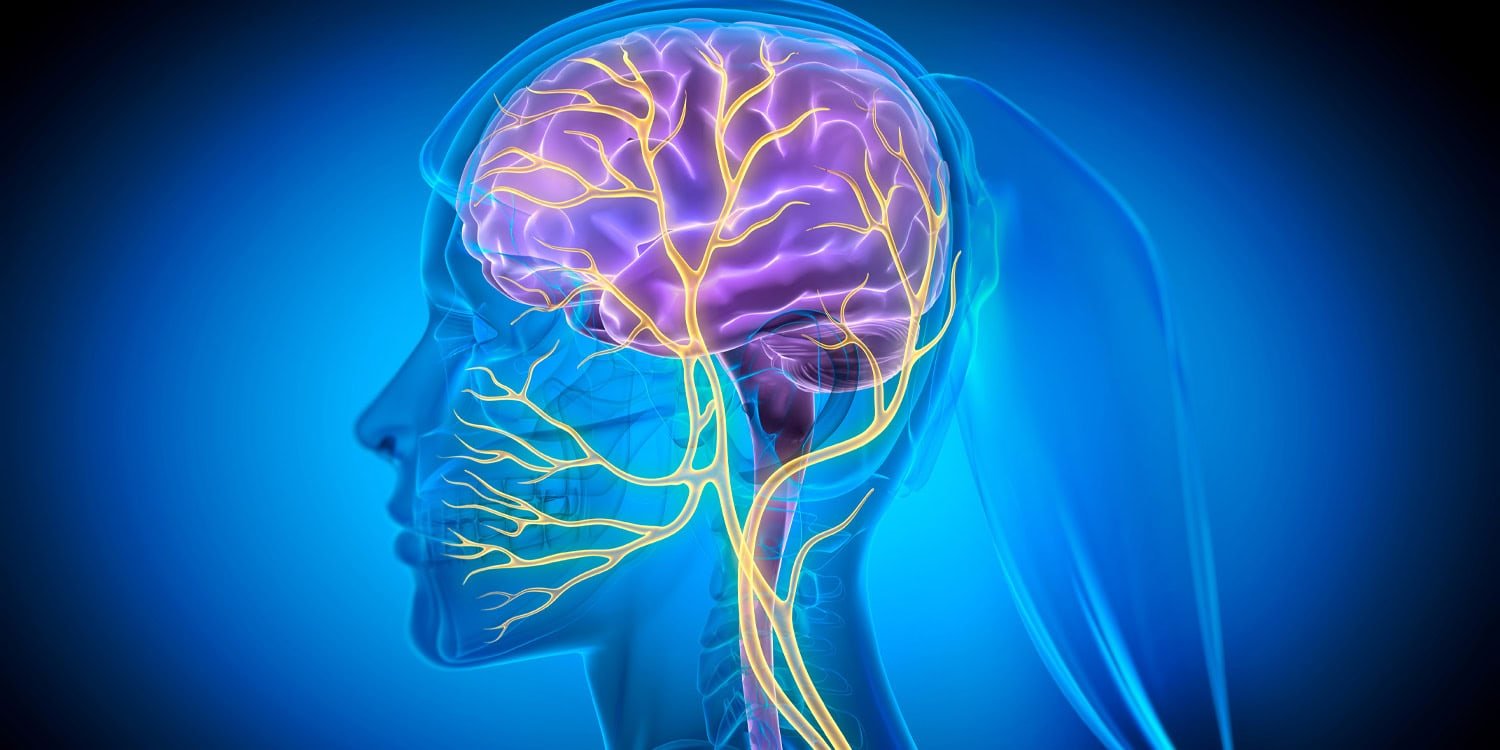
The locus coeruleus plays an important role in many aspects of basic human function. It produces nearly all of the brain’s norepinephrine, a chemical important for sleep, alertness, concentration, learning, and even immune function. It receives input from nerves originating throughout the brain and body, including the vagus nerve, which communicates information to and from the heart, lungs, and other organs.
My research investigates the structure of this brain region, how neurons transmit messages within it, and how it connects to other brain regions. We also investigate how these characteristics change throughout the lifespan and influence thinking and memory.
Research suggests that after middle age, neurons in the locus coeruleus can become damaged by tau accumulation, and that damage may be correlated with memory decline. Tau accumulation, cell death, and loss of function in the locus coeruleus precede and predict Alzheimer’s disease diagnosis and symptoms.
This has led researchers to hypothesize that keeping the locus coeruleus healthy may be a way to protect other parts of the brain as well.
Vagus nerve stimulation and brain health
The vagus nerve transmits information between the brain and organs in the chest and abdomen, such as the heart and intestines, and helps the brain monitor and control many of the body’s vital organs. It sends messages of rest and digestion throughout the brain and body, stimulating digestion and promoting cell repair.
In the 1980s and 1990s, researchers discovered that stimulating the vagus nerve could help relieve epilepsy. It turns out that doing so often has other benefits, too, like improving your mood and thinking.
Vagus nerve stimulation is now approved by the Food and Drug Administration not only to treat epilepsy, but also to treat migraines, depression, and even as an aid in stroke rehabilitation.
Vagus nerve stimulation for epilepsy and depression generally involves implanting an electrical stimulator on the left side of the patient’s chest, where the vagus nerve passes. A non-invasive device to treat headaches sends gentle electrical pulses to specific areas of the neck and ears where the vagus nerve is very close to the surface of the skin.
Even before the discovery of the link between the locus coeruleus and Alzheimer’s disease, researchers had hypothesized that stimulation of the vagus nerve might help Alzheimer’s patients with their mood and thinking. That’s because vagus nerve stimulation may work in part by increasing norepinephrine levels in the brain, and Alzheimer’s patients have too little norepinephrine in their brains.
keep pace
Neuroscientists still don’t know exactly how or why vagus nerve stimulation is beneficial to the brain, but one leading theory is that it modulates the activity of neurons in the locus coeruleus, allowing them to function normally.
Too much activity in the locus coeruleus can cause people to become overly alert, stressed, and panicky. In fact, a hyperactive locus coeruleus promotes some symptoms of post-traumatic stress disorder. Conversely, too little can cause depression and memory problems.
Some forms of vagus nerve stimulation neither increase nor decrease locus coeruleus activity. Rather, it appears to affect the timing and pace of neuron firing. Other forms of vagus nerve stimulation appear to increase norepinephrine in the rat brains, leading researchers to hypothesize that this could also be a way to treat epilepsy with vagus nerve stimulation.
These various findings have led researchers to suggest that stimulation of the vagus nerve may act as an effective regulator of the locus coeruleus, establishing appropriate levels of activity for the locus coeruleus to function optimally.
Can vagus nerve stimulation counteract memory loss?
Interesting hints are emerging that stimulating the vagus nerve may help the brain age.
A small number of studies have found that stimulating the vagus nerve can prevent memory deterioration or improve memory in people with mild cognitive impairment or in the early stages of Alzheimer’s disease. One study of 52 people aged 55 to 75 diagnosed with mild cognitive impairment reported significant improvements in memory and overall cognition after receiving vagus nerve stimulation for one hour a day, five days a week for about six months.
Studies of healthy adults around the age of 60, as well as healthy adults between the ages of 18 and 25, even reported improvements in various aspects of memory after just one session of vagus nerve stimulation.
Although this research is still in its very early stages, it offers hope for new ways to prevent Alzheimer’s disease and some of the devastating symptoms of aging.
This article is republished from The Conversation under a Creative Commons license. Read the original article.
