


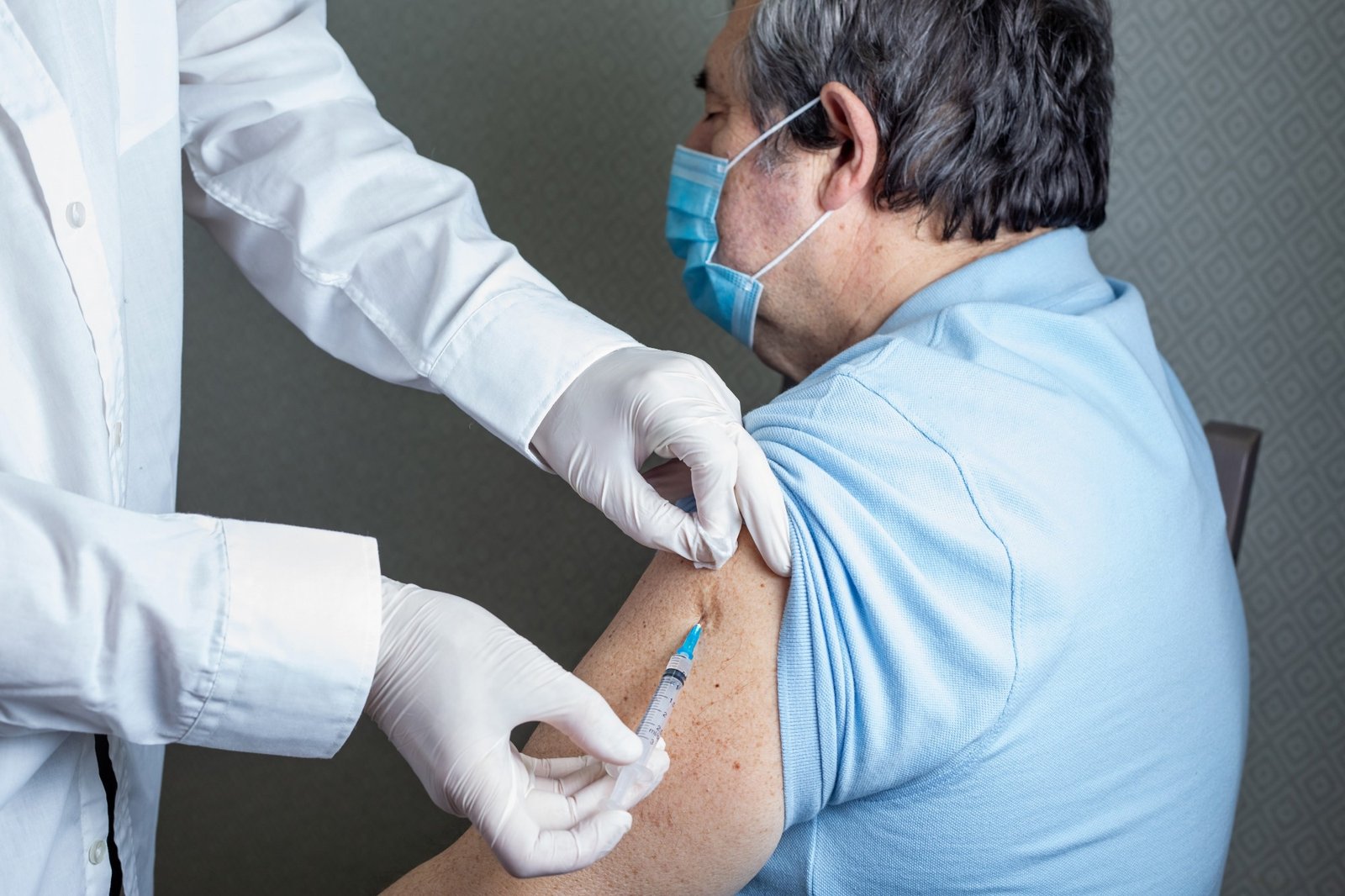
A more powerful flu shot may do more than prevent infection. New research suggests it may slightly lower the risk of Alzheimer’s disease, especially in older women, providing new insights into brain health and prevention.
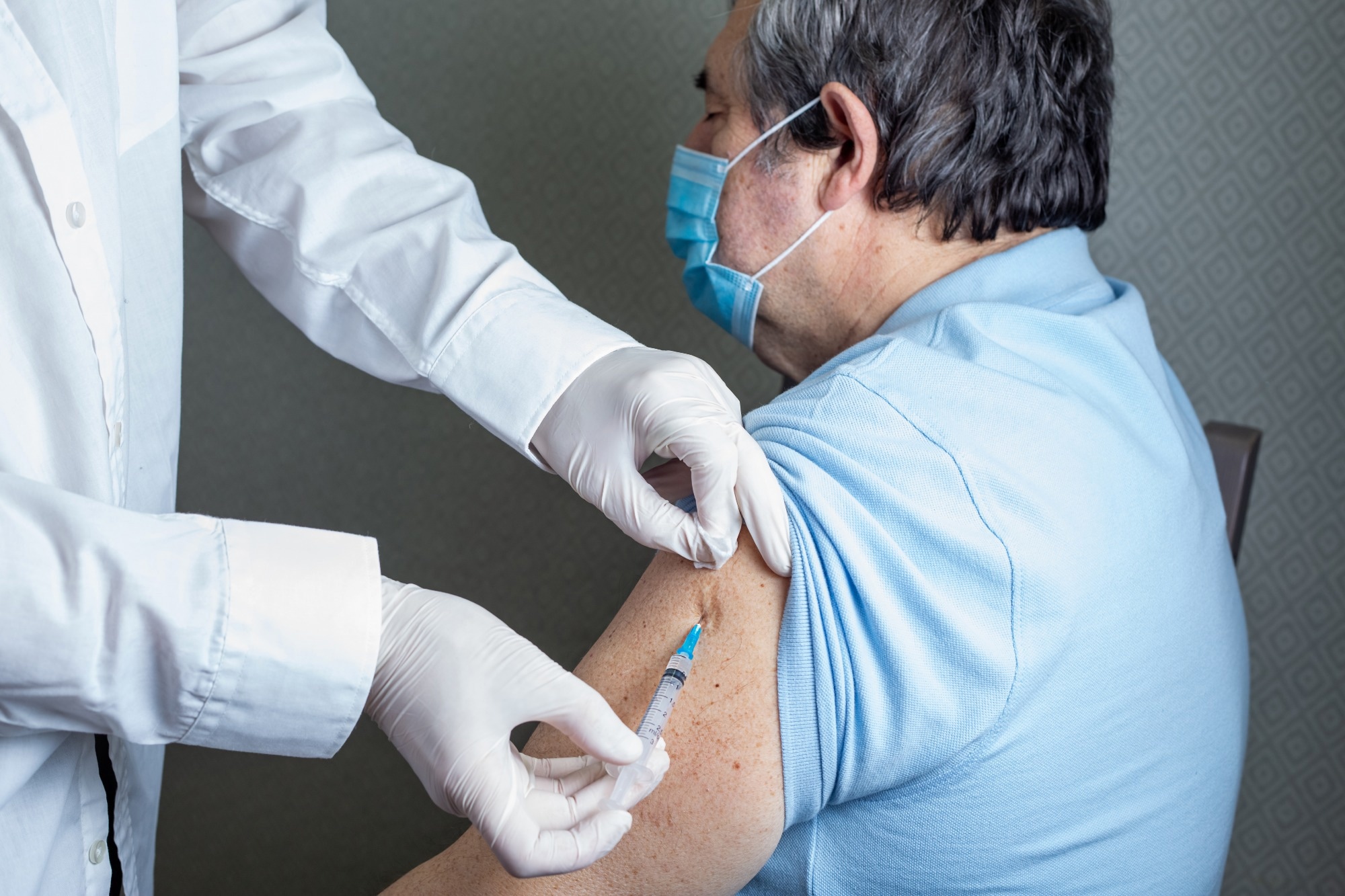 Study: Risk of Alzheimer’s dementia after high-dose versus standard-dose influenza vaccination. Image credit: Galina Sharapova/Shutterstock.com
Dementia affects approximately 57 million people worldwide and is an incurable disease, highlighting the need for low-cost prevention strategies. In recent research, Neurology sought to determine whether high-dose influenza vaccines are associated with a reduced risk of Alzheimer’s disease compared with standard-dose vaccines and to identify gender-dependent differences in efficacy.
Enhanced IIV could lead to better protection
Previous research by these authors demonstrated that one or more doses of an inactivated influenza vaccine (IIV) reduced the risk of Alzheimer’s disease (AD) by 40% over the next four years. However, that study did not differentiate between standard-dose IIV and immunologically fortified IIV.
Based on this previous study, the authors hypothesized that fortified IIV may provide better protection against AD than the standard formulation.
Immunologically enhanced vaccines appear to have the potential to reduce the risk of Alzheimer’s disease through both antibacterial and non-antibacterial mechanisms. For example, increased effectiveness in preventing influenza may reduce the risk of severe infection and associated systemic inflammation, which in turn may reduce neuroinflammation and neurodegeneration.
Additional pathways may include nonspecific immunological effects of vaccination and modulation of neuroinflammatory processes. These effects may help resolve early pathological changes associated with Alzheimer’s disease and prevent its progression.
Supporting this hypothesis, previous studies have shown that recombinant shingles vaccines have a lower risk of dementia compared to live attenuated vaccines, with stronger effects observed in women. This finding suggests that immunologically enhanced vaccines and their efficacy may differ by gender.
The current study compared high-dose (H-IIV) and standard-dose (S-IIV) vaccines and evaluated the impact of IIV on Alzheimer’s disease risk in older adults (65 years and older). The researchers used a targeted trial emulation (TTE) design that used observational data to fill the data fields of a specified protocol of a hypothetical randomized trial. These are then adjusted to minimize the risk of selection and immortality time bias, but the findings are observational and cannot establish causality.
Lower AD risk after H-IIV compared to S-IIV
The risk of new AD over 25 months of follow-up was approximately 0.54 percentage points lower (maximum risk difference) for H-IIV than for S-IIV in a per-protocol analysis. This indicates that, despite statistical significance, the absolute effect size is modest.
Women who received H-IIV had a reduced risk of AD over the next 13 months. Approximately 417 women would need to receive H-IIV to avoid one new case of Alzheimer’s disease. In men, no significant differences were observed in the initial per-protocol analysis, but subsequent intention-to-treat analyzes during follow-up showed a reduced risk, indicating sex-dependent differences in immunity. Previous studies have suggested that older women tend to be more immune to influenza than men of the same age and tend to have greater nonspecific effects.
Risk of mild cognitive impairment (MCI) increased at 13–24 months follow-up in some analyzes (particularly ICD or medication definitions) but not in more stringent case definitions. This is probably due to the high misclassification bias resulting from MCI misdiagnosis in routine clinical practice. For example, over 92% of MCI cases are not recorded in insurance claims data, while one study showed that half of MCI cases are coded as dementia in the Medicare database.
The effect of seasonal revaccination observed in this cohort was that the risk of Alzheimer’s disease was reduced after 27 months of H-IIV vaccination. This means that 294 people would need to be vaccinated to prevent even one new case of Alzheimer’s disease. This may tentatively suggest a benefit from regular revaccination, although the duration of the effect was only slightly longer than in the primary analysis.
Although there was no significant difference in risk between adjuvanted IIV and standard IIV in the primary (per-protocol) analysis, a reduction in AD risk was observed in the intention-to-treat analysis at later time points. Additional analyzes confirmed these findings.
Study design reduces bias but cannot prove causation
This study used a large US claims database to conduct TTE. We compared high-dose versus standard-dose IIV rather than vaccinated versus non-vaccinated, reducing bias and increasing comparability between groups. The study design avoided loss to follow-up and non-adherence to the protocol.
Misclassification bias may exist in both MCI and AD. This study included both senile dementia under Alzheimer’s disease and unspecified dementia to adjust for this. Their exclusion reduced the number of Alzheimer’s disease cases by 80%. Additionally, there was no difference in AD risk between either type IIV. This may reflect either a broad protective effect of IIV against dementia or misclassification of AD.
Missing mortality data may lead to an underestimate of the AD risk associated with S-IIV, as S-IIV is associated with higher mortality compared to H-IIV due to its lower protective efficacy against influenza.
Limitations also include a limited follow-up period, lack of socio-economic and lifestyle data, and an underrepresentation of older adults in this sample.
Mechanisms linking vaccination and neurodegeneration remain unclear
Given the long preclinical phase of Alzheimer’s disease, longitudinal studies with diverse samples using objective cognitive markers are needed to map the long-term effects of influenza vaccination on neurological and cognitive health. The underlying mechanisms also need to be clarified. Research is also needed to determine whether such measures are effective after MCI symptoms begin.
Such research could inform strategies to reduce the burden of Alzheimer’s disease.
Click here to download your PDF copy.
