


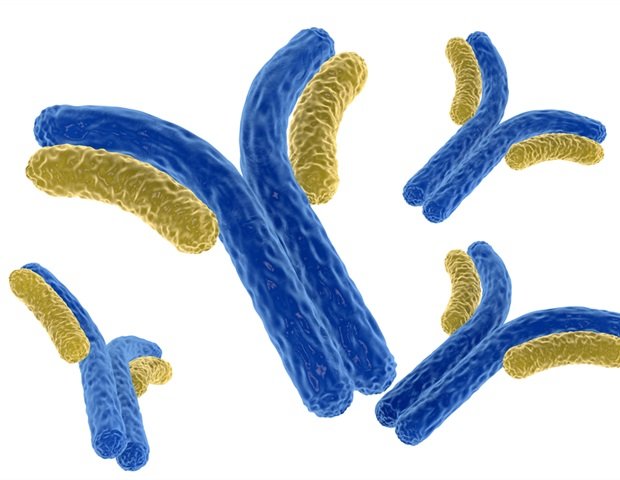
Antibody therapeutics are lab-made proteins engineered to work like the body’s natural antibodies. These are widely used to treat diseases such as cancer by binding to specific targets such as cancer cells or inflammatory molecules. However, in some cases, the body may recognize these drugs as foreign and produce anti-drug antibodies (ADA) to eliminate them.
In some cases, this immune response can cause anaphylaxis, a serious and potentially life-threatening allergic reaction. Although rare, such reactions are a major safety concern for antibody-based therapies because they can occur suddenly and are difficult to predict. Despite this risk, the exact reason why some antibody drugs cause ADA and anaphylaxis is not fully understood.
To investigate this, researchers at Chiba University in Japan looked at how antibody therapeutics interact with immune receptors called Fcγ receptors, which are present on certain immune cells and help recognize antibodies. This research was conducted by Professor Hiroto Hatakeyama and Dr. Ruiheng Tang of the Graduate School of Pharmaceutical Sciences, Chiba University, and Dr. Tokyo Taira of the Faculty of Pharmaceutical Sciences, Tokyo University of Science.
Their findings were; Cancer Immunotherapy Journal March 4, 2026 Drugs that bind strongly to Fcγ receptors are more likely to be recognized as foreign by the immune system, suggesting that they are associated with increased production of ADA.
“We focus on fatal anaphylaxis due to excessive ADA production. We found that high affinity for Fcγ receptors is a critical determinant of anaphylaxis. Our findings uncover a mechanism linking Fcγ receptor-mediated antibody capture and ADA induction by tumor-associated myeloid cells.” says Professor Hatakeyama.
Anaphylaxis has traditionally been explained by the immunoglobulin E (IgE) pathway. In this pathway, exposure to antigen activates B lymphocytes, which subsequently produce IgE antibodies. These antibodies bind to receptors on mast cells and basophils, causing them to release substances such as histamine, causing allergic symptoms. However, increasing evidence suggests that anaphylaxis can also occur through IgE-independent pathways.
To investigate this, the researchers conducted experiments on tumor-bearing mice. They tested two antibodies that both target programmed death ligand 1 (PD-L1). PD-L1 is a protein found on cancer cells that helps them escape from the immune system. When treated with 10F.9G2, an antibody with a strong ability to bind to Fcγ receptors on immune cells, all mice rapidly developed fatal anaphylaxis and saw a sharp rise in ADA levels. In contrast, MIH6, another PD-L1-targeted antibody, had low binding affinity for Fcγ receptors, did not participate in this response, and exhibited very low levels of ADA.
To confirm the role of this interaction, the researchers created a modified version of 10F.9G2 with reduced Fcγ receptor binding. These modified antibodies do not cause anaphylaxis and are associated with low ADA production, supporting the idea that strong Fcγ receptor interactions drive the response.
This study also suggests that tumor-associated myeloid cells may play an important role. These cells were found to capture antibodies with strong Fcγ receptor binding and process them in a manner that may promote increased ADA production and associated immune activation.
Importantly, this process is significantly reduced when Fcγ receptors are blocked. The limited ability of immune cells to capture antibodies was associated with lower ADA levels and improved mouse survival. This observation suggests that Fcγ receptor interaction may be a potential target for reducing the risk of anaphylaxis.
The researchers also looked at clinical data from the Food and Drug Administration Adverse Event Reporting System database and found a similar pattern. That is, antibody drugs with stronger Fcγ receptor binding or higher antibody-dependent cytotoxic activity, a measure of immune cell activation, are more likely to be associated with anaphylaxis.
Overall, this study provides insight into how antibody therapeutics are associated with anaphylaxis. This highlights a possible link between Fcγ receptor binding, ADA production, and immune responses, which may aid in the development of safer antibody therapies in the future.
“This study is based on a tumor model, so it is unlikely to have an immediate impact on daily life. However, we hope it will help explain how antibody drugs cause anaphylaxis in clinical practice.” says Professor Hatakeyama.
sauce:
Reference magazines:
Tan, R. others. (2026). Antibody therapeutics with high affinity for FcγRs exacerbate anaphylaxis through FcγR-mediated capture by tumor-associated myeloid cells. Journal of Cancer Immunotherapy. DOI: 10.1136/jitc-2025-013316. https://jitc.bmj.com/content/14/3/e013316
