


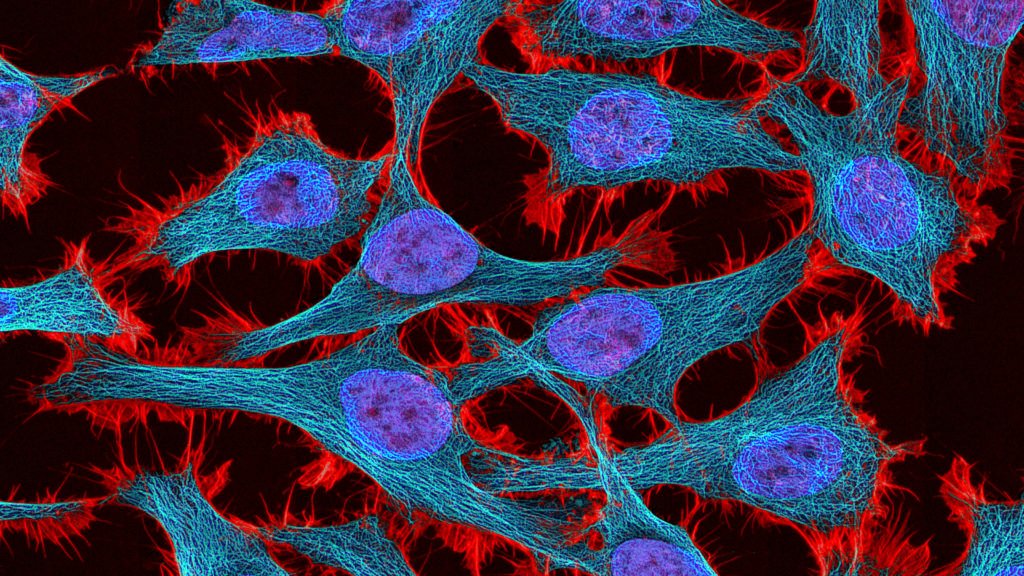
Novartis has settled a lawsuit brought by Henrietta Lacks’ foundation, which claims it has unfairly profited from Henrietta Lacks’ cells. The cells were taken from her tumor in 1951 without her knowledge and were replicated in the laboratory to enable major medical advances, including the polio vaccine.
Details of the agreement, which was finalized this month in federal court in Maryland, have not been made public.
The Lacks family and Switzerland-based Novartis said in a joint statement that they were “pleased to be able to find a way to resolve this issue raised by the Henrietta Lacks Estate outside of court,” without further comment.
This is the second settlement in a lawsuit brought by a foundation that accuses biomedical businesses of profiting from a racist health care system that takes advantage of Black patients like Lacks. The settlement ends a lawsuit between Novartis, one of the world’s largest pharmaceutical companies, and the estate of Lax’s mother, Lux, who died of cervical cancer at age 31 and was buried in an unmarked grave.
The 2024 lawsuit sought from Novartis all net profits made from commercializing a HeLa cell line allegedly grown from “stolen cells.”

Henrietta Lacks settlement hailed by experts as a step towards correcting medicine’s history of racism
Doctors at Johns Hopkins Hospital harvested Lacks’ cervical cells in 1951 without her knowledge, and the tissue taken from her tumor before she died became the first human cells to grow and regenerate continuously in a laboratory dish. HeLa cells have become the foundation of modern medicine and have enabled countless scientific and medical innovations, including genetic mapping and the development of COVID-19 vaccines, but despite their immense impact on science and medicine, the Lacks family received no compensation along the way.
Johns Hopkins University said it has never sold or profited from the cell lines, but a number of companies have patented methods for using them.
In 2023, Lux’s estate reached an undisclosed settlement with biotechnology company Thermo Fisher Scientific. In the lawsuit, the family’s lawyers argued that the company continued to commercialize its research long after the origins of the HeLa cell line became well known, and unfairly enriched itself from Lacks’ cells.
There are other pending lawsuits by the Lux Foundation. Just over a week after the estate settled its lawsuit with Thermo Fisher Scientific, attorneys for the estate filed a lawsuit against Ultragenix Pharmaceuticals in federal court in Baltimore, the same venue as the previously settled case. The lawsuit with Ultragenyx and drug company Viatris is still ongoing.
The family’s attorney indicated additional charges could be filed.
Lacks was a poor tobacco farmer from southern Virginia who married and moved with her husband to Turner Station, a historically black community outside of Baltimore. The couple were raising five children when doctors discovered a tumor in Lacks’ cervix and saved samples of her cancer cells taken during a biopsy.

5 important ways Henrietta Lacks changed medicine
While most cell samples died shortly after being removed from the body, her cells survived and thrived in the lab. These became known as the first immortalized human cell lines because scientists could culture them indefinitely, meaning researchers could reproduce their studies using the same cells no matter where they were.
The remarkable science involved and the impact on the Lacks family, who was chronically ill and had no health insurance, was chronicled in Rebecca Skloot’s best-selling book, The Immortal Life of Henrietta Lacks, published in 2010. Oprah Winfrey played the daughter in the HBO movie based on this story. — Brian Witte
