


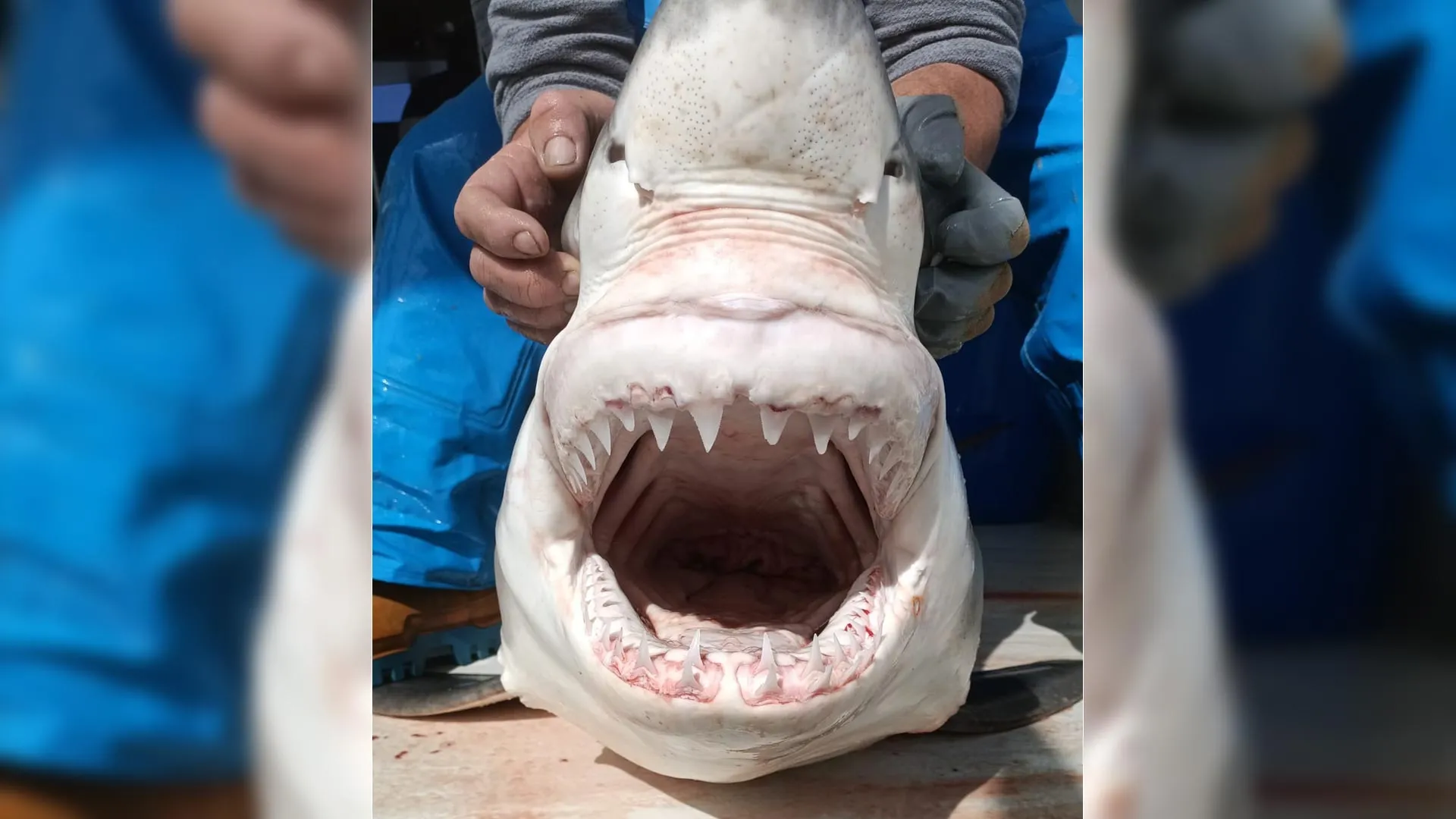
On April 20, 2023, a local fisherman accidentally caught a juvenile great white shark (carcharodon carcharius) off the coast of the eastern peninsula. The young shark was about 210 centimeters long and weighed about 80 to 90 kilograms. Such encounters are extremely rare in this region, prompting scientists to take a closer look at historical records. The researchers reviewed sightings and reports dating back to 1862 and finally compiled a comprehensive analysis that was published in an open access journal. Journal of Ichthyology and Fisheries.
The unexpected catch, compared to records from the past 160 years, suggests that great white sharks have not completely disappeared from Mediterranean waters. Instead, scientists describe them as a mysterious or “ghost” population that rarely appears. Despite their elusive nature, evidence shows that they continue to inhabit this region.
Great white sharks are currently classified as Vulnerable on the IUCN Red List, and their global population is thought to be in decline.
Why are juvenile sharks important?
“Identifying the presence of adolescents is particularly important,” says Dr. José Carlos Báez, the study’s principal investigator. “The occurrence of juveniles raises the question of whether active breeding is occurring in this area,” he further hypothesized.
The discovery of young sharks could indicate that breeding is still occurring somewhere in the Mediterranean, and researchers are eager to investigate further.
Rare but constant sightings in Spanish waters
After reviewing historical records, the study confirmed that great white sharks still occasionally appear in the Spanish Mediterranean. These sightings are still very rare, but they show a consistent pattern over time. This species appears to have quietly remained in the area rather than disappearing completely.
Understanding the fear of great white sharks
Dr. Baez also mentioned the intense fear that great white sharks often evoke. To quote HP Lovecraft’s famous observation that “the oldest and strongest emotion of mankind is fear, and the oldest and strongest kind of fear is the fear of the unknown.” He explains that better scientific understanding can change people’s perceptions.
“By shedding light on the biology and ecology of great white sharks, the study helps replace unsubstantiated myths with true understanding.”
The ecological role of the great white shark
As populations continue to decline, researchers emphasize the importance of long-term monitoring programs to better understand Mediterranean great white sharks. Combining first-hand sightings with modern tracking technology can help scientists develop evidence-based conservation strategies to protect this iconic predator.
“The main idea I want to convey to the public is that these large marine animals play a fundamental role in marine ecosystems. As highly migratory pelagic species, they redistribute energy and nutrients over long distances. They act as natural scavengers, keeping ecosystems clean by consuming carrion. Even in death, their descent to the ocean floor provides an important nutrient pulse for deep-sea communities,” Baez concluded.
