


When Judith Enck, a former top official at the Environmental Protection Agency, noticed a large line of chemical and plastics industry lobbyists visiting the agency’s Washington headquarters in February, she wondered what was going on.
The answer came a few weeks later. Government agencies are moving to revive a proposal from the first Trump administration to repeal Clean Air Act regulations on one of the industry’s go-to methods for chemically processing plastic waste into new industrial feedstocks and fuels.
The EPA is approaching this interestingly by incorporating a request for comment on so-called “advanced recycling” through a process known as pyrolysis into its rulemaking for an entirely different category of waste incineration.
“I wondered if it was a mistake or if they were quietly trying to push this through,” Enck, who served as an EPA regional administrator under President Obama, wondered in an interview Tuesday. The 17-page Federal Register notice about the proposed wood-burning rule included just one paragraph related to advanced recycling of plastics.
Either way, the risks are significant, according to industry and environmentalists.
For years, industry players have promoted chemical treatment of plastic waste as the primary solution to the global plastic waste crisis, while advocating for deregulation at the state and federal level. The industry is also calling for such processing to become a pillar of a potential global plastics agreement.
“We support policies that recognize products of advanced recycling as recycled, and policies that recognize advanced recycling as highly engineered manufacturing processes that can produce plastics and chemicals equivalent to new virgins,” the American Chemistry Council, the main lobbying group for the U.S. chemical industry, says on its website.
But environmentalists view much of what the industry calls chemical or advanced recycling, especially the process known as pyrolysis, as a dirty, polluting sham.
“That’s not recycling,” said James Pugh, director of the federal government’s clean air efforts at the environmental group Earthjustice. “To the extent that these incinerators produce anything significant other than toxic pollution, a small portion of the plastic waste they burn will turn into oily waste and be recycled into chemical manufacturing processes or burned as dirty fuel, fueling the unlimited production of single-use plastics.”
The EPA’s move to ease air pollution control rules to facilitate chemical treatment of plastic waste comes amid growing concern over the global plastics crisis.
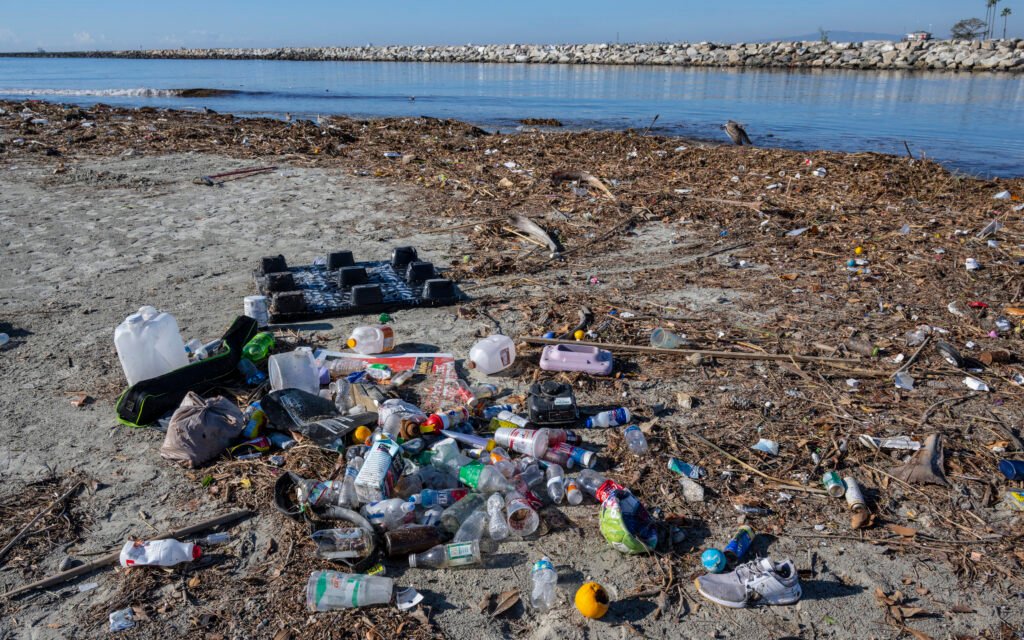
The United Nations Environment Program estimates that the world produces 430 million tonnes of plastic each year, more than two-thirds of which are short-lived products that quickly become waste. The amount of waste being discarded after just one use is increasing, reaching 139 million tonnes in 2021.
Under a “business as usual” scenario, plastic production would triple by 2060, with less than 9% recycled. Plastic production and mismanagement of plastic waste are contributing to climate change, biodiversity loss and environmental pollution, UN officials have concluded.
Scientists have also discovered the smallest plastic particles in the human body that increase the risk of respiratory, reproductive and gastrointestinal problems and some cancers.
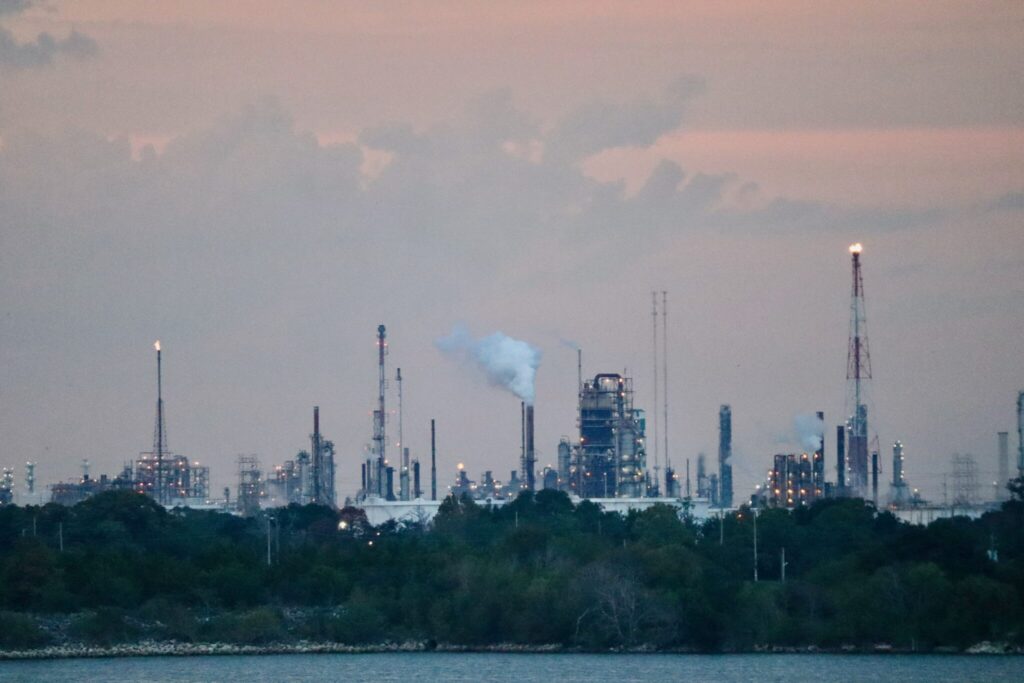 ExxonMobil Baytown Complex in Baytown, Texas at dusk in 2023. The company has developed what it calls advanced recycling of plastic waste that involves pyrolysis in part of the complex. Credit: James Bruggers/Inside Climate News
Plastic chemical recycling issue
Plastic is made from thousands of chemicals and cannot be easily recycled. Most plastic recycling is done through a mechanical process that separates specific types by chemical composition, then cleans, shreds, melts, and reshapes them.
Pyrolysis, the process of breaking down materials at very high temperatures in an oxygen-free environment, has been around for centuries. Traditional uses range from making tar from wood for wooden ships to turning coal into coke for steel making.
Recently, major oil companies and small startups alike have sought to develop this technology as an alternative way to recycle various plastic wastes, but with limited success and severe backlash from environmental concerns.
read more

Houston plastic waste piles up at business after waiting more than a year for ‘advanced’ recycling, where fire department failed three times
Written by James Bruggers
A 2023 report by Enck’s Beyond Plastics and the International Pollutants Elimination Network examined 11 chemical recycling plants operating in the United States. The report pointed to challenges such as low production volumes of recycled plastics and fires and spills at production facilities, and concluded that the technology “has failed for decades and continues to fail, and there is no evidence that it will contribute to solving the plastic pollution crisis.”
However, the chemical industry has staunchly supported chemical recycling, including pyrolysis methods. On the same day that the EPA announced it was developing new rules for advanced recycling, the American Chemistry Council praised the agency. The group said that because pyrolysis does not involve oxygen, the process is not considered incineration and should not be regulated as such.
“Rather than burning plastic for energy or landfilling it, these advanced recycling technologies transform used plastics into valuable raw materials for making new products,” Ross Eisenberg, president of a division of the council called America’s Plastic Makers, said in a press release.
16 industry lobbyists visit EPA
Details of what the EPA is proposing have not yet been disclosed. But the agency’s March 17 announcement and supporting documents point to the kind of regulatory relief the agency sought to provide during President Trump’s first term before time expired.
Pyrolysis has been regulated primarily as incineration for 30 years and has had to meet stringent emissions requirements for solid waste combustion under the federal Clean Air Act.
In the final months of the first Trump administration, the EPA proposed an industry-friendly rule change that said emissions from the process should not be regulated as incineration because pyrolysis does not contain enough oxygen to constitute combustion.
The Biden administration reversed course in 2023 after much criticism from environmental groups and some members of Congress.
The agency said in the same year that it “received significant negative comments” regarding this provision. In taking final steps to withdraw the proposal, the agency said the move “prevents any regulatory gaps and ensures that public health protections are maintained.”
The EPA’s recent request for comment on pyrolysis was included in a rulemaking for incinerators that burn wood and yard waste, which are sometimes used after natural disasters such as hurricanes. “Revising the definition will clarify that this rule does not regulate pyrolysis equipment used in advanced recycling operations,” the agency said.
Beyond Plastics was among 13 representatives of chemical companies and lobbying groups on the visitor log at EPA headquarters on February 10, a month before the announcement. Three senior officials from the American Chemistry Council visited on February 12th.
“While communities across the country are grappling with the health and environmental costs of plastic pollution, the industry appears to be directly connected to the government agencies that are supposed to protect us,” Enck said. “These visitor records are especially concerning at a time when the Trump administration is quietly proposing to roll back environmental protections and remove Clean Air Act requirements from so-called ‘chemical recycling’ facilities. Why did the EPA kill such major changes?”
A written statement from the EPA Press Office said existing solid waste incineration and pyrolysis regulations are vague and the EPA is seeking information on “appropriate remedies.”
The agency has scheduled an online virtual hearing on April 6.
This story is funded by readers like you.
Our nonprofit newsroom provides free advertising for our award-winning climate coverage. We rely on donations from readers like you to continue our work. Donate now to support our work.
donate now
Matthew Kastner, senior director of media relations for the American Chemistry Council, pointed to events in 2023 and 2024 when Enck appeared on the EPA’s visitor log. He said both his and her groups “have the right under the First Amendment to petition the government.”
He added that the council’s member companies are regulated by the EPA, “so it is appropriate and expected that they address issues ranging from compliance to policy development.”
Earthjustice’s Pugh is concerned that the EPA will exempt pyrolysis units from Clean Air Act permitting and emissions measurement or reporting requirements. That would create a “perverse incentive” to build more of them, he said.
“As a practical matter, this definition change means that EPA will completely deregulate all types of incinerators, so-called pyrolysis units,” he added. “And that pollution is really toxic.”
About this story
As you may have noticed, this article, like all news we publish, is free to read. That’s because Inside Climate News is a 501c3 nonprofit organization. We don’t charge subscription fees, keep our news behind paywalls, or fill our website with ads. We provide climate and environmental news free to you and anyone who wants it.
That’s not all. We also share our news for free with dozens of other news organizations across the country. Many of them cannot afford to do their own environmental journalism. We’ve established bureaus across the country to report on local news, partner with local newsrooms and co-publish stories to ensure this important work is shared as widely as possible.
The two of us started ICN in 2007. Six years later, we won the Pulitzer Prize for national reporting and now run the nation’s oldest and largest dedicated climate newsroom. We tell the story in its entirety. We hold polluters accountable. We expose environmental injustice. We debunk misinformation. We explore solutions and inspire action.
Donations from readers like you fund all aspects of our work. If you haven’t already, will you support our ongoing work, our coverage of the biggest crises facing our planet, and help us reach more readers in more places?
Please make a tax-deductible donation. Any of those things make a difference.
thank you,

james brugers
southeast reporter
James Bruggers covers the Southeastern United States as part of Inside Climate News’ national environmental reporting network. He previously covered energy and the environment for the Louisville Courier-Journal, worked as a correspondent for USA Today, and was a member of the USA Today Network environment team. Before moving to Kentucky in 1999, Mr. Brugers worked as a journalist in Montana, Alaska, Washington and California. Bulgers’ work has won numerous awards, including Best Beat Reporting, the Society of Environmental Journalists, and the National Press Foundation’s Thomas Stokes Award for Energy Reporting. He served on the SEJ board for 13 years, including two years as chairman. He lives in Louisville with his wife Christine Bruggers.
