


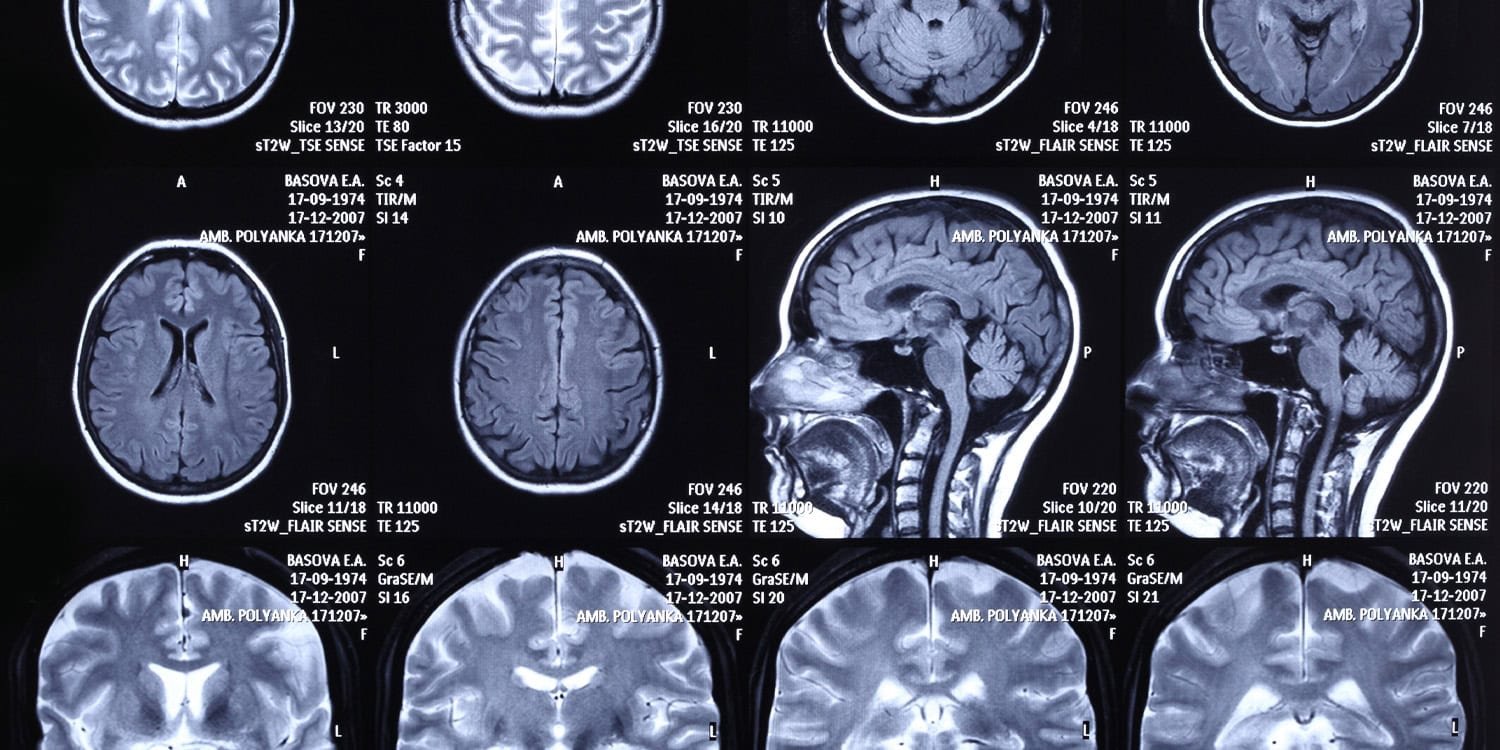
Brain scans show that Republicans and Democrats think about their daily food purchases in starkly different ways, even if they end up buying exactly the same groceries. This insight comes from a neuroimaging study published in the journal politics and life sciencesThis revealed that people with different political affiliations rely on different neural pathways to make the same decisions. Researchers have discovered that they can accurately predict a person’s political affiliation simply by observing their brain activity during everyday shopping tasks.
This research sits at the intersection of neuroscience and political behavior. Researchers in this field study how political ideology corresponds to brain structure and internal processing. Past experiments have shown that liberals and conservatives exhibit different neural activity when faced with situations involving physical threats, risky financial gambles, or aversive images.
These previous experiments generally used highly emotional or provocative triggers. The research team behind this new study wanted to see whether political affiliation corresponded to different brain activity during normal decision-making, which lacks obvious emotional weight. Choosing what to make for breakfast represents exactly this kind of mundane everyday thinking.
Principal investigators Amanda S. Bruce, a pediatric behavioral scientist at the University of Kansas Medical Center, and political scientist Darren M. Shriver at the University of Exeter, UK, designed the project. They wanted to understand whether the mental processes underlying everyday food choices differ by political party. Biology provides precedent for this idea, as animal studies have shown that completely different neural configurations can produce exactly the same behavioral outcomes.
The paper cites basic neuroscience research on wild-caught crabs to explain this biological phenomenon. Scientists previously discovered that the basic neural circuits in different crabs appear incredibly diverse yet can cause the same stomach movements. In a laboratory environment with normal conditions, the crabs behaved indistinguishably from each other. It is only when the environment experiences extreme temperature changes that behavioral outcomes begin to diverge.
Political researchers consider the task of grocery shopping to be the human equivalent of a stable laboratory temperature. Democrats and Republicans can come to the same behavioral conclusions because a routine trip to the dairy aisle is not a high-stress political event. But the unique neural wiring they use to get there may reveal hidden differences that determine behavior only in the heat of deep partisan conflict.
To test this in humans, researchers recruited healthy adults from the Kansas City metropolitan area. They identified participants’ political affiliations through a standard questionnaire. After excluding independents and unaffiliated voters to focus on clear partisanship, the final sample included 40 Democrats and 25 Republicans.
Participants were placed in a functional magnetic resonance imaging scanner. This machine uses a powerful magnetic field to track blood flow in the brain as it occurs. When certain areas of the brain work harder, they require more oxygen, and the scanner detects these subtle changes in blood oxygenation to map neural activity.
While in the scanner, participants made real financial choices regarding their grocery purchases. The researchers gave each person $50. Participants knew that they would actually purchase and take home one of the items of their choice, and the cost was deducted directly from their payment.
The team ran two separate experiments inside the scanner. The first focused on buying 1 gallon of milk and the second focused on buying 12 eggs. The researchers chose these products because they are incredibly common staples, meaning that most adult consumers have already established habits around them.
During the task, participants saw a screen with two different product images and had to choose one. The choices were divided into three specific conditions. In price terms, alternative foods are made in exactly the same way but are offered at different price points.
In terms of production methods, the prices were the same, but different farming methods were listed on the label. In the case of milk, the label indicated whether the product was made from cloned cows, cows treated with artificial growth hormones, or cows raised without those techniques. For eggs, the label indicated whether the chicken was caged, confined, noncaged, or free-range.
In combination conditions, price and manufacturing method differ at the same time. The researchers noted that this combined scenario most closely resembled a real-life trip to the grocery store. Participants had to weigh the trade-off between lower prices and professional farming practices.
When looking at the final choices participants made, the researchers found no behavioral differences between political parties. Democrats and Republicans bought cloned milk, growth hormone milk, and cage-free eggs at surprisingly similar prices. The differences between the actual foods selected were not statistically significant.
Brain scans showed a completely different picture. The thought processes driving these same food choices relied on different areas of the brain depending on the shopper’s political identity. The researchers conducted a whole-brain analysis to pinpoint where these differences occurred.
In Republican participants, brain scans showed increased activity in the left insula while choosing the mixed milk. The insula is an area often involved in interpreting internal sensations and assigning subjective value to items. Republicans also showed increased activity in the ventromedial prefrontal cortex, an area associated with introspection and evaluation of economic choices, when considering how to produce milk.
Among the Democratic participants, brain scans showed increased activity in the right precuneus and right superior frontal gyrus during combination egg choices. The precuneus is often associated with personal memory recall and the processing of social information. The superior frontal gyrus acts as a gateway for directing attention and managing cognitive resources.
The researchers took these brain activation patterns and fed them into a statistical model. They wanted to see if neural data alone could accurately classify participants as Republicans or Democrats. The model performed very well, correctly guessing a person’s political party between 76 and 94 percent of the time.
In one particular model, based entirely on brain activity when choosing egg combinations, the system correctly identified Democratic participants 100% of the time. These classification rates are very accurate compared to random guesses. It’s also better than traditional prediction methods that are simply based on how conservative a person’s parents happen to be.
The researchers noted some unexpected gaps in the brain data. They found no differences in the amygdala, the brain’s emotional processing center that has been featured prominently in older studies of political ideology. The researchers suggested that this was likely because choosing eggs or milk, while providing cognitive information, did not evoke the intense emotional reactions seen in experiments involving political faces or physical threats.
There are several caveats to this study. By excluding independents and unaffiliated voters, the data reflects only the habits of mind of strong partisans. Future research should look at non-aligned voters to see if their brains respond in unique ways to conventional choices, or if they reflect one of the established parties.
The sample size of 65 participants is relatively small compared to national polls. However, this is an acceptable number for neuroimaging studies, which are notoriously expensive and time-consuming to conduct. The researchers also used rigorous statistical thresholds to ensure that the differences in brain activation were real.
The research team hopes this study will encourage deeper exploration of the mechanisms underlying political polarization. Focusing entirely on what people do can limit our understanding of why they do it. If different biological systems produce identical outcomes, identifying their invisible differences may ultimately explain why populations react so differently when political tensions rise.
The study, “Differences in brain activation between Democrats and Republicans when considering food purchases,” was authored by Amanda S. Bruce, John M. Crespi, Dermot J. Hayes, Angelos Lagoudakis, Jason L. Rusk, Darren M. Shriver, and Kianlong Wu.
