


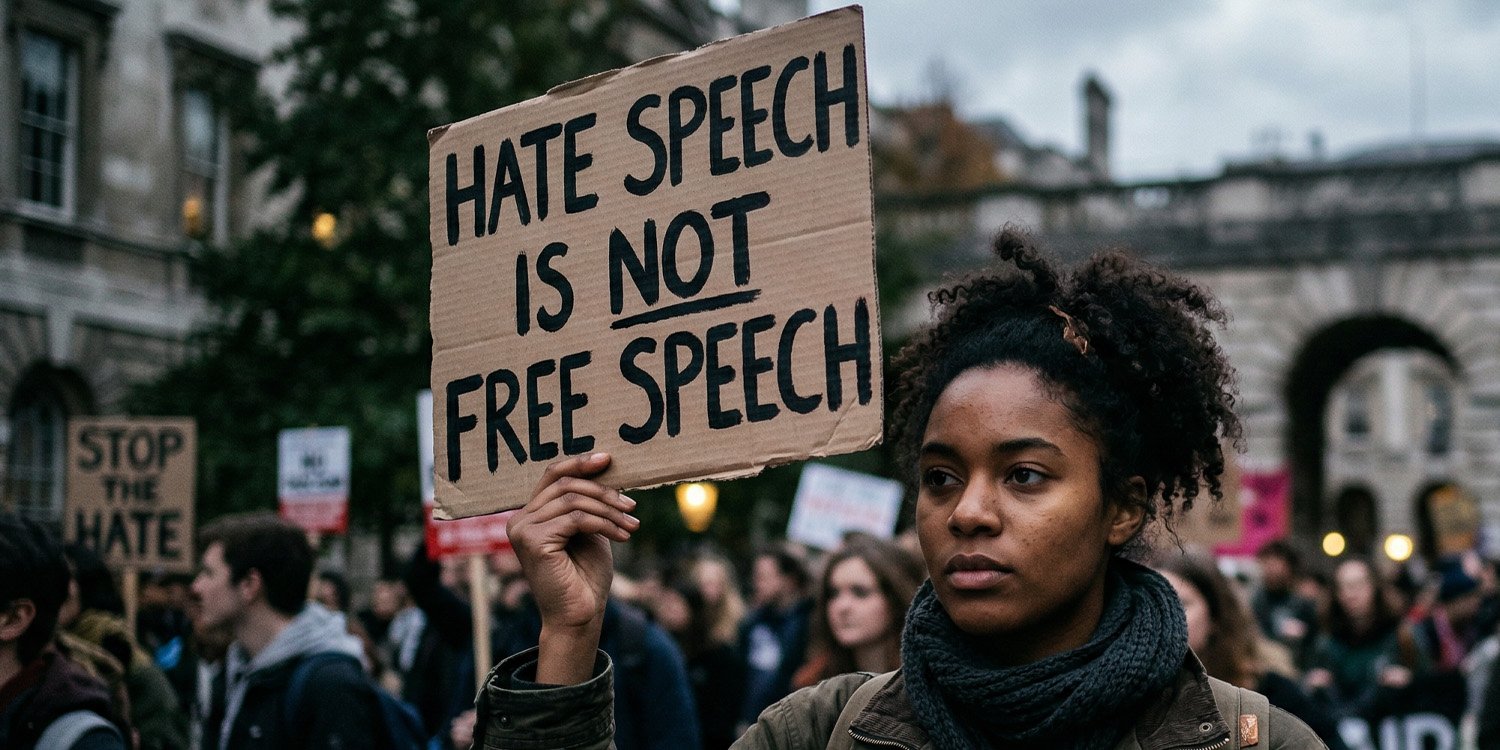
Recent research published in personality and individual differences This suggests that people who believe that words can cause lasting psychological damage tend to have worse mental health. This finding provides evidence that this particular belief is measurable and stable over time. This research helps explain contemporary cultural divides over free speech, safe spaces, and political correctness.
The researchers conducted this study because public debates often focus on whether certain speech is merely offensive or actually harms people’s well-being. These disagreements have implications for college campus and workplace policies regarding things like trigger warnings and restricted language.
“People disagree on whether words cause lasting psychological harm. Some argue that speech can be violent or traumatic. Others argue that extending the concept of harm to offensive or controversial speech coddles people and prevents open discussion,” explained study author Sam Pratt, a doctoral student at the University of California, Los Angeles.
“Where you stand on this is likely to determine your stance on other issues, such as whether teachers should provide trigger warnings in the classroom, whether social media sites should regulate user speech, and whether schools should ban students from reading certain books.”
“To study the belief that words can cause harm, we need a good way to measure it. So we created the Words Can Harm Scale (WCHS), a 10-item measure of the belief that words can cause lasting psychological harm.”
The research team recruited 956 adults living in the United States through an online platform called Prolific. This group was stratified to reflect the national population in terms of age, gender, and race to ensure that the survey results were nationally representative. The average age of the participants was approximately 46 years, with a roughly even distribution of men and women.
Participants completed the Words Are Harmful Scale, which assessed their agreement with statements about the power of words. For example, one item asked whether people could be traumatized by what they read, while another focused on whether vulnerable people should be protected from certain speech. Each answer is provided on a sliding scale from 1 to 100, with higher numbers indicating stronger agreement that the words cause lasting harm.
Two weeks after the first survey, 756 of the original participants were retested. This follow-up study allowed the researchers to see whether participants’ beliefs remained stable over a short period of time. The results suggest that the scale is a reliable tool, as the scores for the first and second tests were very similar.
This study provides evidence that people with high beliefs that words can cause harm tend to have certain demographic characteristics. These people are often young, female, and from non-white backgrounds. Black participants in the study scored higher than white and Asian participants.
Political leanings also show a strong relationship with these beliefs about language. People who identified as liberals or Democrats were more likely to endorse the idea that speech is harmful. This association suggests that progressives may view language as closely tied to power structures and social justice.
One of the most notable findings concerned attitudes toward restricting speech in public and educational settings. There was a strong association between high scores on this scale and support for top-down censorship. Those who believed that language was harmful were much more likely to agree that the government should shut down websites that promote hateful positions.
Those who scored higher on the Words Can Harm Scale also expressed more support for using trigger warnings and creating safe spaces in the classroom. This data shows that there is a correlation between believing that words are harmful and believing that it is important to silence others. This suggests that perceptions of harm are a central driver of contemporary debates about free speech and censorship.
“Most of the correlations we observed were small to medium in size,” Pratt told PsyPost. “However, WCHS had a significantly stronger relationship (correlation r = 0.52) with support for top-down censorship, which supports the use of institutional power to suppress problematic speech.”
“This is a significant effect, meaning that people who believe more strongly that words can cause harm are much more likely to agree with statements such as ‘Classroom discussion should be a safe space to protect students from disturbing ideas’ or ‘I support allowing the government to shut down right-wing internet sites and blogs that promote insane and hateful positions.'”
Researchers also investigated how these beliefs relate to personality traits and social motivation. Those who scored higher on the scale rated themselves as more empathetic and attuned to others. At the same time, they were more likely to engage in moral display, which involves sharing moral beliefs to gain social status.
This study also provides evidence of a link between these beliefs and a person’s sense of victimization. People who scored high on this scale were more likely than others to see themselves as victims in everyday interactions. They also reported lower levels of emotional stability, a personality trait related to how people cope with stress.
The findings regarding mental health were consistent across several different measures used in the study. Those who believed more strongly that words were harmful reported higher levels of both anxiety and depression in the past two weeks. They also said they perceived themselves as less resilient, or less able to recover from stressful events.
The researchers used specific screening tools for clinical symptoms, including the Patient Health Questionnaire and the Generalized Anxiety Disorder Scale. Participants who met criteria for moderately severe depression scored approximately 7 points higher than those who did not. Similarly, those with moderate or severe anxiety had significantly higher scores than those with minimal symptoms.
The data also suggests that people who believe words can be hurtful are more sensitive to the physical symptoms of anxiety. This is a concept known as anxiety sensitivity, where people fear experiences that make them feel anxious. These people also believed that they and others were more likely to experience post-traumatic stress disorder after a difficult event.
Difficulty managing emotions was also associated with higher scores on this scale. Those who agreed that words cause lasting damage often reported that they had trouble controlling their emotions when upset. These correlations suggest that a person’s beliefs about the dangers of words are closely tied to their overall psychological well-being.
As with all research, there are some caveats to consider. “Our study is correlational, so we cannot make claims about causation,” Pratt said. “For example, we know that WCHS is associated with poorer mental health, but we don’t yet know why.”
In other words, this study does not show whether believing that words are harmful leads to worse mental health, or whether poor mental health leads people to perceive words as more dangerous.
“One possibility is that people who are often the targets of negative speech, such as women and racial minorities, have developed the belief that words can be harmful from first-hand experience,” Pratt explained. “A second possibility is that believing that words can cause harm, for example, leads people to interpret words more negatively, leading to worse mental health. Or both may be true. Experiencing negative words leads people to believe that words can cause harm, which in turn leads to worse mental health.”
Future research should follow people over many years to see how these beliefs develop and change. The researchers also noted that people sometimes answer survey questions to make themselves look good to others. This is known as a socially desirable response and can influence how people report their beliefs about empathy and harm.
One wonders if cultural changes are making these beliefs more common. Some experts suggest that younger generations are more susceptible to harm from changes in parenting and the influence of social media. The small negative correlation between age and scale scores provides some support for the idea that younger people hold these beliefs more strongly.
“One of the natural questions is where does the belief that words can cause harm come from?” Pratt said. “Is this a new belief emerging from a younger generation that champions political correctness? Or has everyone in society gradually come to believe that words can be harmful over time? Or have people always had this belief, but it’s only now that it’s sparking political debate?”
“Answering these questions requires tracking how beliefs about the harmfulness of words have changed over generations and over time. This is exactly the type of research WCHS was designed to support.”
The study, “Words Can Be Harmful on a Scale: Measuring Beliefs About Harmful Speech,” was authored by Samuel Pratt, Peyton J. Jones, Benjamin W. Berrett, Richard J. McNally, and Kurt Gray.
