


Researchers at the University of São Paulo’s Center for Agriculture and Nuclear Energy (CENA-USP) have identified multiple types of antibiotics in the Piracicaba River, a major waterway in the Brazilian state of São Paulo. Their discovery is environmental science europeindicating that these substances are not only present in water, but also accumulate in fish. The research team also found that common aquatic plants in the area Salvinia auriculatacould help reduce this contamination.
This study was led by Patricia Alexandre Evangelista with support from FAPESP. The study combined several approaches, including environmental monitoring, studying how pollutants accumulate in organisms, analyzing genetic damage in aquatic organisms, and experimenting with plants to remove pollutants. This broad strategy allowed the team to better understand both the scale of the problem and possible ways to address contamination associated with the use of human and veterinary medicines.
Pollution sources and seasonal patterns
The samples were collected near the Santa María da Serra dam, near the Barra Bonita reservoir, where pollutants from across the river basin tend to collect. The area receives inflows from treated sewage, domestic wastewater, aquaculture, pig farming, and agricultural runoff.
The researchers analyzed water, sediment, and fish during both the wet and dry seasons. They monitored 12 commonly used antibiotics from groups such as tetracyclines, fluoroquinolones, sulfonamides, and phenols. “The results showed a clear pattern of seasonality. During the rainy season, concentrations of most antibiotics were below detection limits. However, during the dry season, when water volume decreased and pollutants were concentrated, different compounds were detected,” Evangelista said.
Measured levels ranged from nanograms per liter in water to micrograms per kilogram in sediment. Some antibiotics, such as enrofloxacin and certain sulfonamides, were detected in the sediments at levels higher than those reported in similar studies around the world. Because sediments are rich in organic matter and nutrients such as phosphorus, calcium, and magnesium, these compounds can accumulate and be released into the environment over time.
Banned antibiotics detected in fish
“One of the most important findings of this study was the detection of chloramphenicol in lambari fish (Astyanax sp.) collected from local fishermen in the Barra Bonita region. Chloramphenicol is an antibiotic and its use in livestock is prohibited in Brazil precisely because of the risks associated with its toxicity,” the researchers said.
This substance occurred only in the dry season, and its concentration was several tens of micrograms per kilogram. Lambari fish is widely consumed in the region, raising concerns about possible exposure to antibiotics through food.
Evangelista explains that chloramphenicol and enrofloxacin were chosen for detailed laboratory experiments because of their importance for both the environment and human health. “Enrofloxacin is widely used in human medicine as well as in animal husbandry, including aquaculture. Chloramphenicol, on the other hand, is still used in humans despite being banned for use in food animals and serves as a historical marker of persistent contamination,” she explains.
Can aquatic plants remove antibiotics?
The team also Salvinia auriculataFloating plants, often considered invasive species, could help purify contaminated water.
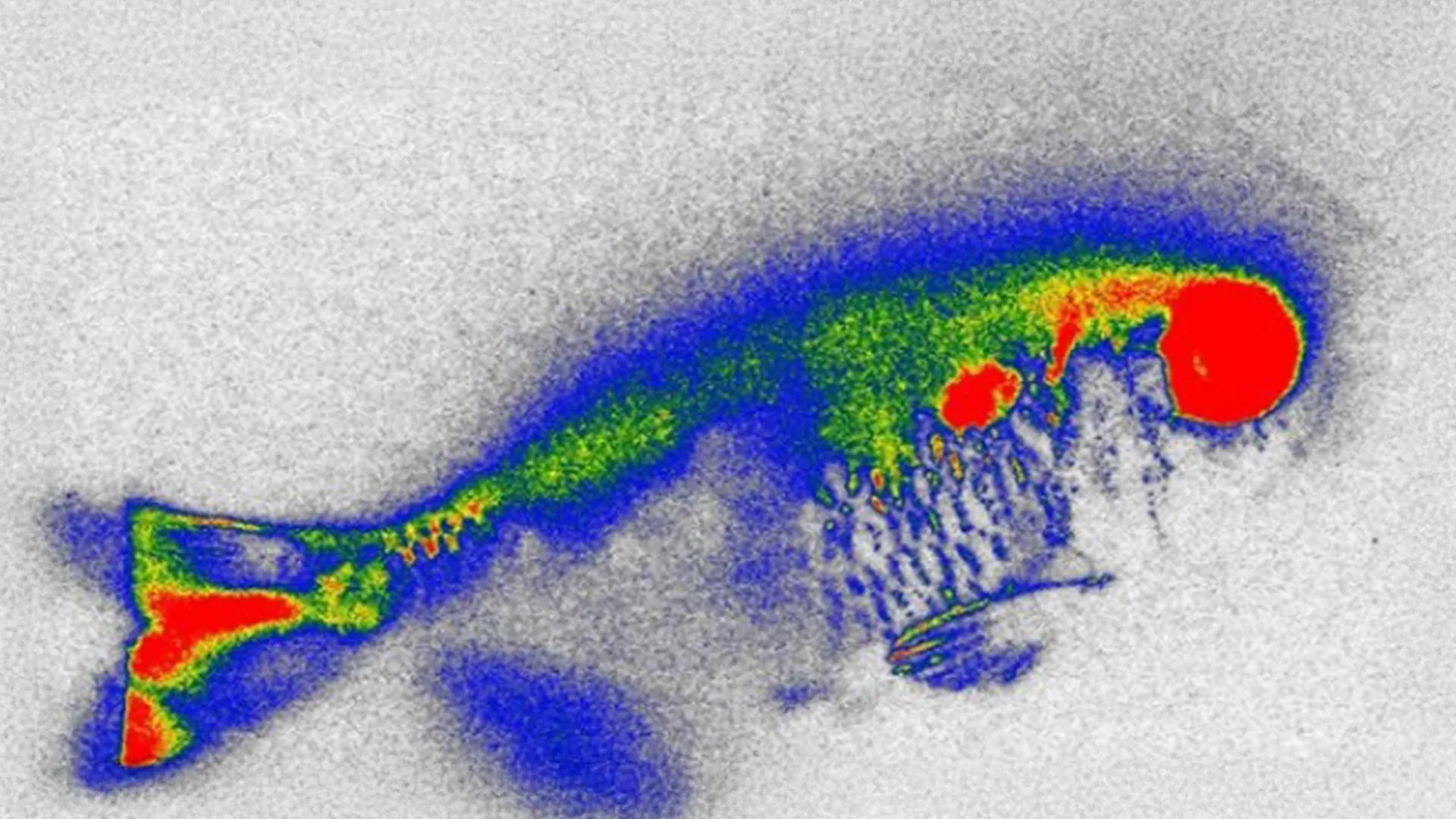
In control experiments, plants were exposed to both typical environmental concentrations and 100-fold higher levels of enrofloxacin and chloramphenicol. Compounds radioactively labeled with carbon-14 were used to precisely track how antibiotics move through water, plants, and fish.
“The results showed that Salvinia was highly efficient in removing enrofloxacin. In treatments with higher plant biomass, more than 95% of the antibiotic was removed from the water within a few days. Compound In the case of chloramphenicol, removal was slower and more partial: plants were able to remove 30% to 45% of the antibiotic from the water, with a half-life of 2 to 3 days. 16–20 days, indicating high persistence of the compound in the environment,” the researchers report.
Imaging techniques showed that antibiotics were mainly accumulated in plant roots, suggesting that root absorption and filtration play an important role.
Complex effects on fish exposure
One of the more challenging discoveries concerned how these antibiotics act inside the fish’s bodies. Experiments showed that reducing the amount of antibiotics in the water does not necessarily reduce the amount absorbed by fish.
Enrofloxacin tends to remain dissolved in water, is cleared relatively quickly by lambari fish, has a half-life of approximately 21 days, and has low accumulation in tissues. Chloramphenicol showed a completely different behavior. The virus persisted much longer in the fish’s body, with a half-life of more than 90 days and a strong tendency to accumulate in tissues.
existence of Salvinia auriculata We changed those dynamics. While the plant lowered the levels of antibiotics in the water, it could also increase the rate at which the fish absorbed the antibiotics. One possible explanation is that the plant changes the chemical form of the antibiotic, making it easier for fish to ingest it.
“This shows that using plants as ‘sponges’ for pollutants is not a simple matter. The presence of macrophytes changes the entire system, including the way organisms come into contact with pollutants,” Evangelista points out.
DNA damage and potential protection in fish
The study also investigated genetic damage in the fish. Chloramphenicol significantly increased DNA damage as measured by changes in blood cells such as micronuclei and other abnormalities. However, at that time Salvinia auriculata In the presence of , this damage was reduced and approached the levels seen in the control group. Regarding enrofloxacin, this plant did not significantly reduce genetic effects.
“The interpretation we propose is that in the case of chloramphenicol, the plants produce fewer genotoxic by-products or may release antioxidant compounds into the rhizosphere to reduce oxidative stress in fish, whereas enrofloxacin is chemically more stable and may produce persistent and potentially toxic metabolites whose effects are not neutralized by macrophytes,” the researchers comment.
The promise and limitations of nature-based solutions
Evangelista emphasizes that Salvinia auriculata Antibiotic contamination is not a simple solution. Although it shows promise, it also has important limitations. One concern is how plants manage pollutants once they have absorbed them. If biomass is not properly removed and treated, antibiotics can be released into the environment.
Still, aquatic plants may offer a low-cost, nature-based option to reduce pollution, especially in places where advanced treatment methods such as ozonation and other oxidation processes are too expensive.
“This study shows that the problem is real, measurable, and complex, and strategies to address it must consider not only pollutant removal but also its biological and ecological impacts,” the researchers conclude.
Growing environmental and public health concerns
“Detection of antibiotic residues in Piracicaba River water, sediment, and fish shows how harmful human activities can be. Microbial resistance to antibiotics can lead to the emergence of superbugs in the environment. “We have achieved positive results in the solution and have enabled a better understanding of the integrated functioning of aquatic ecosystems and the use of effective natural techniques for impact mitigation,” added Valdemar Ruiz Torniciero, Director of the Department. Co-author of Evangelista research and articles.
The radiolabeled molecules used in the study were provided by the International Atomic Energy Agency (IAEA).
