


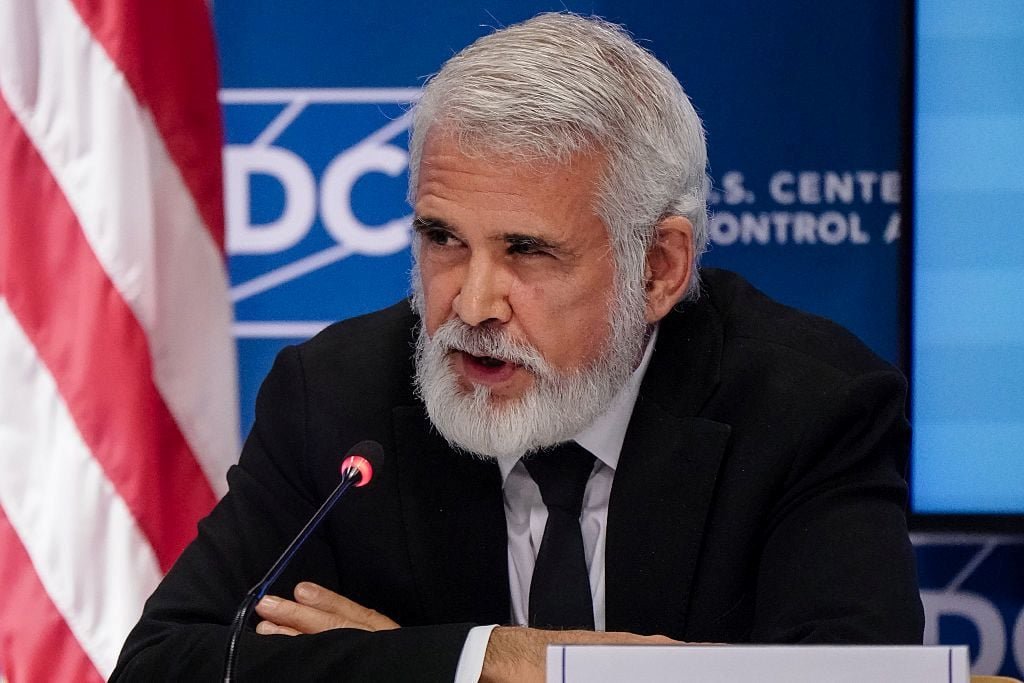
The situation at the CDC’s vaccine advisory committee was further thrown into turmoil this week when an outspoken member of the Advisory Committee on Immunization Practices (ACIP), whose appointment was invalidated by a federal judge on Monday, declared the group disbanded before later correcting his claims.
Dr. Robert Malone, who joined ACIP last summer as Secretary of Health Robert F. Kennedy Jr. dismantled and reassigned the entire commission, posted on Thursday X that “ACIP has been disbanded.”
“The government’s response to the AAP lawsuit and Judge Murphy’s injunction is to disband and reassemble a new ACIP committee, which would take less time than it would take to file and prosecute an appeal,” Malone wrote in his initial post.
Approximately five hours later, Malone posted again, explaining that the information he had received was a “miscommunication” and that “in fact, no decision has been made on how to proceed, and dissolution and reorganization remain among the options on the table.”
Malone’s post referenced Monday’s Boston ruling in which federal Judge Brian Murphy blocked a vote on RFK Jr.’s ACIP appointment and the committee’s subsequent vaccine recommendations to the CDC.
The ruling effectively halted the committee’s meetings scheduled for Wednesday and Thursday of this week in its current format, and also ruled that the CDC’s recent changes to the U.S. pediatric vaccine schedule are invalid under U.S. procedural law.
In an interview with The Wall Street Journal earlier Thursday, Malone told the news organization that he and other members of ACIP were informed that the committee would be disbanded and reconstituted. This position was echoed in a statement to CNN from a representative for ACIP Chair Kirk Milhoan, MD.
In statements to both the WSJ and CNN, an HHS spokesperson said any claims about ACIP’s next steps that do not come directly from the agency are “unsubstantiated speculation.”
The contradictory updates after Monday’s court ruling mark the latest example of turmoil at ACIP, whose meetings since RFK Jr.’s ouster have been controversial and frequently disrupted.
Meanwhile, Malone’s original post’s assertion that the government will take no action against the disparaging characterization of former ACIP members speaks to an apparent widening of the rift between Kennedy’s largely anti-vaccine MAHA movement and the broader Trump administration’s motives, an issue that Malone has already spotlighted in previous social media posts.
Earlier this month, the Journal reported that the White House is cracking down on messages and policies from HHS, including those related to vaccines, ahead of the U.S. midterm elections later this year. The decision to have Trump administration aides take a more active role within the department was made after polls found Kennedy’s various vaccine policies to be unpopular, anonymous sources told the Journal.
The public pushback from the White House also appears to be causing discord within President Kennedy’s “Make America Health Again” circle, which is currently pushing back against the administration’s efforts to put the vaccine issue to rest, according to Stat News.
In Monday’s ruling, Judge Murphy argued that certain appointments to ACIP may have been made in violation of the Federal Advisory Committees Act. At the same time, the changes to the pediatric vaccine schedule likely violated the U.S. Administrative Procedure Act.
Murphy criticized RFK Jr.’s appointment to the board, writing that the potential procedural failures in appointing new members show “the very reason the procedure exists, and that there is a substantial likelihood that the newly appointed ACIP will not be in compliance with applicable law.”
Meanwhile, HHS “looks forward to this judge’s ruling being overturned, as well as his other attempts to thwart the Trump administration,” agency spokesperson Andrew Nixon told Fierce earlier this week.
