


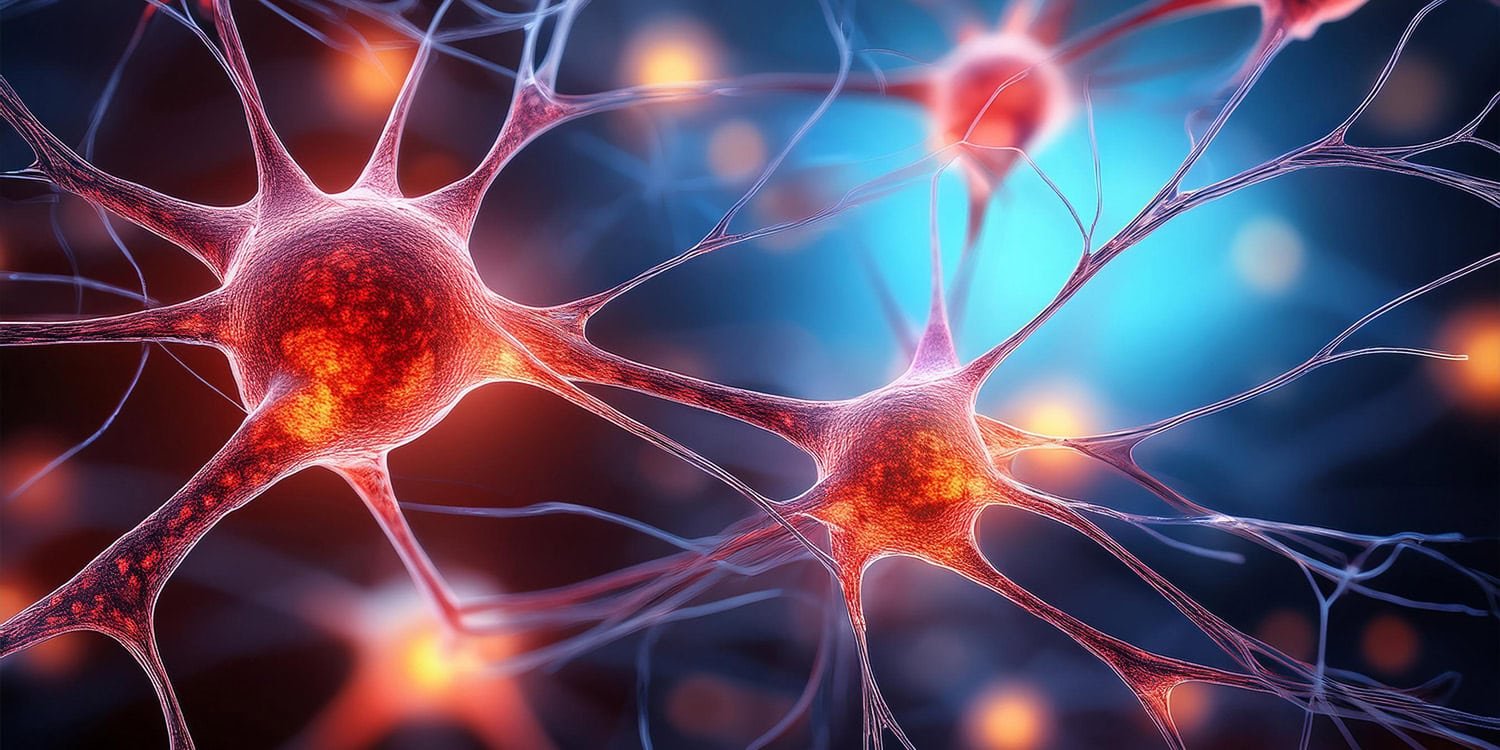
A new study suggests that a single dose of the psychedelic compound DMT can reverse symptoms of depression, such as anhedonia and decline in cognitive function, in mice exposed to chronic stress. The findings provide evidence that the drug helps repair brain circuits by promoting the healthy growth and integration of new neurons. The study was published in the journal translational psychiatry.
Major depressive disorder is a leading cause of disability worldwide. Traditional antidepressants, such as selective serotonin reuptake inhibitors, often take several weeks to become effective and fail to help a significant proportion of patients. This delay and lack of efficacy highlights the need for faster and more reliable treatment options.
In recent years, scientists have discovered that classic psychedelics can rapidly reduce symptoms of depression. One such compound is N,N-dimethyltryptamine, commonly known as DMT, which occurs naturally in a variety of plants and animals. It is also the main active ingredient in ayahuasca, a traditional infusion used in Amazonian rituals.
When administered alone, DMT causes an intense but very brief psychedelic experience that alters perception and mood. This drug works primarily by interacting with specific serotonin receptors in the brain, which are cellular structures that help regulate emotions.
But clinical enthusiasm for psychedelics has outpaced biological understanding of how they work. Much of the past animal research on DMT has focused on basic anxiety responses rather than the more complex and robust symptoms of depression.
“A major gap in psychedelic research is that clinical translation has progressed more rapidly than our understanding of the underlying biology and the conditions under which these compounds are actually useful,” said study author Thiago C. Murin, a researcher at Uppsala University in Sweden.
“In the DMT literature, while many animal studies have focused on anxiety-like outcomes, major depression is also characterized by anhedonia and cognitive impairment, which are often difficult to treat. We designed this study to test pure DMT in a well-established chronic stress model and ask whether behavioral recovery is coupled with measurable repairs in adult hippocampal neurogenesis and circuit integration.”
For the new study, the scientists used a sample of 48 male mice that were genetically modified to allow researchers to visually tag and track newborn neurons. Mice were exposed to a long-term stress model for 56 days. In this model, animals are exposed to unpredictable, mild daily stressors, such as tilted cages or changes in lighting, to induce a depression-like state.
The researchers divided the mice into experimental groups and tested different treatment timings and conditions. One group received a single injection of DMT at a dose of 30 milligrams per kilogram of body weight after the stress period ended. Another group received the same dose of DMT midway through the stress protocol on day 28.
A third group received DMT under isoflurane anesthesia to test whether a conscious psychedelic experience was required for the drug to work. For comparison, another group of stressed mice received daily doses of fluoxetine, a standard antidepressant, for 30 days. The researchers also maintained a control group of unstressed mice and a group of stressed mice that received only injections of inert saline.
To measure anhedonia, scientists tracked animals’ preference for sweet water over regular water. Stressed mice typically lose interest in sugar water and exhibit a loss of pleasure. To assess cognitive function, the researchers used a complex radial arm maze task that tests working memory and the ability to distinguish between different spatial patterns.
Scientists found that mice given DMT after a period of stress completely restored their preference for sugar water. These animals also showed improved cognitive performance in the maze task. In fact, a single dose of DMT showed better results than a standard 30-day fluoxetine treatment in most behavioral tests.
Mice treated with DMT also showed a significant reduction in behavioral hopelessness. The researchers measured this by temporarily suspending mice by their tails and then tracking how long they remained motionless. When the researchers looked at brain tissue, they observed changes that were consistent with these behavioral improvements.
Stressed mice given saline had fewer new neurons in the dentate gyrus, a specific subregion of the hippocampus. Many of these new cells were migrating to the wrong location. This abnormal ectopic integration of cells disrupts healthy brain signaling and contributes to symptoms of depression.
DMT treatment increased the production of new neurons in the hippocampus. The number of abnormally arranged cells was also reduced, and the proper structure of brain circuits was restored. Mice given DMT under anesthesia still showed behavioral and cellular benefits, suggesting that a conscious psychedelic experience may not be necessary to trigger brain repair.
The timing of administration appears to affect the specific effects. Mice that received DMT in the middle of a stress protocol showed protected mood behaviors but still suffered from cognitive impairment. This shows that the drug reopens the window of plasticity in the brain, and that environment and timing are central to full functional recovery.
“In mice exposed to long-term, unpredictable stress, a single dose of DMT improved behaviors associated with depression, including anhedonia and stress-related cognitive impairment,” Moulin told PsyPost. “Importantly, these behavioral improvements are consistent with changes at the brain level. In addition to effects on newborn neurons, we also observed a reduction in aberrant integration of neurons consistent with circuit-level repair. Although this is a preclinical study, it supports the idea that psychedelics may reinstate plasticity in a way that can be beneficial at the right time.”
There are some misconceptions to avoid. This preclinical study does not prove that a single dose of DMT instantly cures depression in humans. Although mouse models capture certain elements of mood and cognition, they cannot fully represent the complexity of human mental states.
“In this model, compared to the standard SSRI control (fluoxetine), the effects were particularly strong for anhedonia and the cognitive readout (pattern separation) we used,” Moulin explained. “However, murine effects often do not directly translate to clinical effects in humans, where dose, situation, and patient heterogeneity are important. I frame it as follows: the signal is strong and consistent enough to warrant deeper mechanistic studies and careful clinical trials, rather than as a claim for immediate clinical equivalence.”
Anesthesia results also require conservative interpretation. Although the anesthetized mice still experienced effects, the effects of the drug were somewhat attenuated, suggesting that the subjective psychedelic experience may still play a role in maximizing treatment outcomes. Because isoflurane anesthesia can have unique effects on the brain, it is difficult to completely isolate the effects of DMT.
Only male mice were used in this study, as certain stress models are less consistent in female mice with this genetic background. Future studies should also include female subjects to determine whether these biological responses differ by gender. Scientists also hope to elucidate the exact molecular pathway by which the drug activates and explore alternative delivery methods to human patients.
“We are working to connect the dots, from receptor activation to circuit changes and behaviors, to map the ‘window of plasticity’, when interventions are most helpful,” Moulin said. “We also want to use non-invasive behavioral tracking to get a better translational readout of psychedelic states in animals. In parallel, we are exploring delivery strategies that are more clinically relevant than injections.”
“One point we think is important is that our findings suggest that the benefits of the plasticity window depend on timing and context. In our model, DMT was able to prevent mood-related symptoms during ongoing stress, but The strongest cognitive relief appeared when administration occurred after the end of the stress protocol, reinforcing the idea that increased plasticity creates an opportunity for change, but whether that change leads to functional recovery may depend on the surrounding context.
The study, “Single-dose DMT reverses anhedonia and cognitive impairment via restoration of neurogenesis in a stress-induced depression model,” was authored by Rafael V. Lima da Cruz, Rêmullo BG de Miranda Costa, Gabriel M. de Queiroz, Tijana Stojanovic, Thiago C. Moulin, and Richardson N. Leão.
