


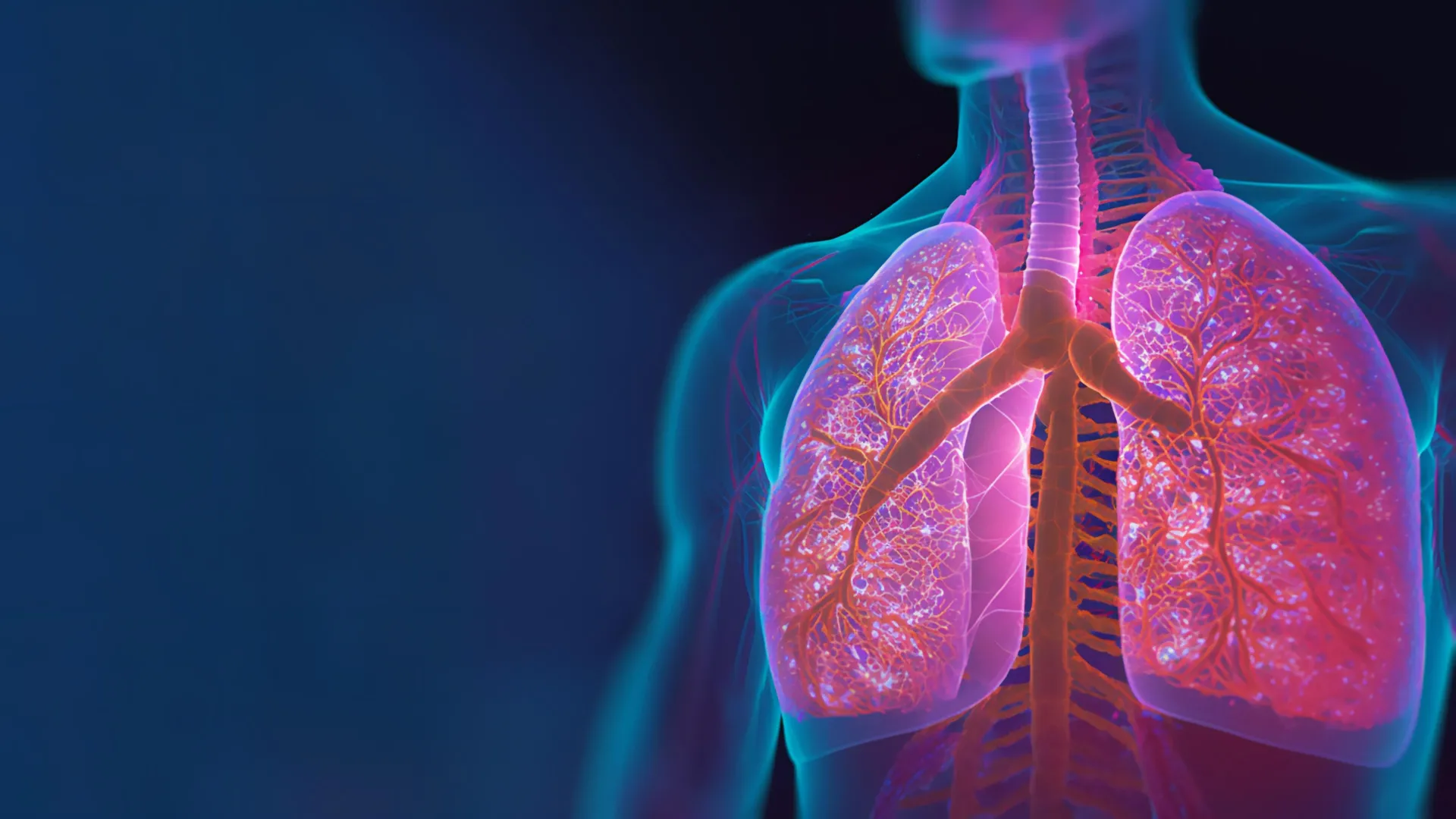
Severe cases of COVID-19 and influenza may cause more than just short-term illness. New research from UVA Health’s Beirne B. Carter Center for Immunology Research and the UVA Comprehensive Cancer Center suggests that severe viral infections can create conditions in the lungs that promote cancer development and progression. The study also found that vaccination can prevent many of these harmful effects.
Researchers led by UVA School of Medicine scientist Dr. Jie Sun have found that severe respiratory infections can change immune cells in the lungs, promoting tumor growth months and even years later. Based on these findings, scientists recommend that doctors closely monitor patients who have recovered from severe coronavirus, influenza, or pneumonia to help detect lung cancer early, when treatment is most effective.
“Severe cases of COVID-19 and influenza can cause the lungs to go into a long-term ‘inflammation’ state, which then makes it easier for cancer to take hold,” said Sun, co-director of the UVA Carter Center and a member of UVA’s Department of Infectious Diseases and Global Health. “The encouraging news is that vaccination largely prevents harmful changes to cancer growth in the lungs.”
Severe respiratory infections and long-term lung damage
Respiratory illnesses such as influenza and coronavirus are among the most common causes of lung damage. However, scientists do not fully understand how this type of damage may affect cancer risk years later. To explore this question, Sun and his team studied the effects of severe lung infections in both laboratory mice and human patients.
The results were amazing. Mice that experienced severe lung infections were more likely to later develop lung cancer and more likely to die from lung cancer. When researchers analyzed patient data, they found a similar pattern. People who had previously been hospitalized with COVID-19 were more likely to be diagnosed with lung cancer.
The analysis revealed a 1.24-fold increased incidence of lung cancer in patients hospitalized with COVID-19. This increased risk was seen regardless of whether the person smoked or had other medical conditions, which doctors call “comorbidities.”
“These findings have important immediate implications for how we monitor patients after severe respiratory viral infections,” said UVA physician-scientist Jeffrey Sturek, MD, who collaborated on the study. “It has long been known that things like smoking increase the risk of lung cancer. Our findings suggest that we may need to think about severe respiratory viral infections in a similar way. For example, for some patients who are at high risk for lung cancer due to a history of smoking, we recommend close monitoring with routine screening CT scans of the lungs to detect cancer early. Future studies may consider similar approaches after severe respiratory viral infections.”
Immune changes that create a tumor-promoting environment
Experiments in mice helped researchers understand why severe infections increase the risk of cancer. The researchers observed significant changes in immune cells known as neutrophils and macrophages, which normally help protect the lungs.
After a severe infection, some neutrophils began to behave abnormally, contributing to a persistent inflammatory environment called a “preneoplastic” that promotes cancer growth. Scientists also found significant changes in the epithelial cells lining the lungs and the tiny air sacs that control breathing.
Vaccination may protect lungs
The study also had encouraging findings regarding prevention. Previous vaccinations appear to have blocked many of the lung changes associated with cancer development. Vaccines help the immune system respond more effectively to infections and reduce the severity of the disease.
Researchers observed an increased risk of cancer primarily in people with severe COVID-19 infection. People who experienced only mild infections did not see this increased risk, and their lung cancer rates actually decreased slightly.
Still, scientists warn that many people who survive severe coronavirus infections and other serious respiratory infections may be at increased risk of developing lung cancer in the future.
“These findings have important implications for clinical care, as tens of millions of people around the world experience long-term sequelae of lung disease (COVID-19),” the researchers said in a scientific paper. “People recovering from severe viral pneumonia, especially those with a history of smoking, may benefit from enhanced lung cancer surveillance, and prevention of serious infections through vaccination may provide indirect cancer protection.”
Early detection and impact on treatment
Sun and his colleagues hope their study will help doctors better identify patients who may be at increased risk of lung cancer after a severe respiratory infection. Early detection allows treatment to begin sooner, potentially improving patient outcomes.
The research team also believes their findings could help develop new strategies to prevent or treat lung cancer associated with previous lung infections.
“Our goal is to help doctors identify people at high risk for lung cancer after a severe infection and develop targeted ways to prevent and treat lung cancer after previous pneumonia,” Sun said. “We also believe that vaccines may not only prevent acute hospitalization after viral infection, but also reduce the long-term effects of serious infections, such as immune scarring, which can increase the risk of cancer.”
Advancing biomedical research at UVA
Improving the understanding and treatment of complex diseases is the core mission of UVA’s Paul and Diane Manning Institute for Biotechnology. The institute is focused on accelerating innovative research like Sun’s work and helping translate lab discoveries into new treatments more quickly.
UVA’s Beiln B. Carter Immunology Research Center (CIC) was established through the generosity of Beiln B. Carter, and the Beiln Carter Foundation continues to support its research efforts. CIC scientists study infectious diseases, cancer, cardiovascular disease, chronic lung disease, the microbiome, and autoimmune diseases to develop new treatments and treatments.
UVA Comprehensive Cancer Center is one of only 57 cancer centers in the United States to receive the “Comprehensive” designation from the National Cancer Center, recognizing excellence in patient care and advanced cancer research.
Research results published in Cell
Sun and his collaborators published their findings in a scientific journal. cell. The research team includes Wei Qian, Xiaoqin Wei, Andrew J. Barros, Xiangyu Ye, Haibo Zhang, Qing Yu, Samuel P. Young, Eric V Yeatts, Yury Park, Chaofan Li, Sijie Hao, Gislane Almeida-Santos, Jinyi Tang, Harish Narasimhan, Nicole A Kirk, Valeria Molinary, Ying Li, Li Li, Bimal N. Desai, Peter joined us. Chen, Kwong-shik Park, Annie Xiaobo, Jeffrey M. Sturek, Wei Chen, Yin Souchong, and Sun.
Research funding was provided by the National Institutes of Health under grants AI147394, AG069264, AI112844, HL170961, AI176171, AG090337, R01HL179312, F31HL170746, T32AI007496, T32CA009109; R01AI155808 and R01HL162783; UVA Comprehensive Cancer Center Collaboration Grant, U01CA224293. UVA Pin Scholar Award. UVA Shannon Fellowship. UVA Comprehensive Cancer Center Pulmonary TRT Pilot Grant. American Lung Association Catalyst Grant, T32GM139787-01. UVA Parsons Weber Parsons Fellowship.
