


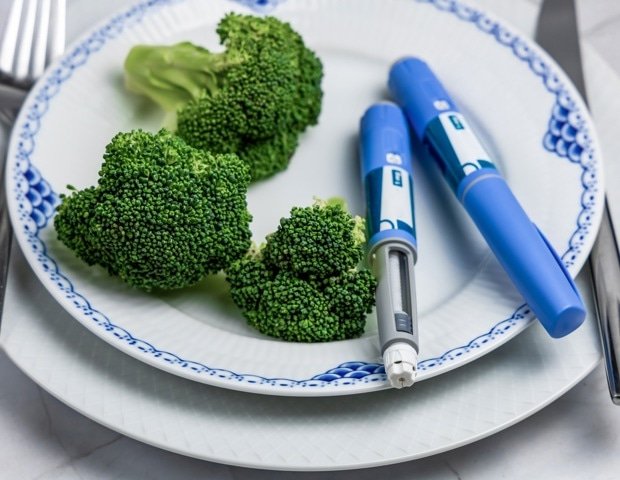
Wegovy, a GLP-1 agonist for weight loss, may have the highest risk of “ocular stroke” (ischemic optic neuropathy) and sudden loss of vision of the semaglutide drug. British Ophthalmological Journal.
Analysis shows that the risk for Wegovy is almost five times higher than for Ozempic and three times higher for men than for women.
Ischemic optic neuropathy (ION for short) is caused by insufficient or blocked blood flow to the optic nerve, causing sudden vision loss in one or both eyes.
Although rare, IONs have recently been associated with GLP-1 receptor agonists, particularly semaglutide, sold as Wegovy, Ozempic, and Rybelsus, which is used in a variety of ways to treat obesity, diabetes, and reduce the risk of cardiovascular disease, the researchers explained.
To determine whether the risk of ION may be associated with specific drugs, researchers analyzed warnings about unintended adverse side effects related to drugs submitted to the U.S. Food and Drug Administration’s (FDA) Adverse Event Reporting System (FAERS) from December 2017 to December 2024.
The researchers focused on IONs associated with Ozempic, a weekly injectable dose of up to 2 mg for type 2 diabetes. For obesity, receive up to 2.4 mg of Wegovy injection (the highest approved dose) weekly, and for type 2 diabetes, receive one tablet of Rybelsus per day.
Also included were weekly injections of the GLP-1/GIP dual agonist tirzepatide for the treatment of obesity and diabetes, which were analyzed by composite category and indication. Zepbound (for obesity).
Of the 30,668,520 unintentional adverse side effects reports, 31,774 were related to semaglutide. The average age of recipients was 56 years, and more than half (54%) were women.
Of these reports, 3,070 were from Wegovy, originating from six countries on three continents, and 20,608 were from Ozempic, originating from 11 countries on four continents.
Ozempic generated about seven times as many reports as Wegovy due to its early approval in 2017. Wegovy was launched in 2021.
However, despite this difference in quantity, Wegovy was most strongly associated with ION (28 reports, high odds of about 75), outperforming Ozempic (47 reports, high odds of about 19) and the generic form of semaglutide (85 reports, high odds of about 21).
ION has not been reported in association with Rybelsus. And when using the comparator drug, there were no signals of a possible causal relationship between the drug and the unintended side effects.
When stratified by gender, the highest signals were Wegoby (116 odds higher) for men and Ozempic (approximately 27 odds higher) for women.
Further analysis then showed that the odds of ION were nearly five times higher in Wegovy than Ozempic, and more than three times higher in men than in women.
Injectables are faster acting than tablets, and the researchers note that differences in route of administration, dosage, and indications “may influence prescribing patterns and safety signals, with higher doses of Wegovy possibly predisposing to optic nerve hypoperfusion (insufficient blood supply) due to intravascular volume constriction, hypotension (hypotension) with nocturnal hypotension and autonomic instability, leading to a stronger association, although no direct clinical relevance has been established.”
“In contrast, the limited uptake and slow uptake of Libersus likely explains the absence of detectable signal,” they added.
They suggested that media attention may have influenced coverage of Wegovy and emphasized that the FDA’s reporting system hindered the ability to determine the true incidence or assess whether reports were clustered after the regulator became aware. There was also no information on comorbidities or disease severity.
Nevertheless, “this study provides the first evidence of formulation- and dose-dependent ION risk and represents the strongest association observed in Wegovy,” the researchers wrote, concluding that “these findings highlight potential dose-dependent safety concerns and warrant urgent prospective evaluation to guide prescribing and regulatory policy.”
The author of the linked commentary agrees with this. “These findings join a growing body of emerging literature reporting ocular complications from (anti-obesity drugs) and warrant further scrutiny and urgent clarification for ophthalmologists,” the researchers wrote.
The researchers suggest that the use of these drugs will continue to rise, highlighting that “the UK has the highest obesity rate in Western Europe (29% of adults are obese and 64% are overweight or obese)”.
The researchers added that anti-obesity drugs “have further potential for use as studies have shown that they are effective not only in dementia but also in cardiovascular diseases such as stroke, making them considered first-line options for some of these conditions.”
“Further complicating matters, the increased use of[anti-obesity drugs]in children, usually over the age of 12, has generated considerable debate and may possibly increase the risk of ocular complications later in life,” the researchers suggest.
Recent clinical studies on these drugs highlight that “while they appear to offer new hope for some diseases, such as age-related macular degeneration and uveitis, they carry the potential risk of rare but serious ocular complications (such as ION) in other diseases.”
sauce:
Reference magazines:
Lakhani, M.et al. (2026). Semaglutide-induced ischemic optic neuropathy: an overall observational analysis of gender- and formulation-specific risks. British Ophthalmological Journal. DOI: 10.1136/bjo-2025-328483. https://bjo.bmj.com/content/early/2026/03/02/bjo-2025-328483
