


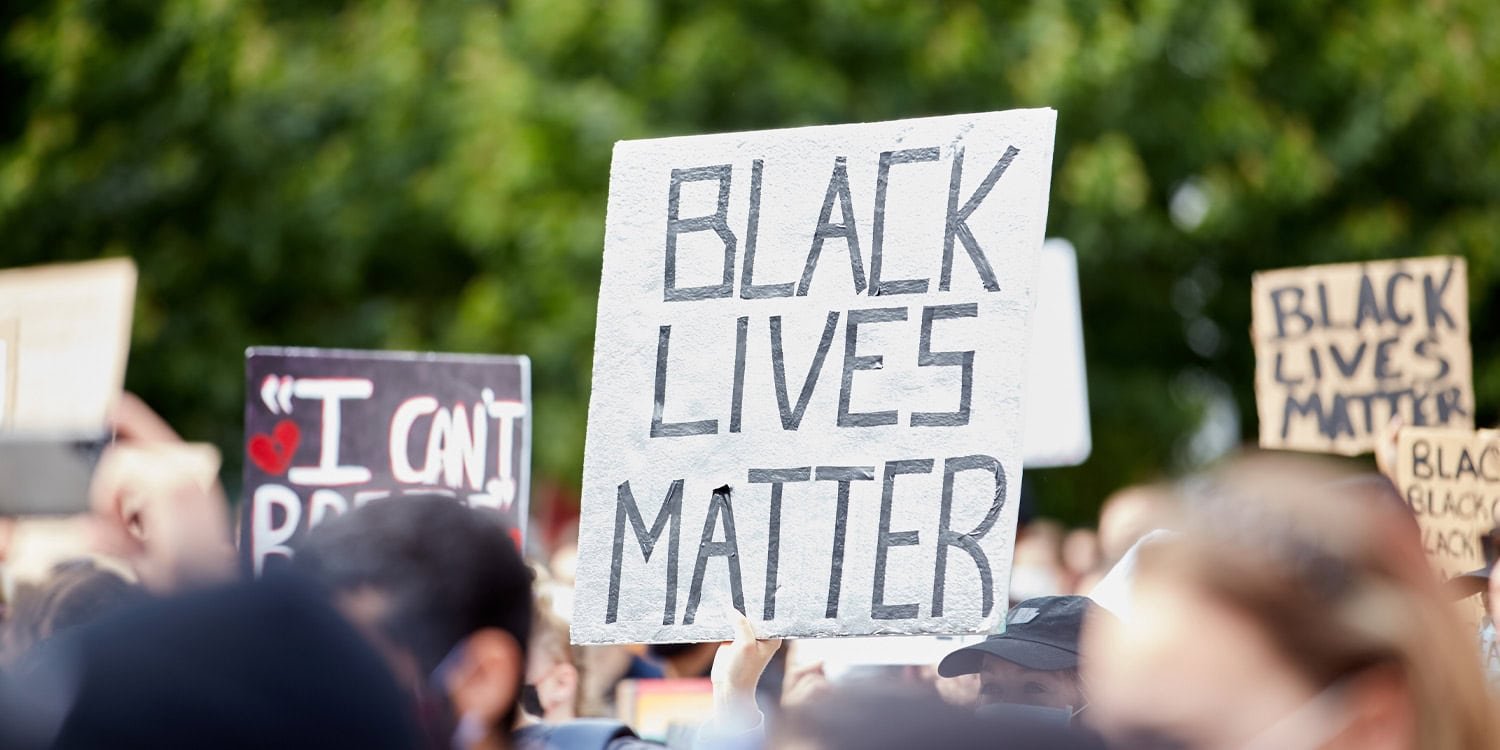
Recent research published in journals political action The results suggest that the 2020 Black Lives Matter protests significantly increased the Democratic vote share in that year’s presidential election. In addition to encouraging existing supporters to vote, this study provides evidence that peaceful mass mobilization can change public attitudes toward racial inequality. The protests initially sparked a conservative backlash, but this response eventually turned into an increase in progressive support by November.
The authors of the new study sought to understand exactly how large public demonstrations affect election outcomes. Previous research provides conflicting views on whether protests advance or hinder movement goals. Peaceful protests often resonate and tilt public opinion toward the demands of participating groups.
At the same time, severely disruptive protests may sway voters toward conservative politicians who emphasize law and order. The Black Lives Matter demonstrations of spring 2020 were among the largest mobilizations in U.S. history. Because the movement faced both widespread support and intense criticism, scientists wanted to measure how this large-scale collective action affected voters’ choices at the polling places.
“Interestingly, around the time of the 2020 election, we were talking with our coauthors about whether protests had any impact on election outcomes, and we ended up writing a paper about it. More substantively, the 2020 BLM protests were one of the largest mass action movements in U.S. history, with an estimated 15 million to 26 million participants,” said study author George Melios, a researcher at the London School of Economics.
“However, there is an ongoing debate in political science about whether protests ultimately help or hurt the cause. Some studies show that protests generate support for protesters’ goals, while others suggest that violent protests can cause a backlash. We wanted to provide causal evidence of how this historically unprecedented movement affected actual election results.”
To measure these political changes, researchers analyzed data from 3,053 of the 3,139 U.S. counties. Researchers focused on the two weeks immediately following George Floyd’s death, specifically from May 26, 2020 to June 7, 2020. The scientists used protest attendance records from the Crowd Counting Consortium, an organization that tracks public demonstrations across the country.
They combined this information with county voting records from the 2012, 2016, and 2020 presidential elections. Because people in areas with large Democratic populations are simply more likely to protest, researchers needed a way to distinguish between existing political trends and the actual impact of demonstrations. To do this, they used regional daily rainfall data from the National Oceanic and Atmospheric Administration.
Rainfall acts as a natural, random event that deters people from protesting, but is otherwise unrelated to the county’s political climate. Researchers investigated how unexpected rain during a two-week protest period reduced the size of demonstrations. We then calculated how the weather-related decline in protest participation affected local voting patterns in the November election.
To test their findings, the scientists also used statistical methods to compare changes in voting patterns between counties where protests occurred and counties where protests did not occur. This method assumes that, absent the protests, voting trends in both counties would have continued to trend similarly.
They also analyzed survey responses from a Gallup public opinion panel involving 85,106 adults. The poll was conducted daily from March to August 2020. By analyzing these daily responses, researchers were able to track how political identity changed from week to week.
Researchers found that Black Lives Matter protests caused a clear leftward shift in local voting behavior. In counties with at least one protest, Democratic vote share increased by an estimated 1.2 to 1.8 percentage points. In a county with 100,000 voters, this change would add approximately 1,200 to 1,800 votes to the Democratic presidential candidate. The researchers say a change of this magnitude is very meaningful in an election with close margins in key states.
The data suggests that this shift occurred because the protests simply increased overall turnout. The researchers tested whether the protests changed the total number of votes cast by voters and found no significant effect. If anything, the protests appear to have genuinely changed the minds of independent and moderate voters.
Research shows that protests have been successful in changing local attitudes towards historical and contemporary discrimination. After the demonstrations, fewer people agreed with the statement that black Americans should be promoted without special benefits. At the same time, more people agreed that historic slavery created continuing conditions that made it difficult for Black Americans to succeed in modern society. This shift in perspective appears to have a direct impact on decisions at the voting booth.
“To put this specifically, in a county of 100,000 voters, our estimates are that the protests shifted roughly 1,200 to 1,800 votes to Biden,” Melios told SciPost. “With protests occurring in 40% of U.S. counties, these effects are cumulative. Consider that Biden won Georgia by about 12,000 votes and Arizona by about 10,500 votes. However, variations across multiple counties may explain this. So while a 1.5 percentage point variation may seem modest, it is potentially decisive in a closely contested election in a key state.”
Scientists also noticed unexpected patterns over time in terms of public response. Survey data in the immediate aftermath of the protests showed that people were temporarily less likely to identify as a Democrat. Researchers suggest that this initial conservative backlash was likely a reaction to media reports of property damage and violent disorder.
However, in the weeks and months that followed, this initial rebound was completely reversed. As the impending unrest fades from the news cycle, voters appear to be thinking more deeply about the core issues of racial injustice and police brutality. By the time the November election approached, this remorse led to an increase in support for the Democratic Party.
“The movement in time was unexpected,” Melios said. “Immediately after the protests, we observed suggestive evidence of a conservative backlash, namely increased awareness of the Republican Party in protest areas. However, in the weeks that followed, the situation completely reversed, ultimately producing the progressive changes observed in the November elections. This highlights that assessing the effectiveness of protests can depend heavily on when the results are measured.”
The researchers also found that protests tended to have the strongest impact on elections in smaller counties with larger white populations and lower average education levels. In the centers of large cities, local protests can easily blend into the background of everyday urban life.
In small communities, local protests are highly visible events. Seeing your neighbors participating in a demonstration can give other residents a strong impression that racial inequality is a pressing issue in your community. Although these findings are detailed, the researchers note several potential limitations to the study.
“Mass mobilization (in times of peace) can meaningfully shape elections,” Melios explained. “The BLM protests not only mobilized existing Democratic voters, but by changing people’s attitudes about racial inequality, they truly changed political preferences. Perhaps most importantly, timing is key. We saw an initial backlash immediately after the protests, but by November there was an eventual reversal and an increase in Democratic support.”
As with all research, there are some caveats to consider. The analysis primarily captures how national media coverage affected voting in specific local counties where protests occurred, rather than measuring how it affected the country as a whole.
The rainfall-based analysis also specifically pinpoints the impact of weather conditions on protest turnout where they actually affected turnout. This particular focus means that the findings may not fully apply to highly politically active regions where people protest regardless of the weather.
As for future research, “we are interested in whether these findings generalize to other protest movements, countries, and historical periods,” Melios told Cypost. “It also remains an open question whether the BLM movement has achieved its primary objective of promoting fairer treatment in the criminal justice system, and this is an important area for future research.”
“Our results are encouraging for peaceful collective action. While the immediate aftermath of a protest can be chaotic and cause a short-term backlash, sustained mobilization can ultimately meaningfully change both attitudes and electoral outcomes.”
The study, “Weather of Protests: The Impact of Black Lives Matter Protests on the 2020 Presidential Election,” was authored by Buk Klein Teesling and Georgios Melios.
