


Ethics guardrails surrounding chemical appointees at the agency are expiring as President Donald Trump pushes for deregulation at the agency.
The “cooling-off” or recusal period for top executives at the EPA’s Office of Chemical Safety and Pollution Prevention (typically the year after political officials are barred from serving in government and speaking to former clients) began to end in January. More revocations are expected this summer and fall, according to a review of ethics documents obtained by POLITICO’s E&E News.
It’s one of the few restrictions on leadership within the EPA’s chemical division, which members of the Make America Healthy Again movement have accused of being too close to the industry insiders it’s supposed to regulate.
“We need to stop acting as if these rules are appropriate and grapple with the fact that the people who lobby to expose people to more known carcinogens should not be overseeing regulations that are meant to protect public health,” said Alexandra Muñoz, an independent toxicologist and MAHA activist. “No impartiality decision can change that fundamental conflict.”
Richard Painter, who once served as chief ethics lawyer to former President George W. Bush, said long after the recusal period ended that he advised his then-appointees to avoid contact with their former employers while in office.
“We didn’t like it. It just looked really vulgar,” Painter said. “And here we are. This speaks to the fact that we have in some ways scaled back our code of ethics and compliance.”
In response to questions for this article, EPA spokeswoman Bridget Hirsch said that every policy the agency advances has consequences for “all Americans,” including “protecting the environment and improving health and quality of life across the country.”
“That includes seeking input from doctors, scientists, parents, farmers, and ranchers across this country to advance the President’s ‘Making America Healthy (MAHA)’ agenda grounded in common-sense policies and ultimate science,” Hirsch said.
Federal law prohibits appointees from participating in “certain matters” involving former employers or customers during the cooling-off period, according to EPA records released under the Freedom of Information Act. This means they should not be included in emails, asked to attend meetings, or make recommendations on issues that affect their past affiliations.
EPA also shared a statement from Justina Few, director of the agency’s Office of Ethics.
“Examples of specific party matters at EPA include permits, registrations, contracts, grants, litigation, enforcement actions, investigations, etc.,” Few said. “To be clear, this federal ethical obligation to refuse does not apply to certain matters of general application, such as rulemaking, general issues, or policy issues.”
Painter, now a law professor at the University of Minnesota, said it was “remarkable” that despite the ethics rules, appointees “already have extraordinary influence over the content of regulations.”
“People who were allowed mass entry into the government from regulated industries deregulated the industry from day one,” he added.
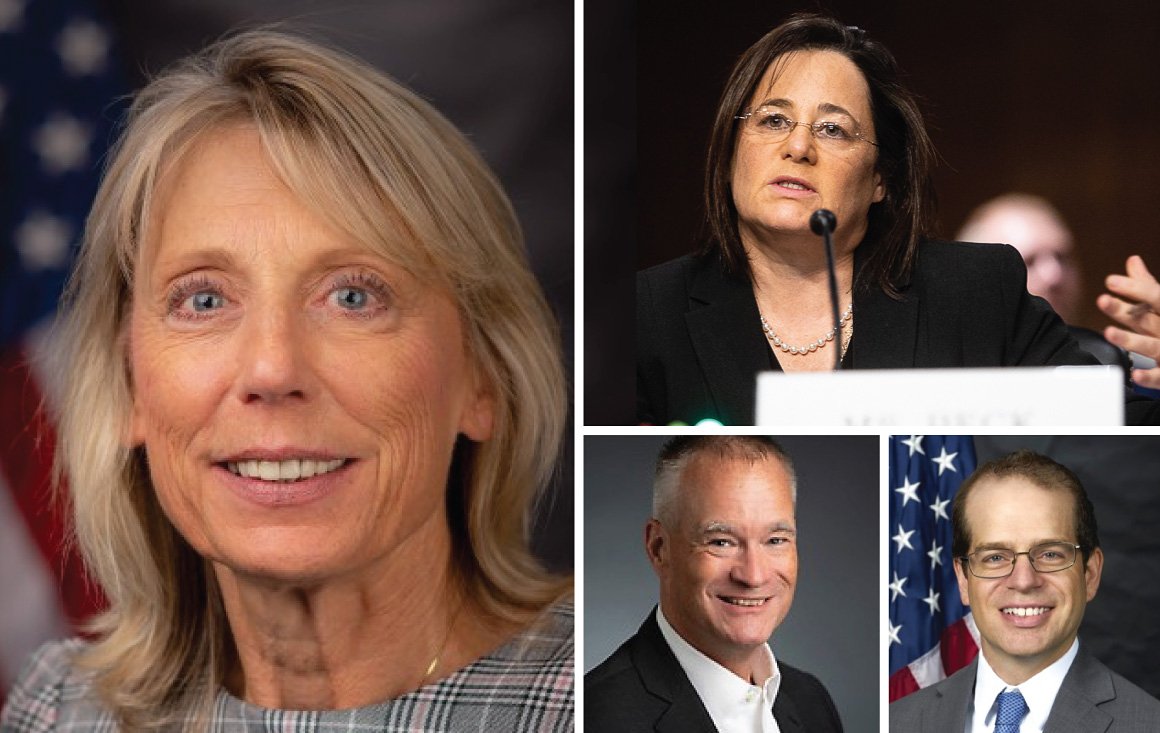
Nancy Beck, principal assistant secretary in the EPA’s Office of Chemicals, ended a cooling-off period over the last year for about 30 former customers, including the American Petroleum Institute, Olin Corp., Scotts Miracle-Gro Inc. and Syngenta. Her last contract with her former employer, the law firm Hunton Andrews Cruz, ended on January 19, according to her revocation statement from June last year.
Beck’s latest denial, dated Jan. 22, rescinds her “ethical obligations” regarding her former employer and clients “under now-expired federal fairness regulations.”
Lynn Dekleba’s recusal from her former employer, the American Chemistry Council, lasted until January 16th. She is the deputy assistant administrator for chemicals programs and, like Beck, worked at the EPA during the first Trump administration.
Delaney Marsko, director of ethics at the Campaign Legal Center, said once an employee’s cooling-off period ends, they can interact with their former employer and participate in issues involving the organization.
“That doesn’t necessarily mean you should do that,” Marsko said. “We are still bound by extensive ethical regulations and standards of conduct and must avoid any appearance of wrongdoing.”
The EPA statement did not address questions about whether Mr. Beck and Mr. Decleba will continue to refrain from interacting with their former employers at the EPA.
Craig Holman, a government affairs lobbyist at the watchdog group Public Citizen, said Trump has not reinstated the ethics pledge for appointees from his first term, when the cooling-off period was two years instead of one. Instead, this time the president is relying on “old-fashioned and ineffective” conflict of interest laws.
“Very little remains of the revolving door policy of the second Trump administration,” Holman said. “A year later, officials are free to meet with former employers and clients on lobbying and policy-making matters.”
Additional supporters with industry connections
The avoidance period for other political appointees in EPA’s Office of Chemicals ends later this year.
Kyle Kunkler, deputy assistant secretary for pesticide management, has until June 27 to resign from his former employer, the American Soybean Association, according to ethics documents.
Kirby Tyndall is the senior advisor for the chemicals program. A cooling off period for more than 30 of her former clients, including Eastman Chemical, Exxon Mobil and the New Mexico Oil and Gas Association, began to end last November, according to her recusal statement. Her final stint with her former employer, the consulting firm GSI Environmental, is scheduled to end on September 9th.
Tyndall and his spouse have also been given a certificate of sale so they can sell the property in accordance with ethics laws. These include shares in Chevron, Exxon Mobil, and Marathon Petroleum.
Douglas Troutman, head of the EPA’s Bureau of Chemicals, has had the longest wait time of any other appointee. According to his recusal statement, the deputy manager must distance himself from his former employer, the American Institute of Cleaning, until September 10, 2027.
Federal law requires a cooling-off period of two years instead of one because Mr. Troutman received bonus payments from ACI. The cleaning products industry group gave Troutman half of his retention bonus of $20,000 before leaving for the EPA, according to financial disclosure reports.
As a Senate-confirmed appointee, Mr. Troutman signed a Certificate of Compliance with the Ethics Agreement.
Waivers were handed out ‘like Halloween candy’
There are no exceptions to the period of non-attendance. In some cases, the EPA has allowed its employees to work on issues they previously handled for former clients.
Beck has received eight fairness decisions. This is permission granted by ethics authorities to allow individuals to participate in litigation, rulemaking, and other work involving past clients.
“Having concluded that the U.S. government’s interest in your participation outweighs any concerns about your impartiality, I authorize you to participate fully in this particular party issue,” Beck’s commitment statement reads.
Marsco, of the Campaign Legal Center, said the fairness decision was “generally a good thing.”
“This is exactly what we want people to do,” Marsko said. “We want people to contact ethics officers about potential conflicts of interest. We want ethics officers to act in a manner that documents their advice and explains the reasoning behind it.”
Others had a different assessment. Kyla Bennett, director of science and policy at the Environmentally Responsible Civil Service, said ethics rules were “in place for a reason” and “should be mandatory”.
“The Office of Ethics hands out these exemptions like Halloween candy,” Bennett said. “The Trump administration is not playing by the rules, and the Office of Ethics is condoning their misconduct, which is appalling.”
Beck’s decision allowed her to delve into legal arguments regarding Toxic Substances Control Act rules regarding methylene chloride. Trichlorethylene, twice. Toxic substance release inventory; perchlorethylene and carbon tetrachloride, also twice. Data reporting requirements. The same goes for the risk assessment of certain phthalates.
Many of Beck’s former clients are involved in lawsuits challenging the same regulations. For example, chemical manufacturer Olin sued the EPA over at least three of these rules: trichlorethylene, perchlorethylene, and carbon tetrachloride.
Mr. Beck’s intervention in a particular rule – the existing chemical review framework that lays the foundation for major chemical regulations under TSCA – caught the attention of prominent leaders in the MAHA movement, who called on advocates to comment on proposed changes to prevent the EPA from “letting big chemicals rewrite the rules.”
The proposed rule received more than 3,000 comments. The Biden administration’s version of the framework received 369 comments. Not finalized yet.
Meanwhile, Dekleba received seven fairness decisions from the EPA. They were so she could work with methylene chloride. Trichlorethylene, twice. T.R.I. Perchlorethylene and carbon tetrachloride. Asbestos; 1,3-butadiene as well.
“The bottom line is these approvals should be very rare,” Painter said. But the Trump administration is trying to put a chemical insider at the EPA to loosen regulations, he added.
“Then they’re going to hand out these exemptions,” Painter said. “We’re going to get more.”
In many cases, the EPA issued permits to both Beck and Decleba to work on the same chemical regulations on the same day.
Democrats pursue EPA ethics
With the flexibility to participate in common issues, Mr. Kankler was able to tackle dicamba, the herbicide targeted by MAHA, which he had pursued as a lobbyist for the American Soybean Association, without making an impartiality judgment.
Deputy Administrator Travis Boyles said in an email released under FOIA that he was the “OCSPP lead on this matter” as of July 10 of last year.
Muñoz and other MAHA supporters call this “evidence” that the EPA remains captive to corporate interests, despite the White House’s first MAHA commission report denouncing industry influence in government science.
This “massive hypocrisy” has caught the attention of lawmakers such as Sen. Jeff Merkley (D-Ore.), who sent a letter to the EPA on Thursday questioning the ethical obligations of OCSPP employees.
Hirsch, the EPA spokesperson, said the E&E News report shows the agency’s leadership is “following the letter of the law without exception.”
“Our team is committed to upholding the highest ethical standards while implementing President Trump’s vision for a healthier and stronger America,” said Hirsch. “Unlike the previous administration’s backroom deals, the Trump EPA is accountable to the Constitution, the law, and the American people.”
Public Citizen’s Holman said ethics regulations are less relevant in Trump’s second term, when misconduct is neither monitored nor enforced.
“If a news organization exposes a violation, there could be an embarrassing suspension under the Trump administration,” Holman said. “However, no enforcement action has yet been taken regarding a number of conflict of interest scandals.”
Maddy Alexander contributed to this report.
Contact reporters at Signal’s KevinBogardus.89 and eborst.64.
