

Close Menu

    Subscribe to Updates

    Get the latest creative news from FooBar about art, design and business.

    What's Hot

    Yellowstone wolves may not have reshaped the national park after all

    June 14, 2026

    Scientists discover parrots may actually use names

    June 14, 2026

    Why middle age is becoming a breaking point in the United States

    June 14, 2026
    Facebook X (Twitter) Instagram
    Facebook X (Twitter) Instagram
    Health Magazine
    • Home
    • Environmental Health
    • Health Technology
    • Medical Research
    • Mental Health
    • Nutrition Science
    • Pharma
    • Public Health
    • Discover
      • Daily Health Tips
      • Financial Health & Stability
      • Holistic Health & Wellness
      • Mental Health
      • Nutrition & Dietary Trends
      • Professional & Personal Growth
    • Our Mission
    Health Magazine
    Home » News » Wolves are stealing prey from cougars in Yellowstone, study finds
    Nutrition Science

    Wolves are stealing prey from cougars in Yellowstone, study finds

    healthadminBy healthadminMarch 4, 2026No Comments5 Mins Read
    Wolves are stealing prey from cougars in Yellowstone, study finds
    Share
    Facebook Twitter Reddit Telegram Pinterest Email


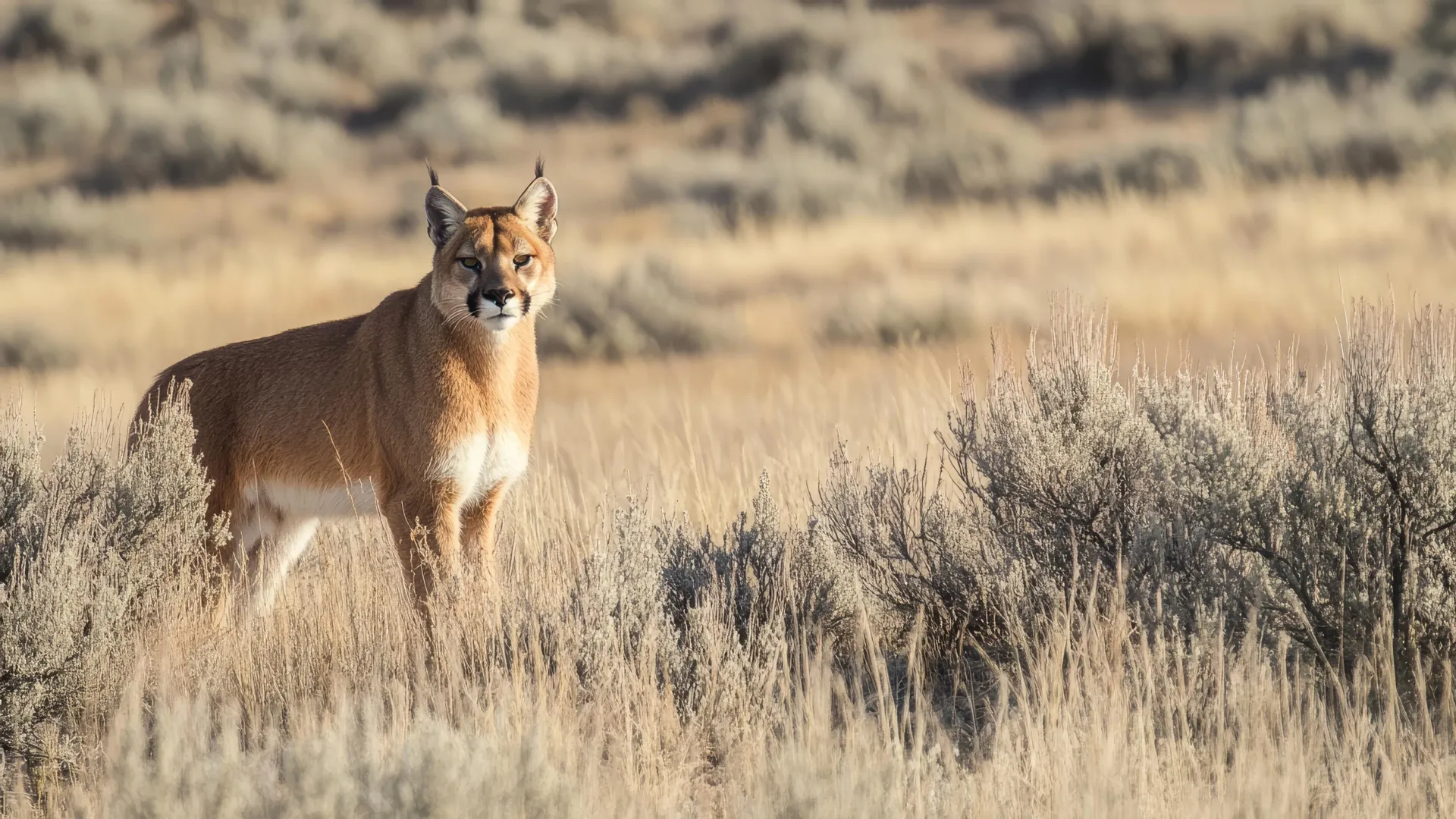
    A new study sheds light on the tense relationship between wolves and cougars in Yellowstone National Park. Researchers have found that many cougar encounters begin with wolves taking over prey that the cougar has already killed. To reduce these dangerous encounters, cougars can adapt by targeting smaller animals and avoid crossing paths with wolf packs.

    The study was conducted as wolf and cougar territories increasingly overlap in the western United States. Wolves have sometimes been responsible for killing cougars, but scientists have found no evidence that cougars have killed wolves.

    How cougars avoid encounters with wolves

    The study also found that cougars stay away from areas where wolves have made recent kills. They tend to stay near shelters such as trees that they can quickly climb if threatened.

    As elk numbers declined in Yellowstone, cougars shifted their focus to deer. Because deer are smaller and can be eaten more quickly, this change reduces the amount of time cougars spend near carcasses, making it less likely that wolves will show up.

    9 years of GPS tracking and field surveys

    Published this week: PNASThe study utilized nine years of GPS tracking data from collared wolves and cougars. Researchers also conducted field surveys at approximately 4,000 potential murder sites within the park.

    The findings suggest that the ability of these two apex predators to coexist peacefully depends more on the diversity of prey species and access to safe havens than on the total amount of prey available.

    “Carnivore communities are undergoing major changes, not just in North America but around the world,” said Wesley Binder, a doctoral student at Oregon State University and lead author of the study. “Our study provides insight into how the two apex predators compete, which can aid recovery efforts.”

    The changing landscape of the American West

    For much of the 20th century, federal and state policies nearly wiped out both wolves and cougars in the United States. Cougars began to recover under legal protection in the 1960s and 1970s. Wolves have been reintroduced since 1995, including in Yellowstone. Both predators are now expanding into areas of the western United States where they have long been absent.

    “There were places over the last 20 to 30 years where cougars were coming back, and now wolves are coming back as well,” Binder said. “A lot of people are asking questions like, ‘What will happen to our ecological communities if both of these large carnivores come back here?'”

    Binder began his doctoral work at Oregon State University in 2022 after spending nearly a decade observing cougars in Yellowstone through the Yellowstone Cougar Project. His efforts included installing 140 remote cameras in the northern region of the park to capture and outfit cougars with tracking collars.

    Why do wolves have the upper hand?

    Decades of research have shown that while wolves hunt in packs, cougars are solitary and typically have an advantage in such interactions. In many predator systems, smaller or less dominant carnivores face trade-offs. They risk being killed, but may benefit from preying on dominant predators. But because cougars rarely scavenge from other carnivores and are skilled solo hunters, scientists remain unclear about what actually shapes wolf-cougar interactions.

    This new study provides a clearer answer.

    • Scientists investigated 3,929 potential kill sites associated with wolves and cougars. Of these, 852 were wolf feeding events and 520 were cougar feeding events.
      • Wolves made 716 kills and scavenged 136 times. Their primary prey included elk (542 animals), bison (201 animals), and deer (90 animals).
      • Cougars killed 513 animals and only foraged seven times, focusing primarily on elk (272) and deer (220).
    • Comparing data from 1998 to 2005 and 2016 to 2024 reveals the following major changes:
      • For wolves, bison’s diet increased from 1% to 10%, while elk’s diet decreased from 95% to 63%.
      • For cougars, elk decreased from 80% to 52%, while deer increased from 15% to 42%.

    Machine learning reveals asymmetric conflict

    The researchers used confirmed murder scene data to train a machine learning model that combined GPS movement patterns with likely murder scene locations. This approach allowed us to match predator movements with possible feeding events to better understand when and where wolves and cougars interact.

    The results showed a significant imbalance. Approximately 42% of wolf-cougar interactions occurred in areas where a cougar would be expected to make a kill. Only one interaction occurred at the scene where the wolves killed their prey.

    From 2016 to 2024, researchers recorded 12 adult cougar deaths, two of which were caused by wolves. In both cases there was no shelter nearby. The wolves did not eat the cougar, but instead ate the elk that the cougar had killed.

    During the same period, 90 wolf deaths were recorded. None of them were caused by cougars. Most wolf deaths are related to natural causes or human activities.

    Co-authors of the study include Joel S. Ruprecht, Rebecca Hutchinson and Tar Levy of Oregon State University of Agricultural Sciences. Jack Rabe of the University of Minnesota and Yellowstone Resource Center; Matthew Metz and Daniel Stahler of Yellowstone Resource Center. Hutchinson is also committed to Oregon State Tech.


    Source link

    Visited 10 times, 1 visit(s) today
    Share. Facebook Twitter Pinterest LinkedIn Telegram Reddit Email
    Previous ArticleTeeth smaller than a fingertip reveal first primate ancestors
    Next Article Scientists discover gene switch that makes pancreatic cancer resistant to chemotherapy
    healthadmin

    Related Posts

    Yellowstone wolves may not have reshaped the national park after all

    June 14, 2026

    Scientists discover parrots may actually use names

    June 14, 2026

    Why middle age is becoming a breaking point in the United States

    June 14, 2026

    Ancient Denisovan DNA still shapes human immunity today

    June 14, 2026

    Lucy’s Hunter Revealed: Giant Crocodiles Terrorized Human Ancestors

    June 13, 2026

    Research reveals that the brain continues to improve even into your 90s

    June 13, 2026
    Add A Comment

    Comments are closed.

    Categories

    • Daily Health Tips
    • Discover
    • Environmental Health
    • Exercise & Fitness
    • Featured
    • Featured Videos
    • Financial Health & Stability
    • Fitness
    • Fitness Updates
    • Health
    • Health Technology
    • Healthy Aging
    • Healthy Living
    • Holistic Healing
    • Holistic Health & Wellness
    • Medical Research
    • Medical Research & Insights
    • Mental Health
    • Mental Wellness
    • Natural Remedies
    • New Workouts
    • Nutrition
    • Nutrition & Dietary Trends
    • Nutrition & Superfoods
    • Nutrition Science
    • Pharma
    • Preventive Healthcare
    • Professional & Personal Growth
    • Public Health
    • Public Health & Awareness
    • Selected
    • Sleep & Recovery
    • Top Programs
    • Weight Management
    • Workouts
    Popular Posts
    • 1773313737_bacteria_-_Sebastian_Kaulitzki_46826fb7971649bfaca04a9b4cef3309-620x480.jpgHow Sino Biological ProPure™ redefines ultra-low… March 12, 2026
    • pexels-david-bartus-442116The food industry needs to act now to cut greenhouse… January 2, 2022
    • 1773729862_TagImage-3347-458389964760995353448-620x480.jpgDespite safety concerns, parents underestimate the… March 17, 2026
    • 1774403998_image_28620e4b6b0047f7ab9154b41d739db1-620x480.jpgGait pattern helps distinguish between Lewy body… March 24, 2026
    • 1773209206_futuristic_techno_design_on_background_of_supercomputer_data_center_-_Image_-_Timofeev_Vladimir_M1_4.jpegMulti-agent AI systems outperform single models… March 11, 2026
    • the-pros-and-cons-of-paleo-dietsThe Pros and Cons of Paleo Diets: What Science Really Says April 16, 2025

    Demo
    Stay In Touch
    • Facebook
    • Twitter
    • Pinterest
    • Instagram
    • YouTube
    • Vimeo
    Don't Miss

    Yellowstone wolves may not have reshaped the national park after all

    By healthadminJune 14, 2026

    One of the most widely cited stories about Yellowstone’s wolves is facing new scrutiny. A…

    Scientists discover parrots may actually use names

    June 14, 2026

    Why middle age is becoming a breaking point in the United States

    June 14, 2026

    New DNA test improves diagnosis of rare genetic disease

    June 14, 2026

    Subscribe to Updates

    Get the latest creative news from SmartMag about art & design.

    HealthxMagazine
    HealthxMagazine

    At HealthX Magazine, we are dedicated to empowering entrepreneurs, doctors, chiropractors, healthcare professionals, personal trainers, executives, thought leaders, and anyone striving for optimal health.

    Our Picks

    New DNA test improves diagnosis of rare genetic disease

    June 14, 2026

    Phase 3 trial of in vivo CRISPR therapy for hereditary angioedema successfully completed

    June 14, 2026

    Grandparents can deal with growing children’s mental health issues

    June 14, 2026
    New Comments
      Facebook X (Twitter) Instagram Pinterest
      • Home
      • Privacy Policy
      • Our Mission
      © 2026 ThemeSphere. Designed by ThemeSphere.

      Type above and press Enter to search. Press Esc to cancel.