


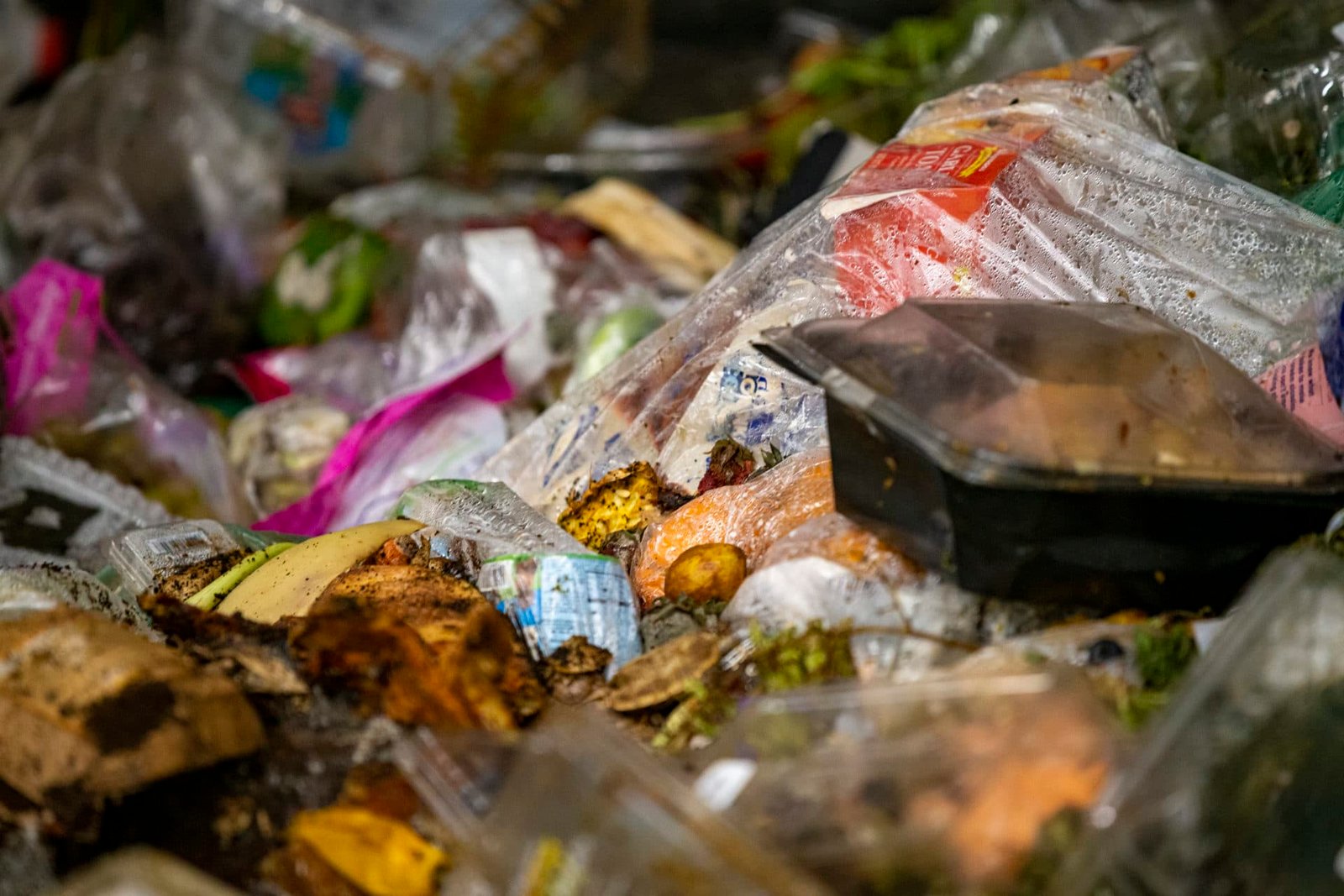
Recycling food waste nationwide would have huge climate benefits, but a new study published in Nature Food found that without changes to food packaging, it could contaminate the soil with microplastics.
According to the Environmental Protection Agency, about one-third of the food produced in the United States is never eaten. Producing, packaging, and disposing of waste food in landfills is a major contributor to climate change, and the EPA has set a goal of cutting domestic food waste in half by 2030.
Some states have already taken steps in this direction. Massachusetts requires businesses that generate more than half a ton of food waste per week to keep it out of landfills and incinerators. Instead, companies should divert edible surplus food to charities or food recovery services, and “recycle” food waste by sending it to compost facilities or anaerobic digesters to turn it into energy.
Massachusetts currently diverts about 370,000 tons of food waste from landfills annually, with a goal of increasing that number to 780,000 tons per year by 2030. Vermont goes further by banning all residents and businesses from disposing of food and yard waste in household trash or landfills.
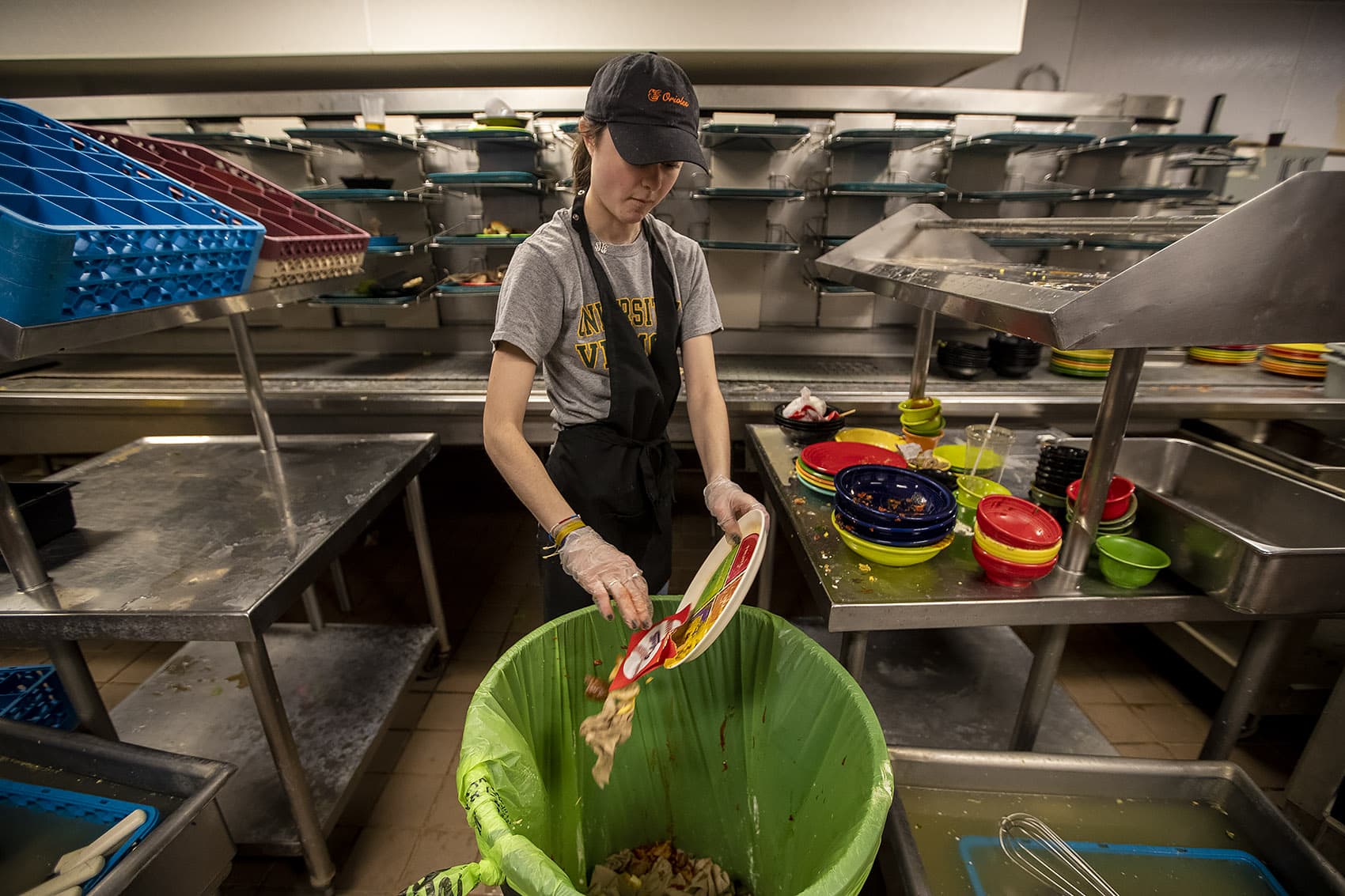 Sarah Anastasio cleans dishes in the Kimball Hall cafeteria at the College of the Holy Cross. (Jesse Costa/WBUR)
Researchers at the University of Vermont wanted to see what would happen if similar food waste bans were introduced nationwide. They found that recycling food waste rather than dumping it in a landfill can significantly reduce greenhouse gas emissions from food waste and reduce its overall climate impact by up to 99%. Nationwide food recycling would also reduce nutrient pollution from landfills, which feed toxic algae blooms.
But without changes to food packaging, a national food waste ban could result in up to 20,000 tonnes of plastic being dumped onto farmland each year via contaminated compost.
“Diverting food waste from landfills has significant climate benefits, and many of those benefits come from avoiding methane emissions as food waste decomposes,” said Katherine Porterfield, lead author of the study and a postdoctoral fellow at the University of Vermont.
But she says a lot of plastic food packaging ends up in food waste, either by accident or through poor sorting. Even if people or machines remove plastic from the waste stream, “a small amount will sneak in. And if you’re talking about very large amounts of food waste, it can add up,” she said.
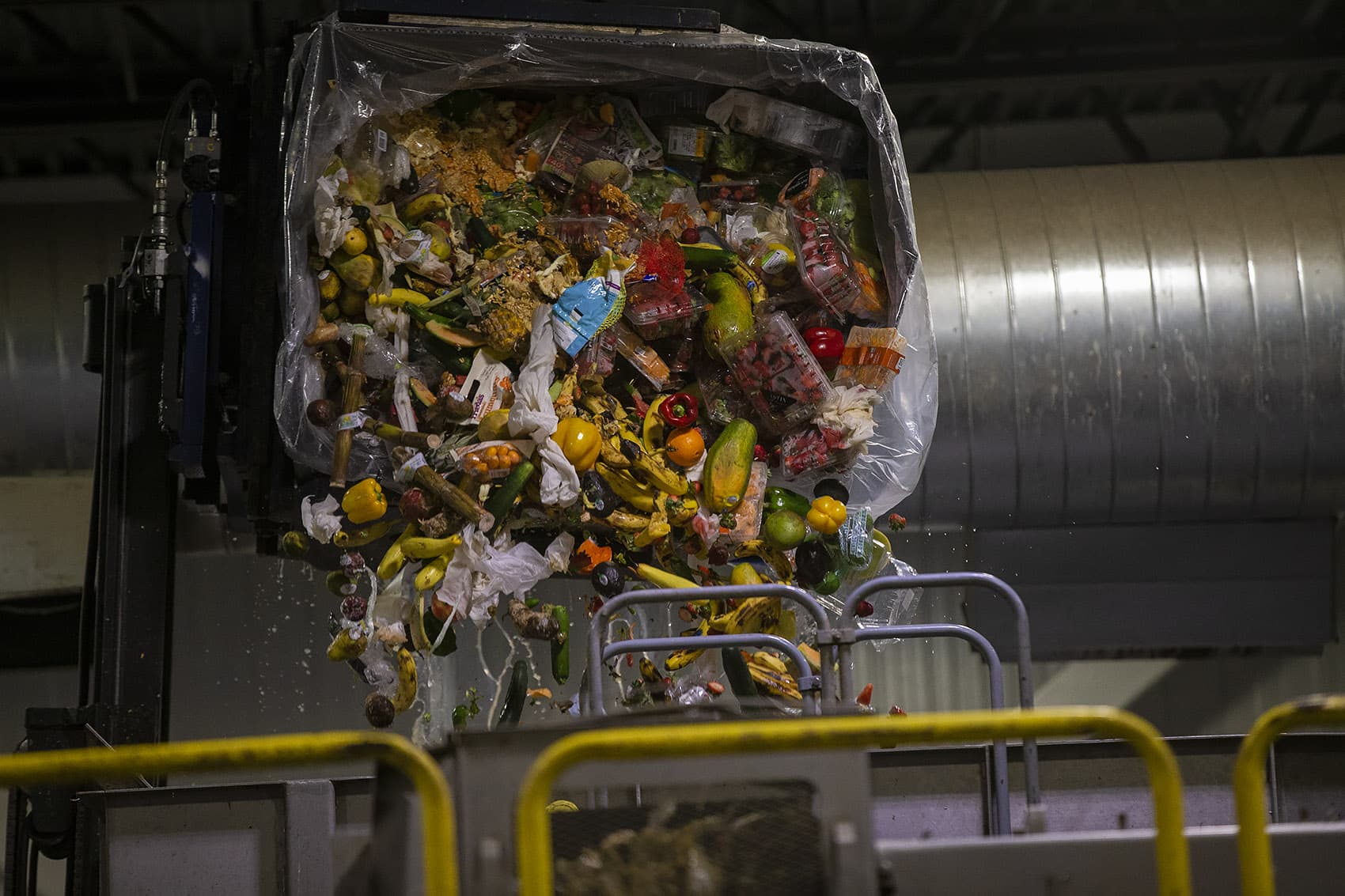 Bins of expired food from local Stop and Shop stores being flushed into an anaerobic digester at the Stop and Shop distribution center in Freetown. (Jesse Costa/WBUR)
Porterfield said food waste is the only way microplastics can enter the environment. “Plastic is everywhere,” she said, noting that it can enter the soil through air and water, rainwater runoff and the plastic mulch used on many farms.
It is unclear whether plastics in agricultural soils could ultimately have a significant impact on food. “That’s something researchers are still trying to understand,” Porterfield said.
The new study highlights “a real problem,” said Laura Orlando, a senior researcher at the nonprofit organization Just Zero, who was not involved in the study. “Plastic does not belong in the compost. Please stop it completely.”
However, she added, compost made from food waste is essentially free of plastic contamination. Many gardeners, farmers and others can use food scraps to make high-quality, plastic-free compost.
“The upstream solution is to remove plastic from packaging,” she says.
There is growing concern about compost contamination with PFAS, microplastics, and other contaminants. In 2022, in Westminster, Massachusetts, an organic compost facility was linked to contaminated drinking water.
The study authors said their findings do not prevent local governments from enacting food waste bans.
“This study shows there are clear benefits to recycling food waste, and this is something we need to address,” said Eric Roy, lead author of the study and director of the Casella Center for Circular Economy and Sustainability at the University of Vermont.
Casella Waste Systems Inc., a leading waste management company in the northeastern United States, is financially supporting this research. Roy said the company had no influence over the study design or results.
He said much plastic waste could be reduced by improving food waste separation and packaging.
“Packaging is designed to wrap food, not to unwrap it,” he said. “Traditional plastics don’t disappear, they tend to break down into smaller and smaller pieces over time. So there’s work to be done.”
