


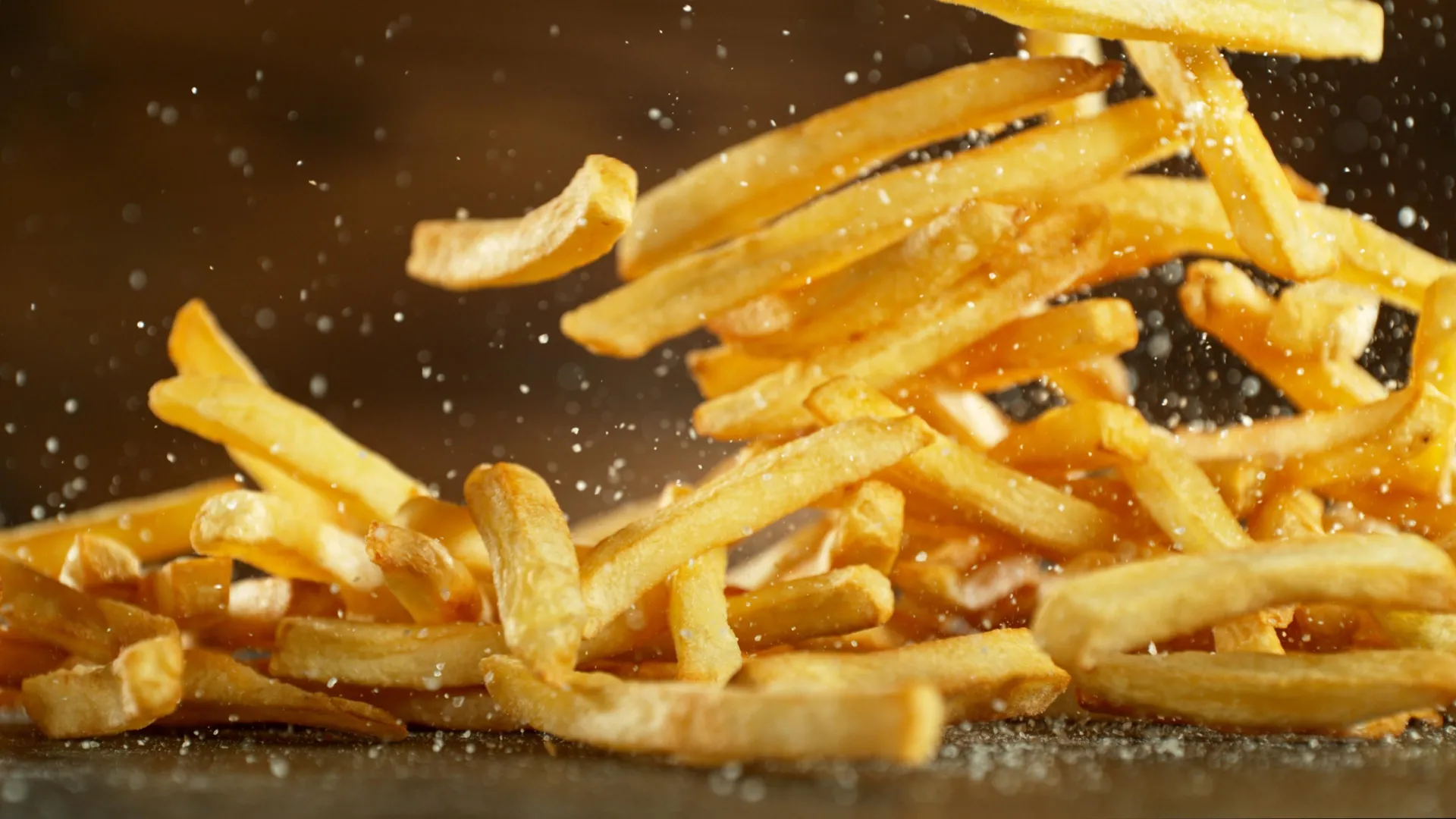
Fried foods such as French fries are popular for their crispy texture and rich flavor. However, they absorb a lot of oil during cooking, which can increase their fat and calorie content. Regularly consuming fatty foods can lead to health problems such as obesity and high blood pressure.
Researchers at the University of Illinois at Urbana-Champaign are investigating whether microwave energy can be used to produce french fries that absorb less oil without sacrificing the quality consumers expect. Their findings suggest that combining microwave frying and conventional frying can reduce cooking time and limit oil intake while producing the crispy appearance and satisfying texture associated with conventional frying.
Make healthier fries without sacrificing flavor
“Consumers want healthy foods, but often that desire gets the better of them when they buy them. High oil content increases flavor, but also contains more energy and calories. My research team is investigating deep-fried foods with the aim of achieving lower fat content without making a significant difference in taste or texture,” said lead researcher Pawan Singh Tahar, professor of food engineering in the Department of Food Science and Human Nutrition in the U of I’s College of Agricultural, Consumer and Environmental Sciences.
FSHN PhD students Takhar and Yash Shah have reported in two new publications the results of their investigation into the physical changes that occur when French fries are cooked with microwave energy.
In the first study, researchers from Illinois collaborated with scientists from Washington State University who developed a specialized microwave fryer. This device can operate at both 2.45 gigahertz (similar to a regular microwave) and 5.8 gigahertz.
Gigahertz is a unit used to express the frequency of electromagnetic waves. Different microwave frequencies change the way energy moves through food and the rate at which water molecules react during cooking.
Track what’s happening inside your fries
The researchers rinsed and peeled the potatoes, then cut them into strips. The strips were then blanched, salted and fried in soybean oil heated to 180°C.
Blanching exposes food to hot water or steam for a short period of time. For potatoes, this step starts to soften the tissue and helps prepare the surface for frying.
During and after cooking, the team measured temperature, internal pressure, volume, texture, moisture, and oil content. These measurements helped reveal how water escaped from the potatoes and how oil entered the remaining spaces of the potatoes.
According to Takhar, one of the major challenges in deep frying is preventing oil from migrating into the food both during and immediately after cooking.
At the beginning of frying, the small holes inside the potato are still filled with moisture, leaving little room for oil. However, when potatoes are heated, that moisture escapes as steam. Empty spaces will begin to form, and the negative pressure can draw oil into the potatoes.
“Think of a straw in a drink. When you force air into the straw, it creates positive pressure, which forces the liquid out. But when you suck on the straw, the liquid moves up. Imagine a food material full of small straws. When there is positive pressure, the oil stops coming out. But when there is negative pressure, the oil starts moving in,” Takhar explained.
Why does pressure determine oil absorption?
Researchers have found that 90% of deep frying is done while the food is under negative pressure. This provides a long-lasting suction effect and allows the oil to move into newly opened pores.
A more effective frying process keeps the pressure inside the potato positive for a longer period of time and spends less time under negative pressure. This allows you to limit the amount of oil that gets into your food.
Microwave energy could help by heating the water throughout the potato, rather than relying solely on heat moving from the surface to the inside. When water molecules absorb microwave energy, they move faster and produce additional steam. The steam increases the pressure inside the food, making it difficult for oil to enter.
“When you heat something in a conventional oven, heat moves from the outside to the inside, whereas a microwave oven heats from the inside out. This is because the microwaves penetrate the material everywhere. The microwaves cause the water molecules to vibrate, causing more vapor formation, shifting the pressure profile to the positive side. The higher pressure of the microwave helps reduce oil penetration,” Takhar said.
Frying in the microwave reduces cooking time and oil intake
Alongside the laboratory tests, the researchers used mathematical modeling to investigate the frying process in more detail. Using computer models, they were able to explore how different variables interact and predict changes that would be difficult to directly measure in every experiment.
The research team compared temperature, pressure, volume, texture, moisture, and oil absorption during frying at 2.45 GHz, 5.8 GHz, and conventional conditions.
Through experiments and simulations, we found that frying in the microwave releases moisture from potatoes faster. It also reduced total cooking time and reduced the amount of oil absorbed by the fries.
However, simply frying in the microwave did not provide the desired texture. French fries cooked only with microwave energy tended to remain soft instead of having the crispy exterior that consumers expect.
“However, simply frying in the microwave will result in a soggy food. Conventional heating is required to obtain crispy texture and taste. Therefore, we propose to combine the two approaches in the same equipment. Conventional heating maintains the crispiness, while microwave heating reduces oil intake,” Takhar said.
Hybrid fryers can offer the best of both methods
The proposed system uses conventional frying to brown the surface and create a crunchy texture, while microwave energy helps remove moisture and prevent excess oil from entering the potatoes.
This combination approach could allow manufacturers to make fries using less oil while maintaining the flavor and texture that makes fried foods so appealing. Faster cooking can also improve production efficiency.
The researchers noted that continuous fryers used in large-scale food processing facilities could be modified to incorporate microwave generators. Because these components are widely available and relatively inexpensive, this system may be economically practical for commercial production.
The first paper, “The influence of conventional and microwave frying on the quality characteristics of French fries” food science journal.
The second paper, “Prediction of quality changes during microwave frying of food biopolymers by solving unsaturated transport and electromagnetic equations based on hybrid mixing theory” Current research in food science.
This research was funded by the USDA National Institute of Food and Agriculture (Awards 2020-67017-31194, ILLU-698-308, and ILLU-698-926).
