


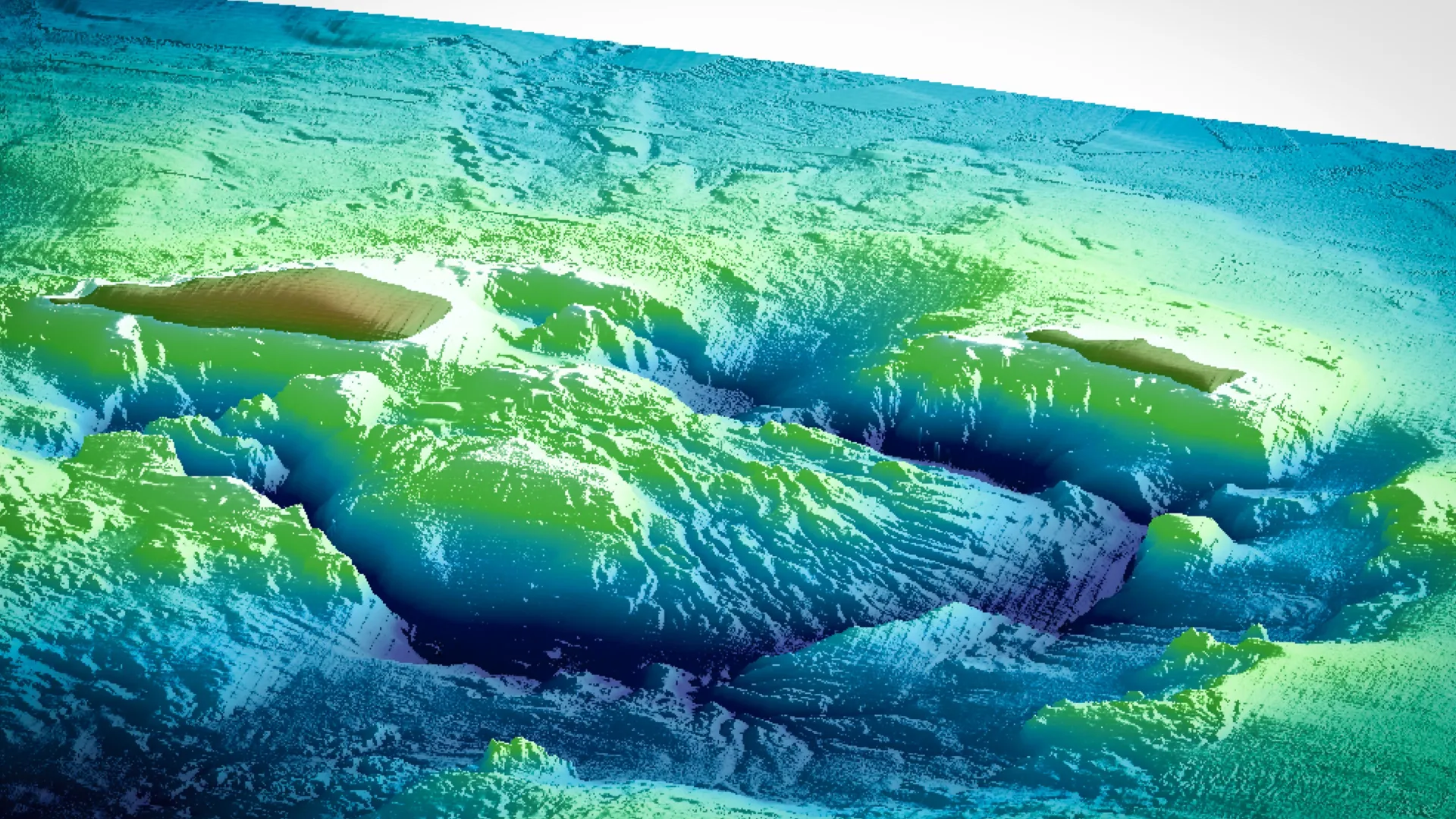
A vast reservoir of magma beneath Japan’s Kikai caldera appears to be filling up again, giving scientists a glimpse of how some of Earth’s largest volcanoes recover after devastating eruptions.
The discovery, led by researchers at Kobe University, could improve our understanding of giant caldera systems such as Yellowstone in the United States and Toba in Indonesia. It could also help scientists identify subsurface changes that precede future mega-eruptions.
Volcano capable of huge eruptions
Mt. Kikai is a largely submerged volcanic caldera in the south of Japan. About 7,300 years ago, the largest known volcanic eruption of the Holocene, the current geological epoch that began about 11,700 years ago, occurred.
Calderas form when an eruption expels a huge amount of magma and the ground above the reservoir collapses. Instead of leaving the typical cone-shaped mountain, this event creates a wide and relatively shallow depression.
The scale of these eruptions may be difficult to imagine. The amount of magma involved could cover the entirety of Central Park to a depth of 12 kilometers.
Yellowstone, Toba, and Kikai are notable examples of giant caldera volcanoes. Scientists know that these systems can erupt multiple times, but the processes that allow them to accumulate large amounts of magma are not yet well understood. This uncertainty makes it especially difficult to predict their future behavior.
“To understand how giant caldera eruptions occur, we need to understand how such large amounts of magma accumulate,” says Nobukazu Sema, a geophysicist at Kobe University.
Listen to seismic waves on the ocean floor
Although Kikai’s underwater location may seem like an obstacle, it provided the research team with important advantages. Because much of the caldera lies beneath the ocean, scientists can conduct extensive and systematic surveys throughout the volcanic structure.
“Because it’s underwater, we can conduct systematic, large-scale surveys,” Seema explains.
A team from Kobe University collaborated with the Japan Agency for Marine-Earth Science and Technology (JAMSTEC) to investigate the crust beneath the caldera. The researchers used an air gun array to generate controlled seismic pulses and placed seismometers on the ocean floor to record how those waves traveled through rocks.
Seismic waves change speed and direction depending on the material they pass through. By measuring these changes, scientists can build a picture of subsurface structures and identify areas that may contain partially molten rock.
A huge magma chamber beneath the demon world
The survey results are Communication Earth and Environmentit has been revealed that there is a region rich in magma directly beneath the part of the Onikai that caused a huge eruption 7,300 years ago.
The researchers were also able to estimate the shape and extent of the reservoir. Its size and location indicate that it occupies the same underground system that supplied magma for ancient eruptions.
“It’s clear from its extent and location that this is indeed the same magma chamber from the previous eruption,” Seema said.
That doesn’t mean the magma has simply remained underground since ancient disasters. Instead, evidence suggests that new molten material entered the reservoir over time.
Fresh magma is rebuilding the system
A lava dome has been forming near the center of Kikai Caldera for about 3,900 years. Lava domes develop when thick magma slowly rises to the surface and builds up around a volcanic opening instead of flowing out easily.
Chemical studies have shown that the material from this dome and other recent volcanic activity is different from the magma released during mega-eruptions. This contrast suggests that Kikai’s current magma source is more recent.
“This means that the magma currently present in the magma chamber beneath the lava dome is likely newly injected magma,” Seema summarizes.
The finding supports a broader model in which fresh magma gradually intrudes after a large eruption, rebuilding a reservoir beneath a giant caldera. Understanding this process may reveal how these volcanoes begin to prepare for later periods of activity.
Clues to Yellowstone and Toba
The proposed model could be extended far beyond Kikai. Scientists have also identified large, shallow magma chambers beneath other major caldera systems, such as Yellowstone and Toba.
“This magma reinjection model is consistent with the existence of large, shallow magma chambers beneath other large calderas, such as Yellowstone and Toba,” Seema said.
By studying how quickly fresh magma enters these systems, where it accumulates, and how it changes the surrounding crust, researchers may ultimately be better able to distinguish between normal volcanic activity and signs of larger-scale phenomena.
Seema concluded, “We hope to refine the techniques that have proven so useful in this study to better understand the re-eruption process. Our ultimate goal is to be able to better monitor key indicators of future mega-eruptions.”
This discovery does not mean that a Kikai eruption is imminent. Rather, it provides valuable evidence that the underground system that caused the ancient catastrophe is still active and continues to accept new magma.
This research was supported by the Ministry of Education, Culture, Sports, Science and Technology (3rd Earthquake and Volcanic Disaster Observation Research Project (Earthquake and Volcanic Disaster Mitigation Research)) and the Japan Society for the Promotion of Science (Grant 20H00199). This was carried out in collaboration with researchers from the Japan Agency for Marine-Earth Science and Technology (JAMSTEC).
