


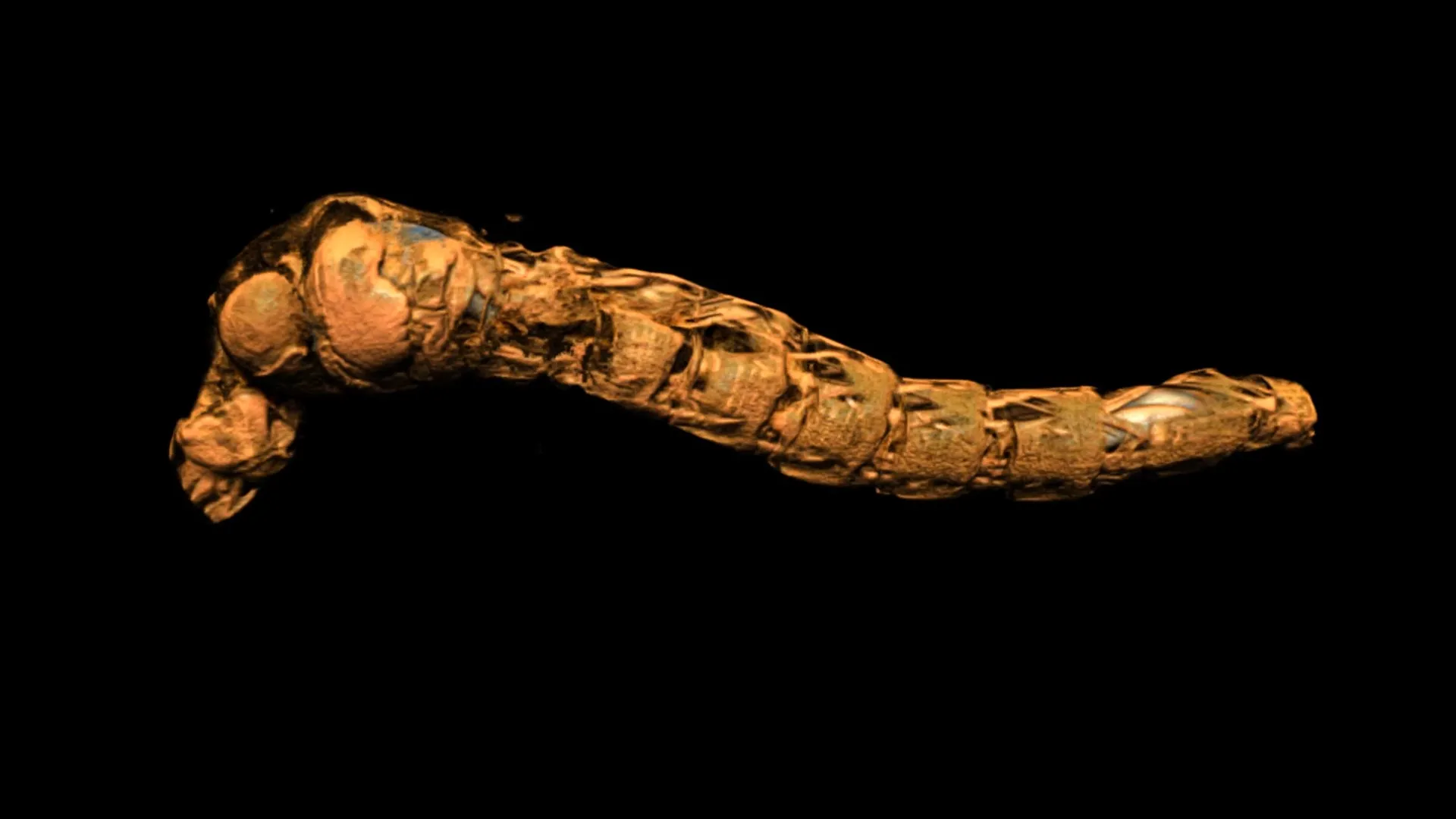
Insect larvae burrowing deep in African lakes are forcing scientists to reconsider commonly held explanations for the near complete absence of insects in the open ocean. The secret lies in an incredibly durable air sac system that can withstand much higher pressures than researchers expected.
Billions of lake fly larvae (eating chaobors) live in East Africa’s Lake Malawi, where they perform incredible vertical migrations every day.
During the day, the larvae descend more than 200 meters into deep areas of the lake where there is little oxygen. This area, often called the dead zone, provides shelter from predators that cannot easily survive there. At dark, the larvae rise toward the surface to feed, but first they must pass between numerous fish waiting to eat them.
To track this daily movement, UBC is researching Drs. Philip Matthews and Evan McKenzie set up a sonar system on the lakebed. This device has made it possible to observe large groups of larvae moving through the water.
Small air sacs act like ballast tanks
When researchers examined the larvae, they found that the insect had adapted part of its respiratory system into two pairs of small air sacs.
These sacs function much like a submarine’s ballast tanks. By adjusting their size, larvae can change their buoyancy and control whether they rise or sink in the lake.
The walls of the sac contain resilin, an unusually elastic material found in many insects. The larvae can change the pH of the sac wall, causing resilin to expand or contract. This changes the volume of the air sac and allows the larva to precisely control its depth.
Air sacs can withstand extreme water pressure
The researchers then placed the larvae inside a small pressure chamber and measured how much pressure their air sacs could withstand before they collapsed.
The results were amazing. This sac withstood pressures comparable to those found at depths of more than 400 meters, much deeper than the larvae typically travel during their daily migrations.
Insects are abundant both on land and in freshwater, but there are virtually no insects in the open ocean. One widely debated explanation is that the intense pressure at deeper depths crushes the air space that insects use to breathe.
The toughness of these larvae suggests that pressure alone may not fully explain why the insects have not colonized the entire ocean.
Biological rubber has the potential to create new materials
Scientists have studied resilin for a long time because it behaves almost like a perfect biological rubber. In other insects, they help form durable structures such as wing hinges and tendons that must be repeatedly bent without wearing out.
The newly discovered buoyancy system could also contribute to efforts to develop smart materials made with resilin. Researchers may eventually use a similar mechanism to create artificial muscles and other materials triggered by chemical changes in pH.
This project was partially funded by a Discovery and Accelerator grant from the Natural Sciences and Engineering Research Council of Canada.
