


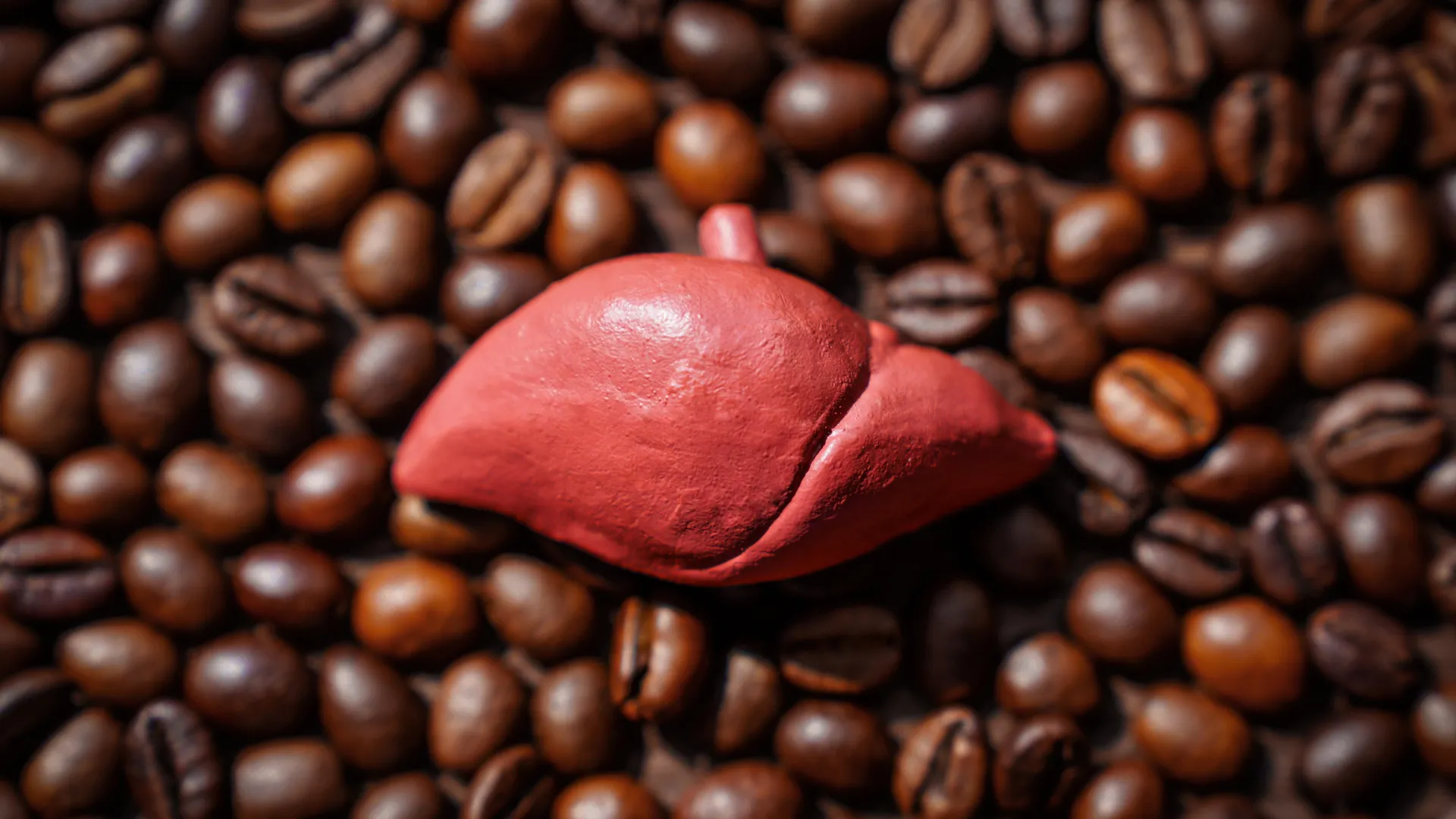
One of the largest studies ever on coffee and liver health has found that heavy coffee drinkers tend to have a lower risk of cirrhosis, liver cancer, and death related to liver disease.
Cedars-Sinai Health Sciences University research; Clinical gastroenterology and hepatologyWe also uncovered a biological pattern that may help explain why coffee intake is repeatedly associated with liver health.
“Previous studies have suggested that coffee may be beneficial for the liver, but most of them have been small or just one piece of the puzzle,” said hepatologist Kim Hyun-seok, MD, MD, PhD, assistant professor of medicine at Cedars-Sinai University and corresponding author of the study. “We followed hundreds of thousands of people over 10 years and examined their health status along with liver MRI scans and blood protein analysis. Together, these findings help explain the biological mechanisms behind the link between coffee and improved liver health.”
Study tracked approximately 355,000 adults
Researchers looked at data from 354,957 UK Biobank participants who had no history of cirrhosis or liver cancer at the start of the study. The research team used linked medical records to track new cases of cirrhosis, liver cancer, and liver-related deaths for a median of 13 years.
The results showed that coffee drinkers generally had better liver symptoms than non-coffee drinkers.
Participants who drank five or more cups of coffee a day had a 32% lower risk of liver cirrhosis, a 47% lower risk of liver cancer, and a 42% lower risk of death from liver disease compared to non-coffee drinkers.
Coffee may reduce liver damage
The researchers also examined liver MRI scans and blood protein measurements to look for physical and molecular signs of liver health.
People who drank more coffee had lower levels of liver fat, excess liver iron, fibrosis, and liver inflammation in MRI scans. Their blood samples also contained high levels of proteins associated with healthy liver function and low levels of proteins associated with inflammation and tissue scarring.
Taken together, these findings provide biological support for the long-observed relationship between coffee consumption and reduced risk of liver disease.
Although the risk generally decreases as coffee intake increases, researchers found signs that even people who drink only one or two cups a day may benefit. The strongest association appeared at about 3 to 4 cups daily.
The researchers noted that the effects were also seen in the highest coffee intake group (more than five cups a day), but stressed that they were not specifically advising people to increase their intake by that amount.
Decaf showed a similar association
Both caffeinated and decaffeinated coffee were associated with improved liver outcomes. This suggests that caffeine is probably not the only substance responsible for this association.
Coffee contains numerous natural compounds, some of which can affect inflammation, liver scarring, and other biological processes involved in liver disease.
However, this study was observational. Although it identified an association, it cannot prove that coffee directly prevents cirrhosis, liver cancer, or liver-related death.
The researchers also emphasized that drinking coffee complements, rather than replaces, established approaches to protecting liver health.
“Our findings support moderate coffee intake for people who already enjoy and tolerate coffee well,” said Ju Dong Yang, MD, lead author of the study and medical director of the Cedars-Sinai Liver Cancer Program.
“However, we do not recommend starting drinking coffee solely for liver protection based on this study alone. Prevention should continue to focus on maintaining a healthy weight, limiting alcohol, regular exercise, and controlling blood sugar, blood pressure, and cholesterol.”
Coffee isn’t for everyone
Caffeine may not be suitable for some people. People with uncontrolled high blood pressure, certain heart rhythm disorders, severe anxiety, insomnia, or other conditions that require caffeine restriction should consult their health care provider before increasing their coffee intake.
Future research will focus on determining which substances in coffee may be responsible for the liver-related associations observed in the study.
“The next step in our research is to identify the specific compounds in coffee that are involved in these liver-protective associations,” said study author Shelley Lu, MD, president of the Women’s Guild of Gastroenterology and director of the Karsh Division of Gastroenterology and Hepatology at Cedars-Sinai University. “Our findings point to biological pathways involved in inflammation and scarring and highlight molecular targets that future studies can explore to better understand how coffee affects liver health and who benefits most.”
Other Cedars-Sinai authors include Yufeng Wang, Abdelrahman M. Attia, Minsun Kwak, Seungwon Burm, Derin Celtik, Daniel Legaspi, Osama Khattab, Naomi Kim, Beza M. Mengistu, Kelsey N. Larios, Walid Ayoub, Alexander Kuo, Paul Martin, Aarshi Vipani, Pandol, Stephen Wang Yuang Contains.
Other authors include Mohammad Said Rezaee Zavareh, David Sooik Kim, and Suthat Liangpunsakul.
Conflict of interest: Ju Dong Yang reports the following conflicts of interest: Consulting services for AstraZeneca, Eisai, Exact Sciences, and Fujifilm Medical Sciences.
