


Jessica Metcalf’s work stinks. literally. But a Colorado State University professor’s research may hold the key to protecting livestock and wildlife from flesh-eating parasites.
In a project recently funded by the U.S. Department of Agriculture, Metcalfe is studying odorous substances to understand what attracts New World screwworms to their favorite open wounds, so they can develop better baits to capture this serious threat to the livestock industry. The pest was eradicated in the United States more than 50 years ago, but it was discovered in Texas in early June.
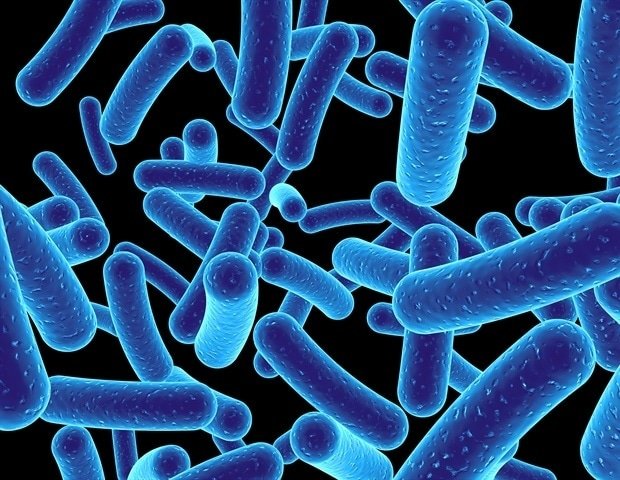
If the wound starts to smell, you know that the wound may be infected and filled with bacteria. Odors are a chemical byproduct of bacteria, and the same smelly bacterial chemicals that cause disgust and concern in humans also attract the New World screwworm, a type of blowfly.
We use these bacterial cues to steer us away from certain things. For example, avoid eating rotten meat. Insects use them for other reasons. They’re like, ‘Okay, bring it, it smells like a great place to lay eggs.’ ”
Jessica Metcalfe, Colorado State University Professor
The New World screwfly lays eggs in wounds and body openings. The maggots that emerge feed on living tissue. Although the risk is low in the United States, it can infect humans and any warm-blooded animal, including pets. Parasites can be fatal if left untreated.
USDA recently announced $105 million in funding for 40 projects, including Metcalfe’s, to strengthen the nation’s defenses against the New World screwworm. As of July 23, the parasite has been detected in cattle, sheep, goats and two dogs in Texas, and another dog in New Mexico. Metcalfe and his collaborators aim to prevent the spread of infection.
make better food
Detection is the first step to controlling New World screwworms. One of the most widely used lures uses the odor produced by bacteria from rotting meat to attract the secondary screwworm fly, a related blowfly that prefers to eat dead meat. The trap is filled with abundant secondary screwworm flies, making it difficult to detect the more harmful New World screwworm fly. Metcalfe’s project will use the odor produced by bacteria from wounds to develop lures specific to the New World screwfly to improve monitoring.
The odors produced by these bacteria are known as volatile organic compounds, or organic compounds that evaporate easily.
Metcalf’s team plans to distinguish between the VOCs that attract New World screwworms and secondary screwworms. In other words, what is it about live meat that makes it so appealing to New World screwworms over harmless carrion?
Blowflies also have their own bacteria that they use to communicate across species. These bacteria inform other blowflies of the location of suitable hosts, further exacerbating the infestation.
Metcalfe’s team plans to distinguish between the bacteria found in NWS and secondary screwworms, which will help design better lures for traps. Knowing what attracts NWS can also potentially be used to redirect NWS away from live hosts.
“We have been studying the relationship between insect, bacteria and animal decomposition for the past 15 years, and because New World screwworms evolved from decomposers (insects that use carrion to rear their young), we were well-equipped to tackle this problem,” Metcalf said.
Metcalf’s work with bacteria that decomposes animals, including humans, also has forensic applications. She and her collaborators discovered that microorganisms present in bodies can accurately determine the time of death, information that can help solve crimes.
“We have developed a fundamental understanding of animal decomposition at our main site in Huntsville, Texas,” Metcalf said. “Basic science is the basis for the tools we build for forensic science to estimate how long a person has been dead. We now know that we can also leverage decomposition ecology, which relies heavily on blowflies and their bacterial partners, to improve monitoring and control of New World screwworms.”
Metcalfe’s team, which includes CSU faculty members Kayla Boughton and Kelly Wrighton, will use advanced genomic and chemical data analysis tools through a partnership with the Colorado Microbiome (CoSMic) Network.
Stakeholder network
Metcalf and his collaborators will work with field volunteers, including livestock producers, veterinarians and wildlife biologists, to clean the animals’ wounds for clinical testing. These stakeholders will receive diagnostic results from the lab tests and benefit from the solutions developed throughout the project. Meanwhile, Metcalf’s lab in CSU’s Department of Animal Science will compare the bacteria and odor of the wound to samples from dead animals.
To build a network of stakeholders, the research team leverages partners across the state, including producer associations, state agencies, CSU Extension, and CSU’s Agricultural Experiment Station and Veterinary Diagnostic Laboratory. Interested parties will receive information about New World screwworms, sampling supplies, and training. Project partners in Texas, Arizona and New Mexico will conduct similar outreach and sampling.
Tracey Goldstein, director of CSU’s One Health Institute, will coordinate outreach, training and sampling efforts across the network. He said the network needs to be as wide as possible to monitor New World screwmaggots because they are particularly difficult to control if they spread to wildlife.
“It doesn’t matter if it’s a human, a deer, a pig, a chicken. It’s a little scary because it infects everything,” Goldstein said. “That’s part of why it’s so hard to deal with. We really need all the eyes and ears on the ground to figure out if and when it’s going to get to Colorado.”
Julia Herman, a beef cattle veterinarian with the National Cattlemen’s Beef Association, plans to connect research with producers across the country. He said producers in endemic areas should inspect all animals for wounds and heal any wounds before moving livestock.
“There’s no way to solve this problem,” Herman said. “Another way to manage this fly is needed, and this project provides one that can reduce the New World screwworm fly population.”
She added: “Although the New World screwworm does not affect many animals, it has an impact on the entire livestock industry, from animal welfare to transportation issues, to the extra time, money and resources it takes to find the fly’s larvae and treat wounds. We hope that projects like Dr Metcalf’s can take some of the stress off producers and minimize the loss of time and resources.”
Additional research questions and potential solutions
Current international efforts to control the New World screwfly are based primarily on irradiating male blowflies to render them sterile. The USDA and Panama’s Ministry of Agricultural Development operate a facility in Panama that breeds, sterilizes, and releases millions of New World screwworm flies. Female black flies mate only once, and even if they mate with an infertile male, the eggs will not hatch.
This effectively kept the species out of the United States for decades, but in 2023 the carnivorous insect began making a comeback in Mexico and Central America. Metcalf’s research will provide her team with data to assess whether infertile males lose their bacterial attraction during sterilization.
“Another potential outcome of our research is understanding how to make infertile flies more suitable,” Metcalfe said.
Student Anthony Grigsby, a forensic entomologist and microbiologist in the CSU PhD Metcalfe lab, said understanding what influences blowfly behavior and its ecological role could help control pests in livestock and humans.
“To date, much of the New World screwworm control effort has relied on methods developed more than half a century ago,” he said. “This project will allow us to understand the biology of screwworms and contribute to modernizing the infrastructure underlying the Sterile Insect Technology Program.”
sauce:
colorado state university
