


The main pillar of cancer immunotherapy involves stimulating the immune system’s specialized killers, T cells, to attack tumors. However, this strategy has been undermined by the tendency of T cells to become exhausted before finishing their job. When cells reach a phase of exhaustion (called T-cell exhaustion), these immune cells lose their ability to sustain attacks and control cancer growth.
This is a major problem with checkpoint inhibitors, a type of immunotherapy that releases the brakes on T cells and kickstarts their activity.
“The tragic part of T-cell depletion is that immunotherapy may seem to be working for a patient, but then its effectiveness wears off,” says Santosha Vardhana, MD, a physician-scientist who treats lymphoma patients at Memorial Sloan Kettering Cancer Center (MSK). “Many of them experience only fleeting promise before it is taken away from them.”
Dr. Vardhana’s lab has now identified a signaling molecule called MEK that plays a key role in T cell depletion. This discovery is based on animal experiments; immunitysuggest that blocking MEK may limit T cell depletion and dramatically facilitate immunotherapy.
We are excited to apply this discovery to enhance multiple forms of immunotherapy. FDA-approved MEK inhibitors are already available, so this approach could be tested in humans without too much delay. ”
Dr. Santosha Vardhana, MD, Physician Scientist, Memorial Sloan Kettering Cancer Center
T cell strength, metabolism, and the role of MEK
Until recently, researchers did not fully understand how T cell depletion occurs. But in 2020, Vardana’s lab discovered an important clue. It begins with cellular metabolism, the chemical process that allows cells to generate energy from nutrients.
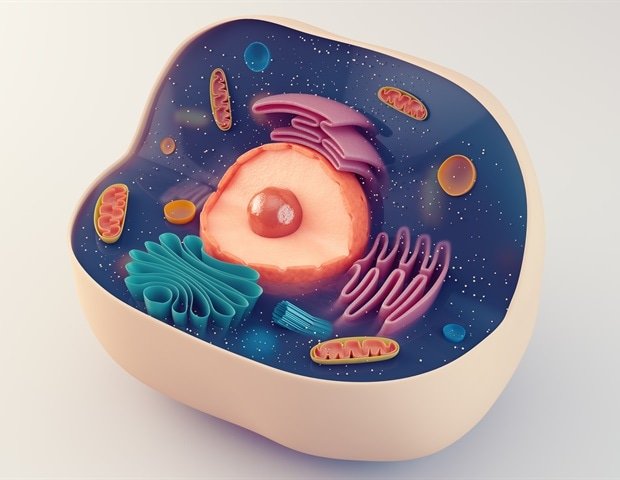
Continued exposure to tumor antigens (cancer proteins that the immune system considers foreign) can overload parts of T cells called mitochondria (also known as the cell’s “powerhouses”), which are responsible for converting nutrients into energy.
“There is a huge metabolic demand placed on T cells as they encounter cancer cells and try to produce cancer-killing or cytotoxic proteins,” Vardana says. “We found that the decision to produce high levels of these proteins is controlled by MEK.”
Overactivation of MEK ultimately drives T cells to a terminal state of depletion, to the point where they cannot be stimulated by immunotherapy.
“We realized that T cell depletion is not just a loss of function; it reflects an imbalance between what is asked of these cells and the energy available to them,” says Dr. Tanmana Mitra, a student in Vardana’s lab and lead author of the study.
Researchers have discovered that, despite their name and function, exhausted T cells are highly metabolically active. When cells were treated with MEK inhibitors, they grew more, but actually used less energy.
“That discrepancy made us wonder where that energy goes, and we found that these cells invest enormous resources to make proteins,” Dr. Mitra explains. “This has changed the way we think about T-cell depletion. From a problem of too little energy to a problem of too much energy demand.”
Researchers found that limiting MEK signaling may suppress the production of cytotoxic proteins and allow some T cells to remain in an active, self-renewing state for longer. This may improve the effectiveness of immunotherapy.
Think of it as adjusting your speed throughout your road trip rather than driving flat out. By slowing down, you maintain your ability to keep going for longer.
Researchers demonstrated in a laboratory model that blocking MEK signaling allows T cells to survive under the harsh environmental conditions of tumors.
However, when it comes to cancer patients, this is not the case for everyone. Shutting down MEK may not be the best option for all patients.
A balancing act: T-cell supercharging and energy conservation
T-cell depletion is more complex than researchers originally thought. For example, MSK immunologist Dr. Andrea Sittinger found that T cells become exhausted in order to save themselves. They stop fighting to avoid dying from overstimulation.
“As we learn more about T-cell exhaustion, we increasingly understand that exhausted T-cells aren’t all bad, so we can use drugs to reverse the process. Rather, exhaustion is almost like a ‘safe mode’ for T-cells, a kind of equilibrium that allows them to survive and keep going,” Vardana says.
When T cells are in attack mode and producing cytotoxic proteins, mitochondria must convert nutrients from food into adenosine triphosphate (ATP). ATP is the main molecule used by all living cells to store and transfer energy.
“Think of ATP as the currency of money your cells spend,” Dr. Vardana says. “When you spend ATP on one thing, you don’t have enough money to do anything else. The depletion program is a sign that a cell’s bank account is nearing zero. MEK tells exhausted cells to conserve fuel or go penniless. What we found is that inhibiting MEK makes cells more conservative and can extend their lifespan while slowing down the rate at which they produce proteins that actually kill cancer cells.”
Therefore, MEK is both the problem and part of the solution. MEK keeps T cells at full power, but they run the risk of burning out completely. This means blocking MEK is a double-edged sword. The attack will be weakened, but the soldier will be able to stay alive.
Is it better to have a strong immune attack that burns out quickly, or a gentler attack that is sustained? The answer may be different depending on each person’s cancer.
When to apply gas to burn out T cells
Dr. Vardhana will discuss the selective use of MEK inhibitors to activate T cells. Two factors indicate that a patient will respond well to immunotherapy:
- The tumor is small.
- Patients have a higher number of immune cells that attack the tumor, usually because the tumor has a higher number of recognizable mutations.
“T-cell preservation is less important in these patients,” he says. “It’s like being in a car with one-eighth of the tank left, but the finish line is in sight. For these patients, you just keep the car burning gas. In other words, you take a traditional immunotherapy approach. These patients probably don’t need MEK inhibition.”
In contrast, patients with large tumors or with low numbers of immune cells are less likely to have a strong enough response to immunotherapy to rapidly treat their tumors. In these cases, the slow burn caused by MEK inhibitors allows T cells to survive, even in a state of fatigue. This is essential when the task at hand (tumor) is large or the workforce (number of T cells) is small.
Application to multiple immunotherapies
Dr. Vardhana says MEK inhibition, if used judiciously, could potentially enhance some types of immunotherapy.
- Checkpoint inhibitors: MEK inhibition is a combination of checkpoint inhibitors and BRAF inhibitor.
- Chimeric antigen receptor (CAR) T-cell therapy: “We believe this approach can dramatically increase T-cell persistence, which has been a major issue with CAR T-cell therapy,” says Dr. Vardhana.
- Tumor-infiltrating lymphocyte (TIL) therapy: TIL therapy harnesses and expands the power of immune cells that are already fighting cancer. MEK inhibition, performed before or after TIL therapy, may sustain the best tumor-fighting TILs.
- Bispecific antibodies: This new class of drugs consists of lab-made proteins designed to bind to two different targets at the same time, which can cause overactivation of T cells, but can also cause fatigue.
“This study shows the importance of understanding the core principles of T-cell biology, which determine the balance between energy conservation and powerful cancer-fighting activity,” Vardana says. “Once we know the answer, the possibilities for treatment will really expand.”
Important points
- Immune T cells often become exhausted and weak when recognizing and responding to cancer.
- A signaling molecule called MEK plays a key role in causing T cell exhaustion.
- Blocking MEK may slow down the process of T cell depletion and enhance T cell attacks against cancer.
- This treatment strategy is likely to be most valuable in patients who do not respond to conventional immunotherapy, who have large tumors or very few tumor-reactive immune cells.
Other authors of the study include Jahan Rahman, Madeline Hwee, Yan-Ting Chen, Ruben Jose Jesus Faustino Ramos, Hui Liu, Travis Hartman, Justin Cross, Miguel de Jesus, Morgan Huse, Valerie Longo, and Pat Zanzonico.
sauce:
Memorial Sloan Kettering Cancer Center
Reference magazines:
Mitra, T. others. (2026) MEK-dependent bioenergetic demand causes terminal CD8+ T cell depletion. immunity. DOI: 10.1016/j.immuni.2026.06.012. https://www.sciencedirect.com/science/article/abs/pii/S1074761326002633
