


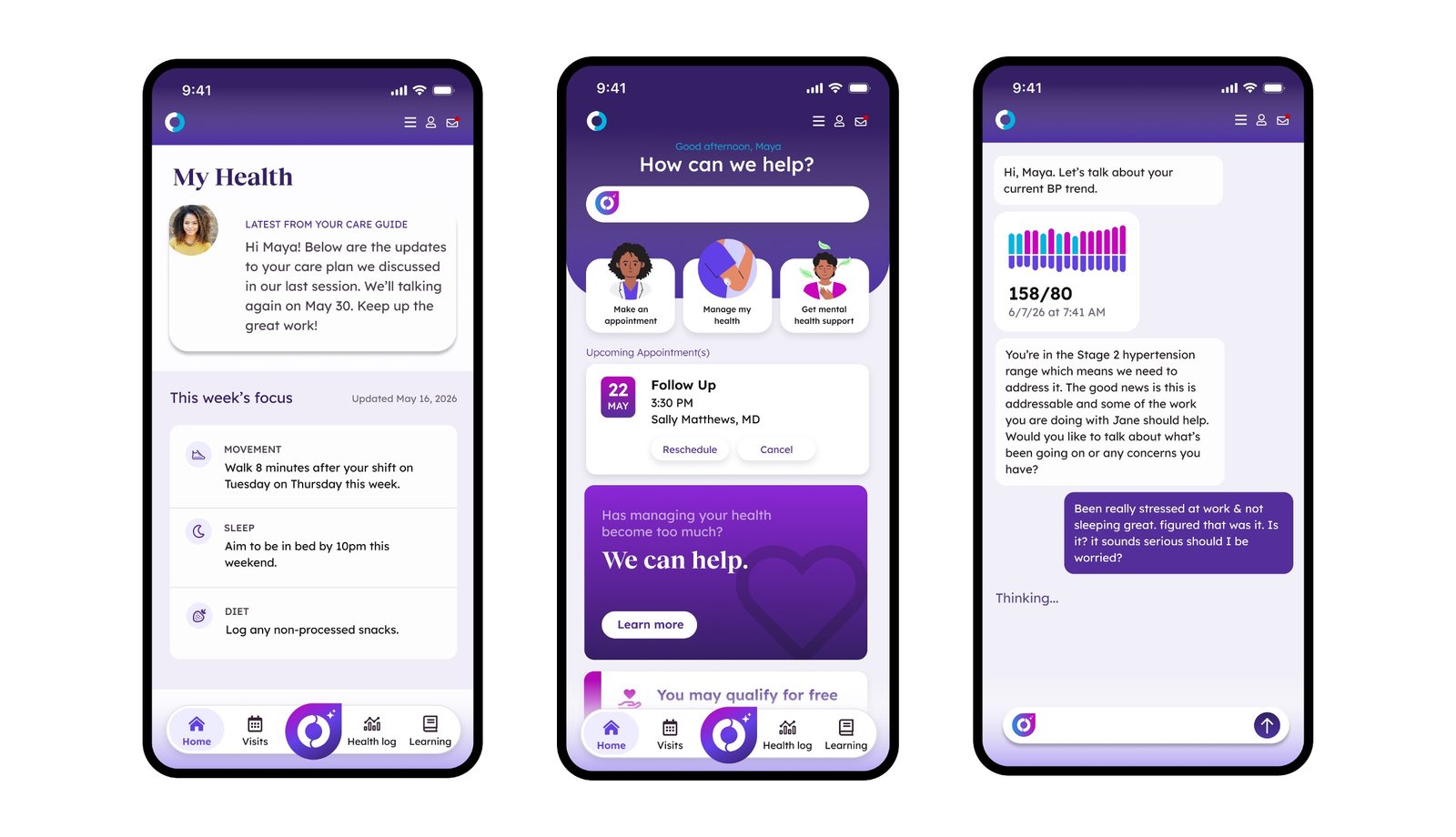
Teladoc Health announced a new virtual care model for employers and health plans designed to provide a more tailored and personalized approach to members while tying payments to clinical and financial outcomes.
The model, called Teladoc One, was built to replace fragmented symptom-specific medical programs with integrated services that dynamically support an individual’s entire health needs, rather than addressing just one disease at a time, company executives said. As part of the model, Teladoc Healthcare teams work with members’ local providers to deliver and coordinate care across a virtual environment.
“Teladoc One is fundamentally a new care model that changes the way care is delivered,” Kelly Bliss, president of U.S. group health at Teladoc Health, said in an interview with Fierce Healthcare.
Teladoc One was developed in partnership with certain health insurance groups and employers and was initially targeted at people with cardiometabolic conditions. The program, based on the Teladoc One model, will launch in September with an initial group of enterprise customers and is expected to be generally available in January 2027.
Bliss noted that while employers are operating in a “sea of point solutions,” they are also faced with rising healthcare costs that add significant financial constraints.
“Three out of four Americans manage at least one chronic disease, resulting in approximately $4.7 trillion in annual expenses, costs that employers and health systems cannot afford,” Bliss noted.
“For years, virtual care has been focused on individual illnesses and conditions, but that hasn’t really changed some of the trajectory of health outcomes and care costs. Many employers are now contracting with different point solutions, which creates health silos – silos of health data and silos of health outcomes – where risk is identified too slowly because there is no single organization that has a holistic view of the individual,” she said.
Addressing these challenges requires new models that provide clinical breadth and “structural agility” to intervene in a variety of ways across different specialties and care modalities, and to manage long-term relationships with members, Bliss said.
As the nation’s largest multispecialty virtual care practice, Teladoc Health has the capabilities, clinical data, behavioral data and expertise to offer new models to employers and health plans, Bliss asserted.
The company has completed 100 million visits across primary care, mental health, chronic disease, and acute care. According to the company, Teladoc Health spent two years building the technology foundation for Teladoc One by leveraging the company’s vast virtual health data.
The platform is powered by Teladoc Health’s Pulse intelligence engine, which aggregates clinical history along with claims, pharmacy, device, medical record, engagement, and eligibility data. These data insights allow care teams to identify emerging trends, intervene, coordinate care, support specialty referrals and improve member outcomes, Teladoc executives said.
“Teladoc One is built on what I call a primary care chassis, which allows us to provide more individualized care and access care more dynamically to meet a broader range of needs, rather than being limited to a predefined set of programmatic interventions as digital health point solutions do,” Bliss said.
The Teladoc One model aims to drive both clinical outcomes and lower total cost of care while keeping 100% of the fee at risk.
“Success will be measured by improved condition management, medication adherence, care plan engagement, and follow-up, along with reduced medical costs, unnecessary referrals, emergency department visits, and hospitalizations, and more appropriate medication and treatment site decisions,” Dr. Ethan Burke, chief medical officer at Teladoc Health, told Fierce Healthcare. “Teladoc One puts 100% of its fees at risk, so its success is directly tied to proven healthcare cost savings and improved clinical outcomes.
One key feature of the model, Burke said, is that Teladoc’s healthcare team works with members’ existing health care providers to complement the care provided by brick-and-mortar primary care physicians and specialists.
“Care guides and clinicians coordinate care referrals, exchange clinical information through health information exchanges and secure provider messaging, and follow-up to help patients successfully connect to in-person care when needed. The goal is to create a seamless experience across virtual and local care, reducing fragmentation and improving continuity,” he said.
“Suppose our care team realizes that an alternative drug is a better fit. In that scenario, one of the NPs on the care team reaches out directly to the patient’s PCP and flags it down. We are pleased that external providers have welcomed these interventions and collaborations. In our early pilots, any outreach to members’ brick-and-mortar primary care was welcomed,” he said.
For patients, the model is designed to support personalized care pathways, with new capabilities that match patients to the right level of care optimized for cost and needs. According to the company, this care model is built to connect and adapt to provide proactive, always-on care and guidance.
“Imagine a patient with high blood pressure, weight concerns, or increased stress. Instead of each patient having a separate program, they get one connected care experience,” Burke said. “Care teams can identify changes in health data in real-time, and AI provides reminders and check-ins between visits, and care teams adjust medication management, nutritional support, health behaviors, specialist referrals, and more as needed. If in-person care is required, we coordinate it directly for a seamless experience.”
This launch is part of Teladoc Health’s strategy to enhance integrated care delivery. Approximately two-thirds of Teladoc Health’s customers own two or more products. A recent study of more than 29,000 Teladoc Health members enrolled in multiple chronic care programs found that combining chronic care with mental health significantly lowered blood sugar levels and led to weight loss in members.
Patients will be supported by a multidisciplinary virtual care team of licensed clinicians, certified health coaches, registered dietitians, mental health therapists, and specialists. Patients have a care guide that keeps them on track with their care plan, escalates to other members of the care team as needed, and coordinates with primary care physicians and specialists in our network.
Teladoc Health also built AI support to send members reminders, assist with scheduling, and provide personalized check-ins between interactions with medical teams.
As part of its model, Teladoc Health builds a patient’s clinical profile based on medical history, insurance claims, pharmacy records, medical records, connected devices, health information exchanges (HIEs), biometric data, engagement patterns and patient-reported preferences, Burke said.
“This dynamic profile helps healthcare teams continuously assess risk, identify potential problems early, and proactively intervene before a patient’s condition worsens. We use data and technology to personalize outreach, monitor changes in health status, support care plan check-ins, and provide clinicians with relevant clinical and behavioral insights before any patient interaction.” “The result is a more proactive, personalized model of care designed to improve outcomes, strengthen patient engagement, and reduce avoidable hospitalizations. Importantly, AI supports care teams while qualified clinicians remain responsible for all diagnosis, treatment decisions, and direct patient care.”
