


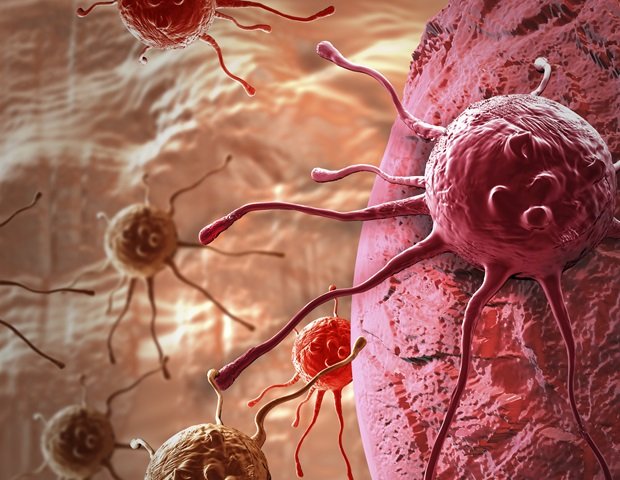
City of Hope®, one of the nation’s largest and most advanced cancer research and treatment institutions, home to a national medical center ranked among the nation’s top cancer centers by U.S. News & World Report, has launched an innovative Phase 2 clinical trial aimed at mapping how tumors change when they begin to resist immunotherapy, a treatment that improves the immune system’s ability to fight disease. This study will focus on advanced non-small cell lung cancer (NSCLC), the most common type of lung cancer, accounting for 87% of cases.
The six-year IMMUNO-BIOMAP trial, which aims to enroll 535 patients with newly diagnosed NSCLC, will use advanced predictive models to tailor treatment to the evolving biology of a patient’s tumor. This research is supported by a grant of up to $23.7 million from the Advanced Research Projects Agency for Health (ARPA-H) to City of Hope’s Ravi Sargia, Jyoti Malhotra, and Alitro Nath.
Our goal is to develop clear guidelines for choosing the most appropriate next treatment when a patient’s cancer does not respond to initial treatment. City of Hope is determined to find reliable ways to predict who will benefit from immunotherapy and who is likely to have better outcomes with other treatment options. ”
Ravi Sarzia, MD, Principal Investigator, Professor, Director of Medical Oncology and Therapeutic Research at City of Hope, and Arthur and Rosalie Kaplan Professor of Medical Oncology
For patients with advanced NSCLC, doctors often turn to powerful drugs called immune checkpoint inhibitors, which target a protein called PD-L1 on cancer cells. However, less than 40% of patients achieve a good outcome, and many develop resistance to the drug.
Researchers at City of Hope’s Beckman Institute aim to revolutionize the way oncologists treat NSCLC using PD-L1 immunotherapy. They are diving deep into the world of biomarkers, the biological clues that help doctors match a patient’s cancer to the most effective treatment. The research team also plans to investigate circulating tumor DNA to develop new strategies that can keep patients responding positively to these life-prolonging drugs for longer.
In the second phase of the trial, researchers will aim to deploy new treatments in real time based on these biomarkers, halting disease progression and increasing treatment success rates. The research team will focus on how second-line immunotherapy drugs address the challenge of resistance, particularly in patients with tumors containing specific genetic mutations known to promote cancer growth and spread.
“Our ultimate goal is to identify groups of patients who respond well to personalized and biomarker-based treatments so that they can live longer without relapse,” said Dr. Sarzia. “With support from ARPA-H, these discoveries could usher in a new era in the fight against lung cancer.”
City of Hope is the only institution in the nation to receive ARPA-H funding for lung cancer research in the ADAPT study.
This ambitious $142 million effort, under ARPA-H’s Advanced Analytics for Precision Cancer Therapy (ADAPT) program, aims to integrate cutting-edge technology and top experts in tumor biology to deliver personalized cancer treatments that evolve with a patient’s disease.
This study will explore the best way to use immunotherapy and assess whether combining it with other treatments is more effective than traditional chemotherapy alone.
“Late-stage non-small cell lung cancer is unique in that a patient’s response to initial treatment often influences the success of subsequent treatment. Patients who have a positive response within the first two years tend to be more likely to achieve sustained improvement. Solving this mystery is one of our key objectives,” said lead investigator Alitro Nath, Ph.D., assistant professor in the Division of Medical Oncology and Therapeutic Research Division of Molecular Pharmacology.
Although immunotherapy improves survival rates for some patients, survival rates are often not as good for patients who receive chemotherapy after immunotherapy. Many cancers shed malignant cells or release circulating tumor DNA into the bloodstream before visible changes appear on a patient’s scans. This phenomenon highlights the need for more accurate and timely monitoring of patient response to treatment.
“Measuring tumor DNA levels in the blood over time can help identify which patients are at higher risk of drug resistance or relapse after immunotherapy. Understanding how checkpoint drugs interact with tumor cells can help identify each patient’s unique cancer DNA. We can adjust treatment plans based on the signals, increasing the chance of success,” said lead researcher Jyoti Malhotra, MD, Associate Professor, Department of Medical Oncology and Therapeutic Research, and Director of Thoracic Medical Oncology at City of Hope. Hope from Orange County.
The clinical trial will utilize City of Hope’s network of approximately 40 clinical sites serving a diverse population of lung cancer patients across the United States.
“We believe the insights gained from this trial will transform the way physicians manage the care of patients with non-small cell lung cancer,” said Dr. Sarzia. “We are excited to work with all of our colleagues at City of Hope to improve care for patients with lung cancer. Our findings give hope for more successful treatment and longer lives for the 200,000 people diagnosed with lung cancer each year in the United States.”
