


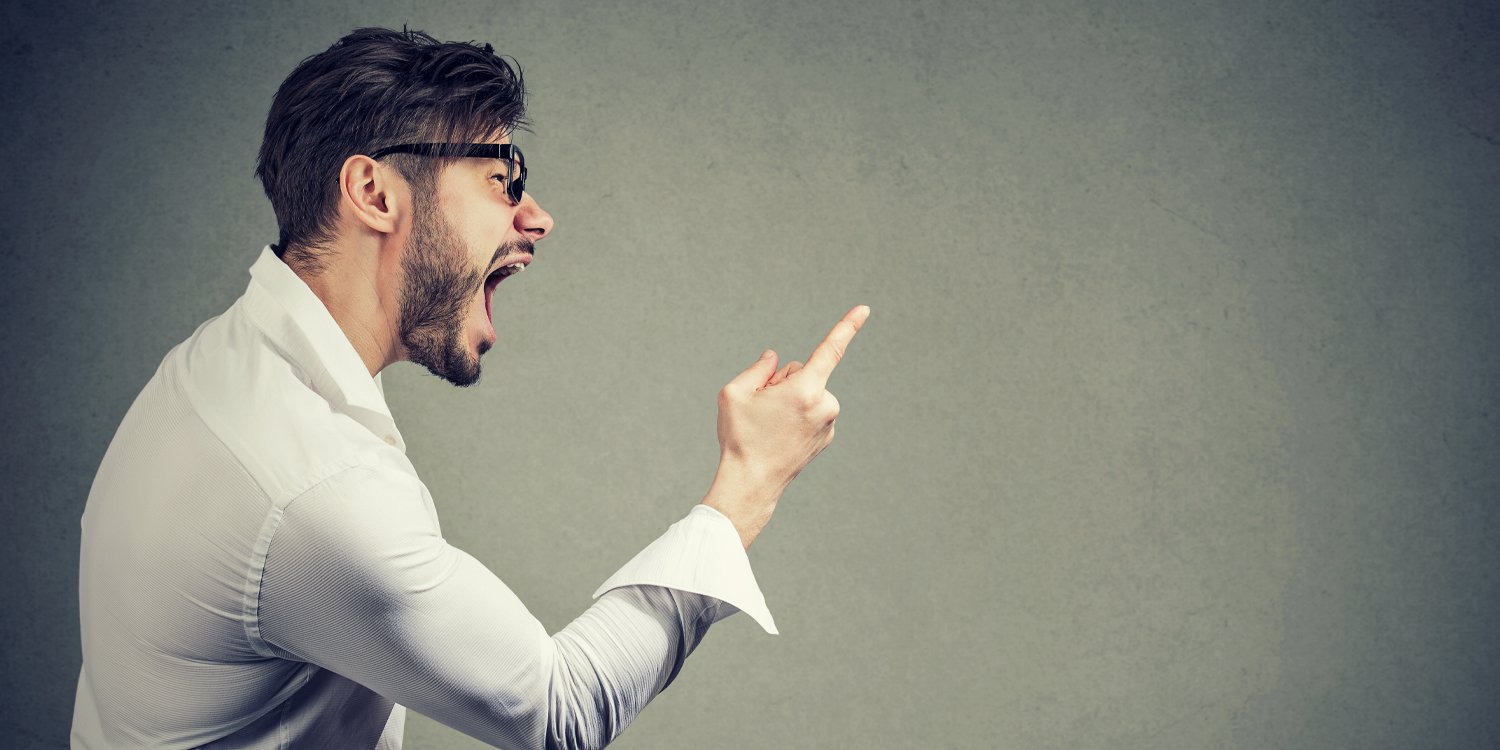
People consider rude behavior directed at the person who initiated the conflict to be more respectable than disrespectful behavior towards the person who started the conflict, but still prefer a polite and neutral response. This research Journal of Experimental Social Psychology.
Rude behavior, including derogatory remarks, disrespectful treatment, and other disrespectful acts, is generally considered harmful because it can cause conflict, disrupt coordination, and weaken relationships within a group. Researchers have paid considerable attention to the causes of uncivil behavior and how it affects targets, witnesses, workplaces, and communities.
The study also showed that incivility can be widespread. If someone is rude, the target or witness may react in kind, escalating the cycle of rudeness. Most of the research to date has focused on the person who initiates the cycle, leaving open the question of whether all uncivil acts are judged equally.
Merrick R. Osborne, a researcher at the University of Southern California, and his colleagues investigated whether people distinguish between incendiary rudeness, where people introduce rudeness into an interaction, and retaliatory rudeness, which is directed at the person who initially acted rudely.
Based on the theory that the moral meaning of an act depends on its social context, the researchers proposed that retaliation may be seen as more justified or virtuous because it may appear to confront wrongdoing, defend other members of a group, or reinforce expectations about how people should be treated. They predicted that this recognition of virtue would cause observers to accord greater social leniency and status to retaliators than to instigators.
The researchers conducted five pre-registered experiments with a final sample of 848 participants. Study 1 involved 135 Reddit users recruited through Prolific Academic. Participants identified subreddits that were important to them, named two people who frequently posted, and their pen names were incorporated into the virtual interactions. Depending on the condition, a poster might make a normal post and then receive an uncivil response, or initially post something rude and then receive an equally rude response.
Study 2 recruited hockey and baseball fans through Prolific and retained 141 hockey fans and 147 baseball fans. Participants imagined a player from their favorite team initiating a physical confrontation or retaliating after the opposing player launched a comparable attack. Study 3 included 185 Prolific participants who worked full-time or part-time. They recalled or imagined a workplace situation in which a colleague initiated disrespectful behavior, retaliated against the instigator, or directed the disrespectful behavior toward an unrelated third party.
Study 4 recruited 240 participants through CloudResearch. Participants imagined working for a fictitious company and read an email exchange in which an employee made an uncivil or uncivil comment about a colleague’s report. The second employee then responded politely, remained neutral, or responded uncivilly. Participants rated both employees, allowing researchers to compare retaliation with incitement, silence, and polite response.
Throughout the study, participants completed an eight-item Virtue Scale that assessed whether they thought the action was right, fair, honorable, virtuous, morally correct, and just, and a Status Attribution Scale that assessed their admiration and respect for the actor. The researchers also used contextual measures of social rewards, such as upvotes on Reddit, willingness to buy an athlete’s jersey or vote for sports honors, recommendations for promotions at work, and willingness to spend time with co-workers.
Study 3 also included the 10-item negative affect portion of the Positive and Negative Affect Schedule as a control measure. Although most ratings in the first three studies used a 7-point scale, Study 4 used a scale ranging from negative to positive ratings to help researchers determine whether the retaliator was truly admired or simply disliked.
Across Reddit and sports experiments, participants consistently judged retaliatory incivility more favorably than incendiary incivility. Reddit users initially accorded greater status to those who posted rude replies to rude posters, and were about seven times more likely to upvote those replies than similarly rude comments that were not retaliatory. Hockey and baseball fans alike viewed players who retaliate as more deserving of status and team-related rewards than those who initiated the conflict.
This pattern emerged despite the fact that retaliation can disadvantage a participant’s preferred team, harm an opposing player who was not personally responsible for the initial transgression, and occur in sporting contexts where aggressive acts are interpreted as helping the team. Across these studies, retaliators were perceived as more benign, and this difference helped explain why retaliators received greater social tolerance.
Workplace research further showed that the impact depends on who is the target of the uncivil behavior. Participants gave greater status and work-related rewards to coworkers who directed the rude behavior toward the initial instigator than to coworkers who initiated the disrespectful behavior and spread it to unrelated coworkers. Inciting and redirected incivility were similarly rated, suggesting that observers are not simply more tolerant of those who act second.
However, Study 4 revealed that more lenient measures were not worthy of approval. Retaliators received less negative evaluations than instigators, and received more favorable evaluations when they followed up another person’s rudeness with a rude response rather than a polite comment. Nevertheless, they were still rated as more immoral and less worthy of respect than the midpoint of the scale. Civil responses were rated most positively, but neutral responses were also generally preferred over rude retaliation. Therefore, retaliatory incivility was not rewarded in any absolute sense. It was mainly punished less severely than the incivility that caused the conflict.
The authors note that their measure of virtue, although highly internally consistent, has not undergone formal statistical validation. The study was also limited to the United States, with the sports experiment only examining men’s hockey and baseball, leaving questions about whether the results generalize across cultures, genders, and marginalized groups.
Overall, these findings indicate that people interpret rudeness in light of previous events and, while giving some moral and social leniency to retaliation, continue to think civility is the more appropriate response.
The study, “Two Wrongs Make It More Right: How Retaliatory Rudeness Receives Social Forgiveness,” was authored by Merrick R. Osborne, Suhaib Abdulrahman, Ali Omrani, Jackson P. Trager, and Morteza Deghani.
