


For decades, medicine has pursued the simple but elusive goal of getting the right drug to the right place at the right time. New research from the University of Oregon suggests that the timing of regeneration cues may be even more important than previously realized when it comes to healing from injury.
The findings suggest a possible explanation for why some regenerative therapies are successful in the lab but perform poorly in the clinic. This means that regenerative therapies may be delivering the right regenerative cues in the wrong order. This study also demonstrates how to precisely control the rate at which playback cues are released. It could one day help doctors better treat complex injuries that require multiple treatments to be administered in a specific order, mimicking the body’s natural healing process.
In two recently published studies, biopolymer and controlled release journalAccelerating Scientific Impact Scientists at the Phil and Penny Knight Campus have shown that releasing specialized tissue repair signals in a staggered manner accelerates blood vessel regeneration compared to releasing them all at once.
By releasing it in stages, we were actually able to learn more about the order in which these signals act during the regeneration process and how their timing contributes to promoting healing. This may help explain why some promising treatments are not achieving their full potential in patients. For future patients, getting the timing right could be as important as getting the biological signals right. ”
Marian Hettiarachchi, Larry Simpson Professor and Associate Professor in the Department of Bioengineering
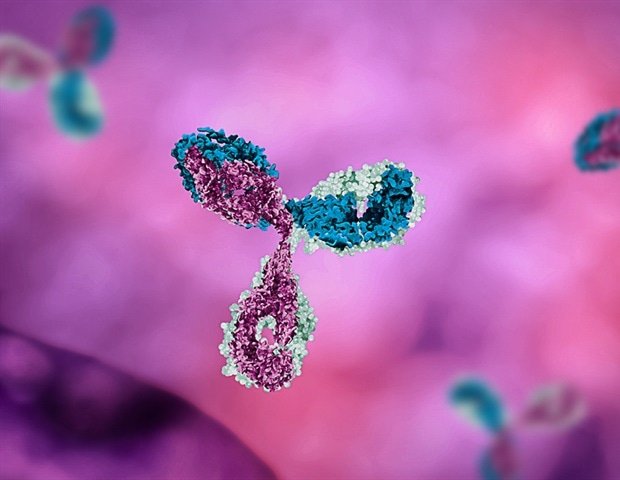
The researchers’ approach relies on affibodies, artificial proteins that function like antibodies but are about one-tenth the size. Unlike natural antibodies, which evolve to recognize foreign invaders such as viruses, affibodies can be designed from scratch to bind to almost any target. In this case, they bind to biological signals, or growth factors, that direct tissue repair.
Hettiarach’s lab designed affibodies that hold specific regenerative cues called growth factors and temporarily block their activity. Depending on how tightly the affibody grips the target, the growth factors are released at different rates and become biologically active anywhere from minutes to days later.
The task of constructing an affibody with precisely tailored binding strengths fell to graduate student Justin Svendsen, a biochemist with a talent for computational modeling. Svendsen used computer models to design affibodies that target growth factors involved in blood vessel formation and tested their specificity in the lab. They then used the same computational approach to predict how small genetic mutations would change the affibody’s release rate, screening hundreds of candidate designs in silico before testing them on the bench.
“We are essentially developing a molecular timer,” Svendsen said. “By introducing a single mutation, we can program affibodies to release targeted growth factors over minutes, hours, or even days.”
The first study was biopolymerestablished that a single genetic mutation can shift an affibody’s release timeline from minutes to up to seven days, demonstrating that protein behavior can be reliably tuned through computational design before a single experiment is performed in the lab.
The second study was controlled release journal Together with co-author Chandler Asnes, they expanded the approach from one growth factor to three growth factors, all involved in blood vessel regeneration. By swapping out different affibodies, each tuned to release its target on a different schedule, the researchers were able to deliver the three growth factors in any order they chose.
Blood vessel regeneration was clearly worse when all three growth factors were released simultaneously than when they were released in a staggered manner. The researchers believe this may be because growth factors are highly context-dependent, with the same molecule promoting the growth of new blood vessels in one environment and potentially causing regression of existing blood vessels in another.
Researchers say this approach could be extended far beyond blood vessel repair. Because affibody design is primarily computational, new candidates can be modeled and screened much faster than laboratory-only methods. This pipeline is currently being applied by the Hettiarach laboratory to bone healing, muscle repair, and spinal cord regeneration.
“It has the potential to revolutionize the way we approach injuries that require multiple, precise interventions,” Hettiarachchi said.
Svendsen said the team sees potential in a wide variety of injuries. “We’re excited to be able to apply this across tissues and cell types,” he said. “We think applications could range from sports injuries to more serious medical conditions.”
sauce:
Reference magazines:
J.E., Svendsen; Others. (2026). Stepwise affinity-controlled delivery of vascular endothelial growth factor, fibroblast growth factor-2, and platelet-derived growth factor promotes angiogenesis in vitro. Controlled Release Journal. DOI: 10.1016/j.jconrel.2026.115183. https://www.sciencedirect.com/science/article/pii/S0168365926005869?via%3Dihub
