

Close Menu

    Subscribe to Updates

    Get the latest creative news from FooBar about art, design and business.

    What's Hot

    Navigating the Rapid Evolution of Medical Research: What Clinicians Need to Know

    October 16, 2026

    Why Environmental Health and Climate Change Demand Immediate Action

    October 15, 2026

    The Urgent Challenges Facing Population Health Today

    October 14, 2026
    Facebook X (Twitter) Instagram
    Facebook X (Twitter) Instagram
    Health Magazine
    • Home
    • Environmental Health
    • Health Technology
    • Medical Research
    • Mental Health
    • Nutrition Science
    • Pharma
    • Public Health
    • Discover
      • Daily Health Tips
      • Financial Health & Stability
      • Holistic Health & Wellness
      • Mental Health
      • Nutrition & Dietary Trends
      • Professional & Personal Growth
    • Our Mission
    Health Magazine
    Home » News » New ‘living plastic’ self-destructs in just 6 days without leaving behind any microplastics
    Nutrition Science

    New ‘living plastic’ self-destructs in just 6 days without leaving behind any microplastics

    healthadminBy healthadminJuly 17, 2026No Comments3 Mins Read
    New ‘living plastic’ self-destructs in just 6 days without leaving behind any microplastics
    Share
    Facebook Twitter Reddit Telegram Pinterest Email


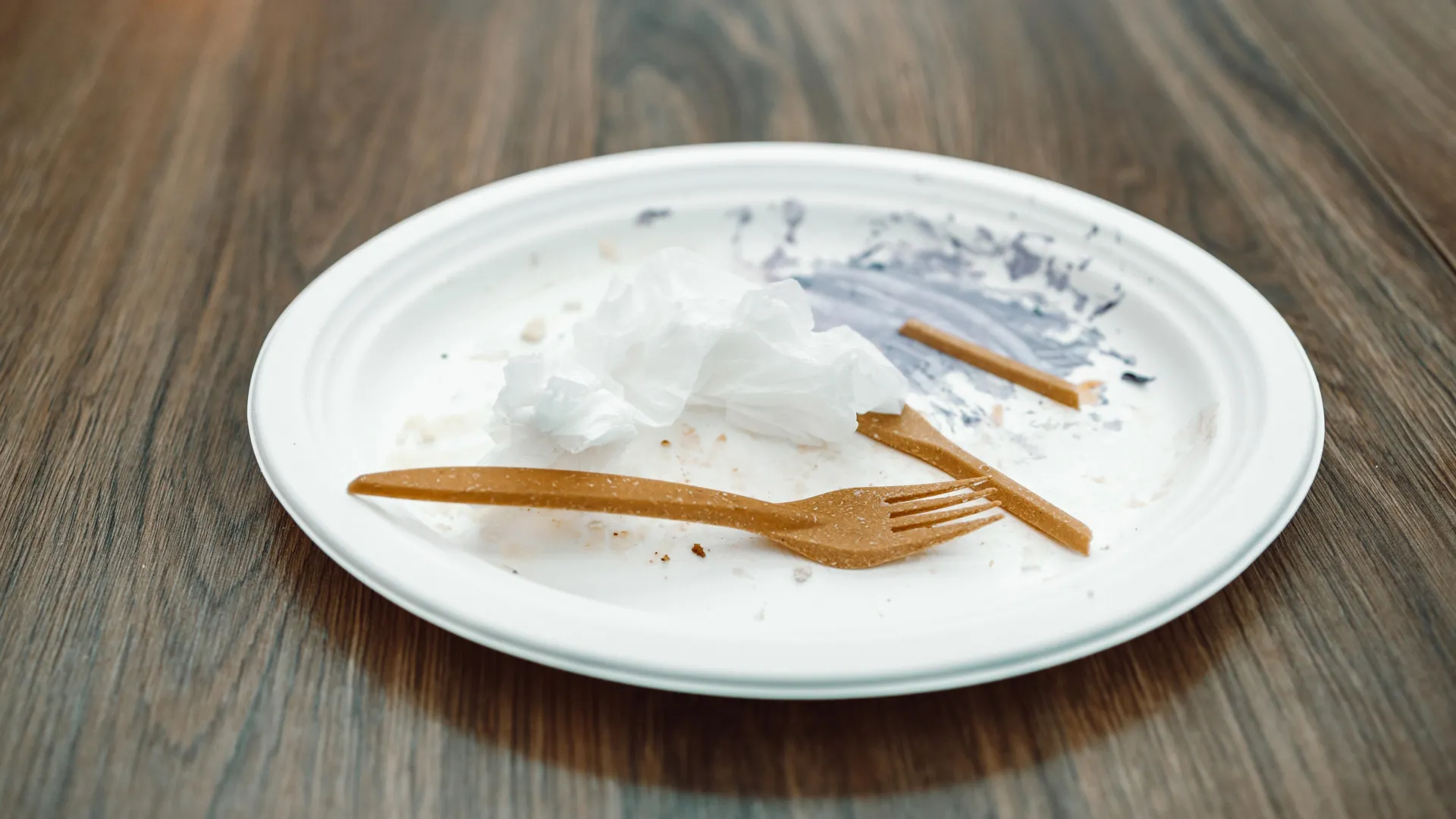
    Although many plastic products are only used for minutes or hours, the materials can remain in the environment for decades or even centuries. Researchers are now investigating a different approach: plastics designed to break down on their own when activated.

    These materials, known as living plastics, contain dormant microorganisms that can degrade the surrounding polymers. In a study published in ACS applicable polymer materialsScientists have developed a version that completely decomposes in six days without producing microplastics.

    “The realization that traditional plastics last for centuries, while many applications such as packaging are short-lived, led us to wonder if it was possible to incorporate degradation directly into the material’s life cycle,” explains Zhuojun Dai, corresponding author of the paper.

    Turning microorganisms into built-in processing systems

    Some microorganisms naturally produce enzymes that cut long polymer chains into smaller pieces. Because plastics are made from polymers, researchers have been studying whether these enzymes, or the microorganisms that produce them, can be embedded directly into plastic materials.

    “By embedding these microbes, plastics can effectively ‘come to life’ and self-destruct on command, turning durability from a problem to a programmable function,” Dai explains.

    Previous living plastic designs often relied on a single enzyme, limiting the efficiency of material degradation. To improve the process, Dai, Jin Geng, Dianpeng Qi et al. Bacillus subtilis It produces two polymer-degrading enzymes that work together.

    The first enzyme cuts long polymer chains at random positions, reducing them to shorter parts. The second step then works from the ends of these fragments and further breaks them down into individual monomeric building blocks.

    Complete disassembly in 6 days

    Researchers found that the dormant Bacillus subtilis Spores containing polycaprolactone, a polymer common in 3D printing and some surgical sutures. By keeping the bacteria in spore form, the team was able to protect them until they were ready to begin the decomposition process.

    The finished living plastic had mechanical properties similar to regular polycaprolactone film. It maintained its strength and functionality under normal conditions, suggesting that the addition of spores did not significantly weaken the material.

    To activate the bacteria, the team added nutrient broth heated to 122 degrees Fahrenheit (50 degrees Celsius). The spore became active and began producing two enzymes. Within six days, the plastic was completely broken down to its basic components.

    Because the enzymes work in sequence, the material doesn’t just break down into tiny plastic pieces. This process was efficient enough to prevent the generation of microplastics during decomposition.

    Disappearing wearable devices

    To demonstrate the potential for real-world use, researchers created wearable plastic electrodes from biomaterials. The device worked as intended, but completely degraded within two weeks of startup.

    The results suggest that living plastics could eventually be used in products that need to remain durable for a limited period of time, but should not persist after being disposed of.

    Expansion of technology to other plastics

    The research team now hopes to develop a way to activate bacterial spores in water, where a significant portion of plastic pollution accumulates.

    Although the experiments focused on a single polymer, the researchers believe the same general strategy can be applied to other materials, including plastics, which are widely used in disposable products.

    The authors acknowledge funding from the China National Key Research and Development Program, Shenzhen Medical Research Fund, National Natural Science Foundation of China, Natural Science Foundation for Outstanding Young Scholars of Guangdong Province, and Shenzhen Science and Technology Program.


    Source link

    Visited 16 times, 1 visit(s) today
    Share. Facebook Twitter Pinterest LinkedIn Telegram Reddit Email
    Previous ArticleBlood p-tau217 levels indicate risk of cognitive impairment years before symptoms appear
    Next Article A mother’s diet high in UPF may affect her child’s health years later
    healthadmin

    Related Posts

    Navigating Evidence Gaps in the 2025-2030 Dietary Guidelines

    October 11, 2026

    Navigating Conflicting 2025 Dietary Guidelines for Metabolic Health

    October 10, 2026

    Navigating the 2025-2030 Dietary Guidelines for Cardiometabolic Prevention

    October 8, 2026

    Bridging the Gaps in 2025-2030 Dietary Guidelines for Metabolic Health

    September 22, 2026

    The Challenge of Updating Dietary Guidelines for Metabolic Health in Clinical Practice

    September 20, 2026

    Navigating Confusion Around the 2025-2030 Dietary Guidelines

    September 18, 2026
    Add A Comment

    Comments are closed.

    Categories

    • Daily Health Tips
    • Discover
    • Environmental Health
    • Exercise & Fitness
    • Featured
    • Featured Videos
    • Financial Health & Stability
    • Fitness
    • Fitness Updates
    • Health
    • Health Technology
    • Healthy Aging
    • Healthy Living
    • Holistic Healing
    • Holistic Health & Wellness
    • Medical Research
    • Medical Research & Insights
    • Mental Health
    • Mental Wellness
    • Natural Remedies
    • New Workouts
    • Nutrition
    • Nutrition & Dietary Trends
    • Nutrition & Superfoods
    • Nutrition Science
    • Pharma
    • Preventive Healthcare
    • Professional & Personal Growth
    • Public Health
    • Public Health & Awareness
    • Selected
    • Sleep & Recovery
    • Top Programs
    • Weight Management
    • Workouts
    Popular Posts
    • 1773313737_bacteria_-_Sebastian_Kaulitzki_46826fb7971649bfaca04a9b4cef3309-620x480.jpgHow Sino Biological ProPure™ redefines ultra-low… March 12, 2026
    • pexels-david-bartus-442116The food industry needs to act now to cut greenhouse… January 2, 2022
    • 1773729862_TagImage-3347-458389964760995353448-620x480.jpgDespite safety concerns, parents underestimate the… March 17, 2026
    • 1774403998_image_28620e4b6b0047f7ab9154b41d739db1-620x480.jpgGait pattern helps distinguish between Lewy body… March 24, 2026
    • 1773209206_futuristic_techno_design_on_background_of_supercomputer_data_center_-_Image_-_Timofeev_Vladimir_M1_4.jpegMulti-agent AI systems outperform single models… March 11, 2026
    • Leukemia-620x480.jpgBiomimetic platform powers CAR T therapy for… March 9, 2026

    Demo
    Stay In Touch
    • Facebook
    • Twitter
    • Pinterest
    • Instagram
    • YouTube
    • Vimeo
    Don't Miss

    Navigating the Rapid Evolution of Medical Research: What Clinicians Need to Know

    By healthadminOctober 16, 2026

    Stay updated on 2025-2026 clinical trials, FDA approvals, and emerging methodologies in oncology and beyond.

    Why Environmental Health and Climate Change Demand Immediate Action

    October 15, 2026

    The Urgent Challenges Facing Population Health Today

    October 14, 2026

    The Core Challenges Health Tech Founders Face in 2026

    October 13, 2026

    Subscribe to Updates

    Get the latest creative news from SmartMag about art & design.

    HealthxMagazine
    HealthxMagazine

    At HealthX Magazine, we are dedicated to empowering entrepreneurs, doctors, chiropractors, healthcare professionals, personal trainers, executives, thought leaders, and anyone striving for optimal health.

    Our Picks

    The Core Challenges Health Tech Founders Face in 2026

    October 13, 2026

    The Growing Health Crisis from Environmental and Climate Factors

    October 12, 2026

    Navigating Evidence Gaps in the 2025-2030 Dietary Guidelines

    October 11, 2026
    New Comments
      Facebook X (Twitter) Instagram Pinterest
      • Home
      • Privacy Policy
      • Our Mission
      © 2026 ThemeSphere. Designed by ThemeSphere.

      Type above and press Enter to search. Press Esc to cancel.