


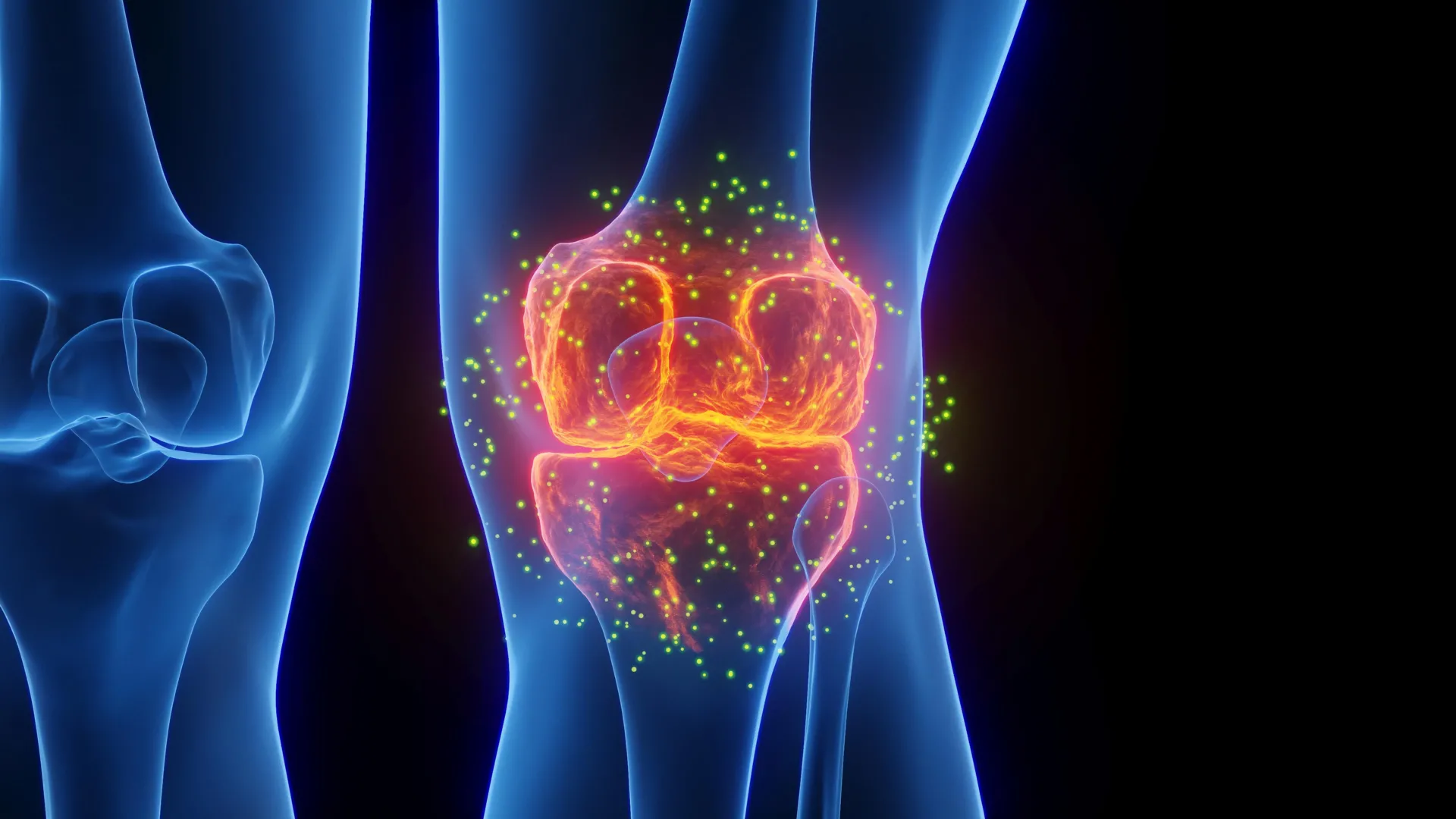
Researchers at the University of Alabama at Huntsville (UAH), part of the University of Alabama System, have identified a promising new use for continuous low-intensity ultrasound that may one day help treat joint injuries and reduce the risk of post-traumatic osteoarthritis. Their findings suggest that the non-invasive approach may shift the body’s immune response from long-term inflammation to tissue repair, providing a potential drug-free strategy to improve healing.
The study was published in the journal Nature scientific reportled by Dr. Anuradha Subramanian, professor of chemical and materials engineering. It combines biological research conducted by Dr. Shahid Khan during his doctoral studies with computational and statistical analysis developed by Dr. Satyaki Roy, Professor of Mathematical Sciences, with contributions from graduate student Owen Trippani. This research was funded by the National Institutes of Health through an R01 grant awarded to Subramanian.
Effects of ultrasound on immune cells
To understand how macrophages respond to continuous low-intensity ultrasound, the research team focused on macrophages, specialized immune cells that play important roles in both inflammation and tissue repair.
“After an injury, the body recruits inflammatory ‘defender’ macrophages (M1) to remove damaged tissue and healer macrophages (M2) to support repair and recovery,” Subramanian explains. “Sustained predominance of protective macrophages can create a prolonged inflammatory environment that contributes to post-traumatic osteoarthritis.”
The researchers wanted to see if ultrasound could encourage these immune cells to transition from an inflammatory state to one that promotes healing.
“In the ‘M1’ state, microphages promote inflammation to fight damage and infection, but prolonged M1 activity can also harm healthy tissue,” Professor Subramanian said. “In contrast, ‘M2-like’ macrophages support tissue repair and recovery. Shifting macrophages to an M2-like state is important because it may help reduce chronic inflammation while promoting healing in injured joints. Our findings suggest that continuous low-intensity ultrasound may help restore this balance by promoting a more reparative macrophage response.”
Roy says chronic inflammation is a major factor in the development of post-traumatic osteoarthritis.
“Post-traumatic osteoarthritis is caused in part by persistent inflammation that limits tissue repair and promotes joint degeneration,” Roy added. “Our team is interested in continuous low-intensity ultrasound because it provides a non-pharmacological, non-invasive approach that may modulate immune cell behavior and promote a more reparative healing environment in injured joints.”
A more realistic model of joint damage
To better recreate conditions inside injured joints, the researchers relied on fragments of fibronectin, a molecule produced when damaged tissue is destroyed, rather than using only traditional laboratory methods that induce inflammation. This approach created a model that more closely reflects the biological environment that occurs after joint injury.
The research team also combined transcriptomics, the large-scale study of gene activity, with an advanced computational technique known as differential clustering. Rather than analyzing genes one by one, this technology identifies groups of genes whose behavior changes together, providing a broader picture of how immune cells respond to ultrasound treatment.
“This allowed us to study not only which genes change, but also how groups of genes change their coordinated behavior in response to ultrasound stimulation,” Roy says.
Early results show reduced inflammation
The researchers found that continuous low-intensity ultrasound reduced biological markers associated with inflammation, while increasing markers associated with a more reparative M2-like macrophage state.
Although research is still limited to laboratory experiments, the findings suggest that non-drug, non-invasive techniques may eventually be used to influence immune cell behavior and improve healing after joint injury. Researchers believe this technique could be part of future treatments aimed at slowing the progression of osteoarthritis and improving recovery after joint trauma.
“Next steps include validating these findings in animal models of early post-traumatic osteoarthritis and studying how ultrasound-based modulation affects long-term tissue repair in the setting of joint injury,” Subramanian says.
