


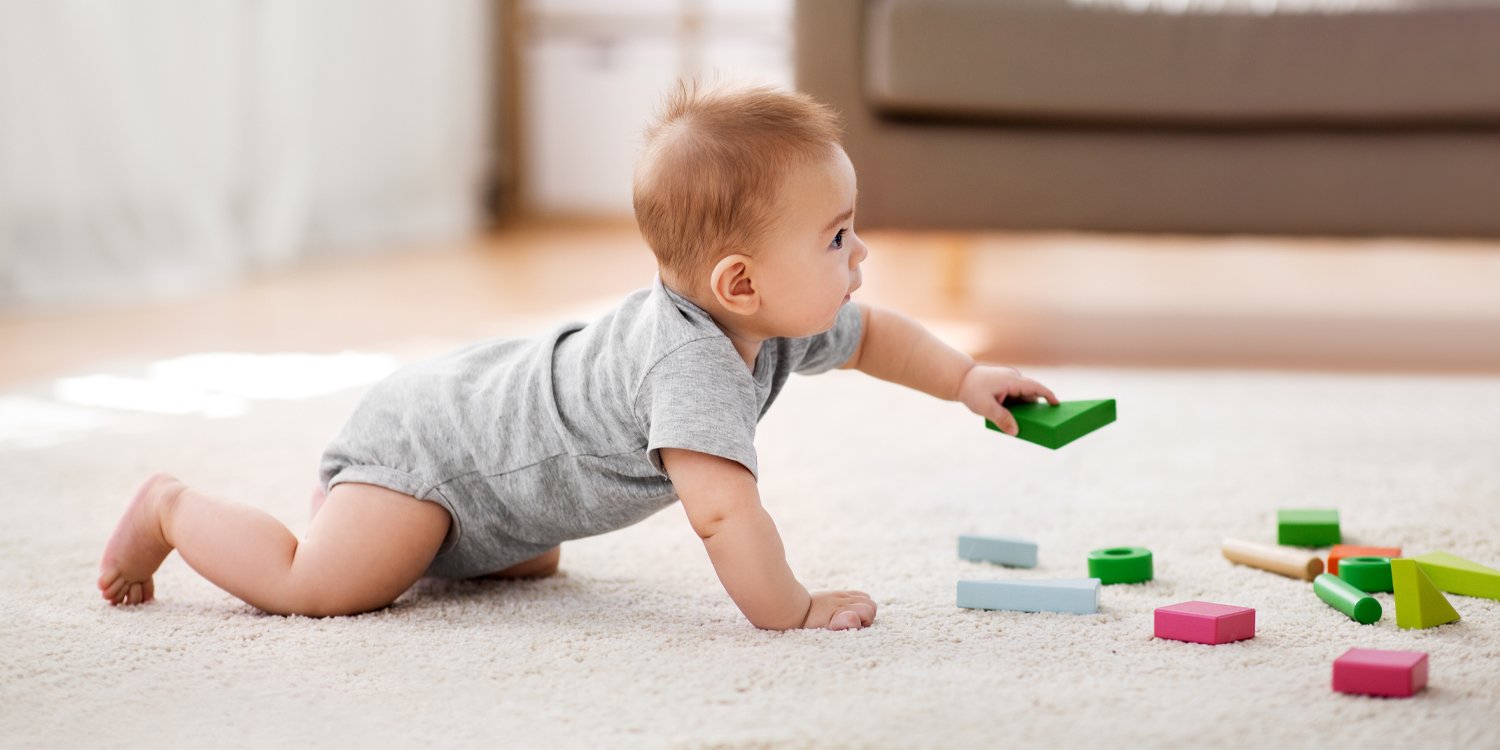
The type and amount of toys available in a home may reflect more than just a family’s purchasing habits. Having a large variety of toys in the home is associated with infants’ advanced interaction skills and early language development. These behavioral patterns were recently detailed in a study published in the Journal of Experimental Child Psychology.
Interactions in early childhood shape how the brain develops during adulthood. Everyday objects and playthings become tools that parents use to interact with their young children. These tools range from items that encourage formal learning, such as books and shape sorters, to objects that encourage imaginative scenarios, such as toy kitchens and dolls.
In the field of psychology, playthings are often seen as cultural tools. Their true developmental function emerges not only from the objects themselves, but also from how the caregiver presents and mediates them to the child. These interactions guide the child’s attention and provide an environment in which caregivers can talk, demonstrate behaviors, and teach cognitive skills.
Child development researchers are grappling with the question of how this physical environment relates to young children’s inner nature. Babies exhibit a variety of temperaments from birth. These natural properties result from a combination of genetic, biological, and environmental factors that interact over time.
Several temperament traits govern infants’ responsiveness to the world, determining how quickly and intensely they react to certain events. Other characteristics are related to behavioral control and focus on the child’s ability to manage these impulses and change the focus of attention.
One particular temperament trait is known as low-intensity pleasure. This concept refers to young children’s ability to find pleasure in quiet, low-energy activities, such as looking at a book or listening to quiet music. Children who prefer this calm state often find it easier to focus their attention. A state of quiet attention allows for the reflective pacing necessary for learning and often benefits early language acquisition and social understanding.
The researchers wanted to find out how the simple presence of household toys was associated with this particular temperament, children’s emotional skills, and mothers’ educational behaviors. Gabriela Cassie Rosenbaum of Ashkelon Academic College and Edna Orr of Gordon College of Education led the study. They sought to map relationships linking the physical play environment with biological characteristics and ultimate communication outcomes.
Researchers observed 63 infants between the ages of 11 and 30 months. The mothers of these children filled out a detailed questionnaire cataloging the types and quantities of toys in their home. These inventories included educational games, physical activity sets, musical instruments, pretend play items, and standard building blocks.
The mothers also completed a standardized assessment assessing their child’s temperament, focusing on their ability to enjoy themselves quietly. Another series of questionnaires assessed infants’ emotion regulation, social competence, and current communication milestones.
These communication milestones tracked the number of early words and symbolic gestures that infants now understand and use. For example, the study measured behaviors ranging from waving goodbye and playing everyday games to imitating adult behaviors such as pretending to talk on the phone.
To observe how the pairs actually interacted, the researchers videotaped 15 minutes of each mother and child playing together at home. The researchers provided the same set of standard objects for each session. The set included a toy jar, a pot with a lid, a baby bottle, a doll, a hairbrush, a plastic cup, and a soft block. The mothers were asked to act and play naturally as usual.
A trained coder then viewed the recordings and scored mothers’ teaching behaviors using a standardized observation checklist. This scoring involved recording moments when mothers explained reasons to their children, named objects, provided cognitive stimulation, or expanded conceptual ideas.
Statistical analysis revealed associations linking the home environment and children’s developmental progress. A richer and more diverse toy environment was associated with higher maternal education levels during recorded play sessions. Mothers whose families had a large variety of toys tended to provide more supportive cognitive feedback when interacting with their infants.
The researchers also noted a positive association between toy variety and infants’ natural temperament. Babies raised in homes with more enriching environments had higher scores on the Low-Intensity Hedonic Temperament Scale. They also showed more advanced social and emotional regulation skills, such as empathy and self-awareness.
All three of these factors (maternal teaching, quiet and thoughtful temperament, and emotional regulation) were correlated with improved communication and play outcomes. According to the data model, the physical presence of the toy serves as the foundation layer. This tool accommodates the temperament of young children who prefer calm, focused learning while providing an environment for maternal guidance.
Looking at individual toy categories, objects designed for cognitive learning, music, and motor coordination all showed positive connections with social-emotional skills and maternal educational behaviors. The researchers also documented differences in the distribution of household toys based on the child’s gender. Toys aimed at symbolic play or pretend play were more common in girls’ households, while toys aimed at physical activity were more common in boys’ households.
The study also collected data on family economic and educational backgrounds. In this particular analysis, the association between family socio-economic level and number of household toys was not statistically significant, but family background was positively associated with maternal educational qualities and infant socio-emotional skills. This is consistent with a broader sociological pattern in which economic security gives parents more time and energy to engage in structured learning activities with their children.
This study relies on a single time point observational approach. This type of cross-sectional design cannot prove that buying more toys directly leads to faster child development. Researchers note that having more toys alone does not promote infant development. Rather, a home filled with educational objects may reflect a rich environment in which parents already tend to interact and teach.
Much of the data was obtained from parent-reported surveys. Although these questionnaires are standard tools in developmental research, parent responses may contain subjective bias. The sample of 63 participants was modest and covered a wide developmental range, as the rate of language learning in children between 11 and 30 months of age is highly variable. Although the researchers took age into account mathematically, the wide range meant that the communication behaviors measured varied widely from child to child.
Based on these results, researchers can conduct longitudinal studies that follow children over many years. Future research could also include fathers and other caregivers to see how different families use play materials. It’s also helpful to objectively measure how much time children spend interacting with the toys they own, rather than simply tallying the number of items available to them.
The study, “Home Toy Enrichment and Infant Play and Communication Skills: The Mediating Role of Maternal Educational Qualities, Infant Temperament, and Social-Emotional Skills,” was authored by Gabriella Cassey Rosenbaum and Edna Oh.
