


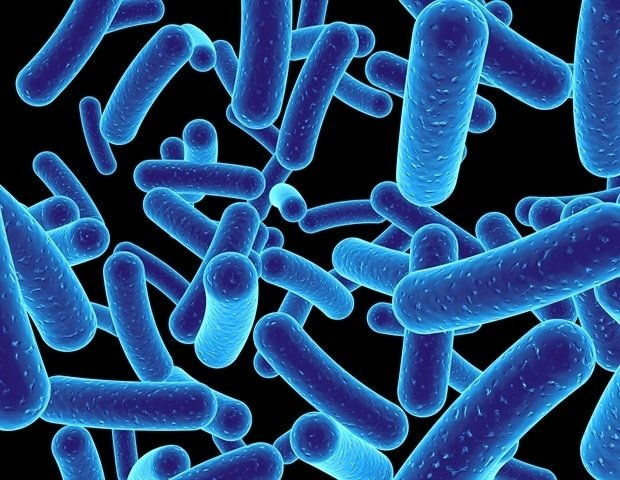
Escherichia coli (E. coli) is a mostly harmless bacterium that lives in the intestines of animals and humans. E. coli is the most well-studied bacterium, and when scientists discover something about E. coli, they often apply that discovery to all bacteria. So when scientists learned that E. coli allocates its resources to multiply as quickly as the environment allows, it was assumed that all bacteria behave similarly.
But researchers at the University of California, San Diego have discovered that B. subtilis, a bacterium commonly found in soil, employs a different survival strategy. The results, published in the journal Science, raise the question of whether other types of bacteria use different strategies and how that knowledge can help researchers think differently about antibiotic resistance (see sidebar for details).
slow growth for better survival
E. coli grows as fast as conditions allow, sometimes doubling every 20 minutes, so it continues to grow as quickly as possible even under adverse conditions. From an evolutionary perspective, the more E. coli there are, the more likely some of them will survive.
Ten years ago, researchers in the lab of physics professor Sak-Jun Jun at the University of California, San Diego tried to replicate the groundbreaking E. coli results in Bacillus subtilis, and the results were surprising. In E. coli, when protein production is partially blocked by antibiotics, the cell compensates by building more ribosomes, the protein-producing machinery. The research team expected Bacillus subtilis to react similarly. Instead, its ribosome levels remained flat. Jun thought he might have performed the experiment incorrectly, but when the results held up over repeated experiments, he realized that Bacillus subtilis managed stress in a fundamentally different way.
To learn more, Jun enlisted the help of Jade Wang, a professor of bacteriology at the University of Wisconsin-Madison. Mr. Wang is an expert on the exact reactions of bacteria, particularly to E. coli and Bacillus subtilis. Stringent responses are survival mechanisms used by bacteria to adapt to harsh environmental conditions, such as nutrient deprivation or the presence of antibiotics.
Through their collaboration, Jun realized that the two bacteria employ different survival control mechanisms.
Bacteria are generally thought to grow as fast as available nutrients allow by carefully balancing how they invest their resources. However, we found that under antibiotic stress, B. subtilis does the opposite, intentionally suppressing its growth below its capacity.
Seokjun Jun, Professor of Physics, University of California, San Diego
In order for bacteria to grow, they must allocate resources between their ribosomes, which build proteins, and the rest of the cell, which makes the building blocks of proteins, such as amino acids. In E. coli, a small molecule called (p)ppGpp acts like a control switch. When the supply of amino acids decreases in unfavorable conditions, (p)ppGpp increases and tells the cell to produce fewer ribosomes, keeping everything in sync.
B. subtilis has another regulatory switch called guanosine triphosphate (GTP). GTP plays two roles. They act as regulatory signals that enhance core processes such as protein synthesis and control functions such as stress responses. Under unfavorable environmental conditions, GTP levels in B. subtilis are reduced. This decrease slows the production of amino acids, but does not change ribosome levels. The result is a fragmentation, with cellular “factories” still full of machinery but with a diminishing supply of raw materials.
Keeping the number of ribosomes constant even when GTP decreases slows bacterial growth, but also increases resistance to stress. High GTP speeds up growth, but also makes cells more vulnerable. This trade-off allows B. subtilis to choose between faster growth and stress tolerance depending on environmental conditions.
In experiments conducted by Jun and Wang’s labs, Bacillus subtilis was much better at surviving in antibiotic environments than E. coli. This may be related to persistence, where a small number of cells survive exposure to antibiotics without developing genetic resistance and resume proliferation when conditions improve.
”We tend to think that bacteria are designed to multiply as quickly as possible. What surprised us is that this person chose not to do so. When we turned on suppressing ourselves and controlling our decisions to stay alive under stress, we grew faster, but we also became much more vulnerable.“Jun said.”Cells are constantly making a gamble between growing and surviving, and that gamble may be part of the reason why bacteria are so difficult to kill.”
The study challenges the long-held assumption that bacteria are simply wired to grow as fast as possible and shows that many bacteria balance growth and survival as an active strategy. Because this reduction in rate is directly related to antibiotic survival, the findings present a new way of thinking about how bacteria become resistant to antibiotics and endure stress.
sauce:
University of California, San Diego
Reference magazines:
Thierman, R., et al. (2026). Separation of global metabolic flux and proteome partitioning in bacteria. science. DOI: 10.1126/science.aeb6410. https://www.science.org/doi/10.1126/science.aeb6410
