

Close Menu

    Subscribe to Updates

    Get the latest creative news from FooBar about art, design and business.

    What's Hot

    Study finds that Democrats are disproportionately driving an increase in angry tweets in Congress

    July 5, 2026

    A light switch wakes up sleeping cancer cells, making them vulnerable again.

    July 5, 2026

    Classic psychedelics are associated with long-term increases in openness and decreases in neuroticism

    July 5, 2026
    Facebook X (Twitter) Instagram
    Facebook X (Twitter) Instagram
    Health Magazine
    • Home
    • Environmental Health
    • Health Technology
    • Medical Research
    • Mental Health
    • Nutrition Science
    • Pharma
    • Public Health
    • Discover
      • Daily Health Tips
      • Financial Health & Stability
      • Holistic Health & Wellness
      • Mental Health
      • Nutrition & Dietary Trends
      • Professional & Personal Growth
    • Our Mission
    Health Magazine
    Home » News » Scientists discover deep sleep circuits that build muscle, burn fat and revitalize the brain
    Nutrition Science

    Scientists discover deep sleep circuits that build muscle, burn fat and revitalize the brain

    healthadminBy healthadminJuly 5, 2026No Comments5 Mins Read
    Scientists discover deep sleep circuits that build muscle, burn fat and revitalize the brain
    Share
    Facebook Twitter Reddit Telegram Pinterest Email


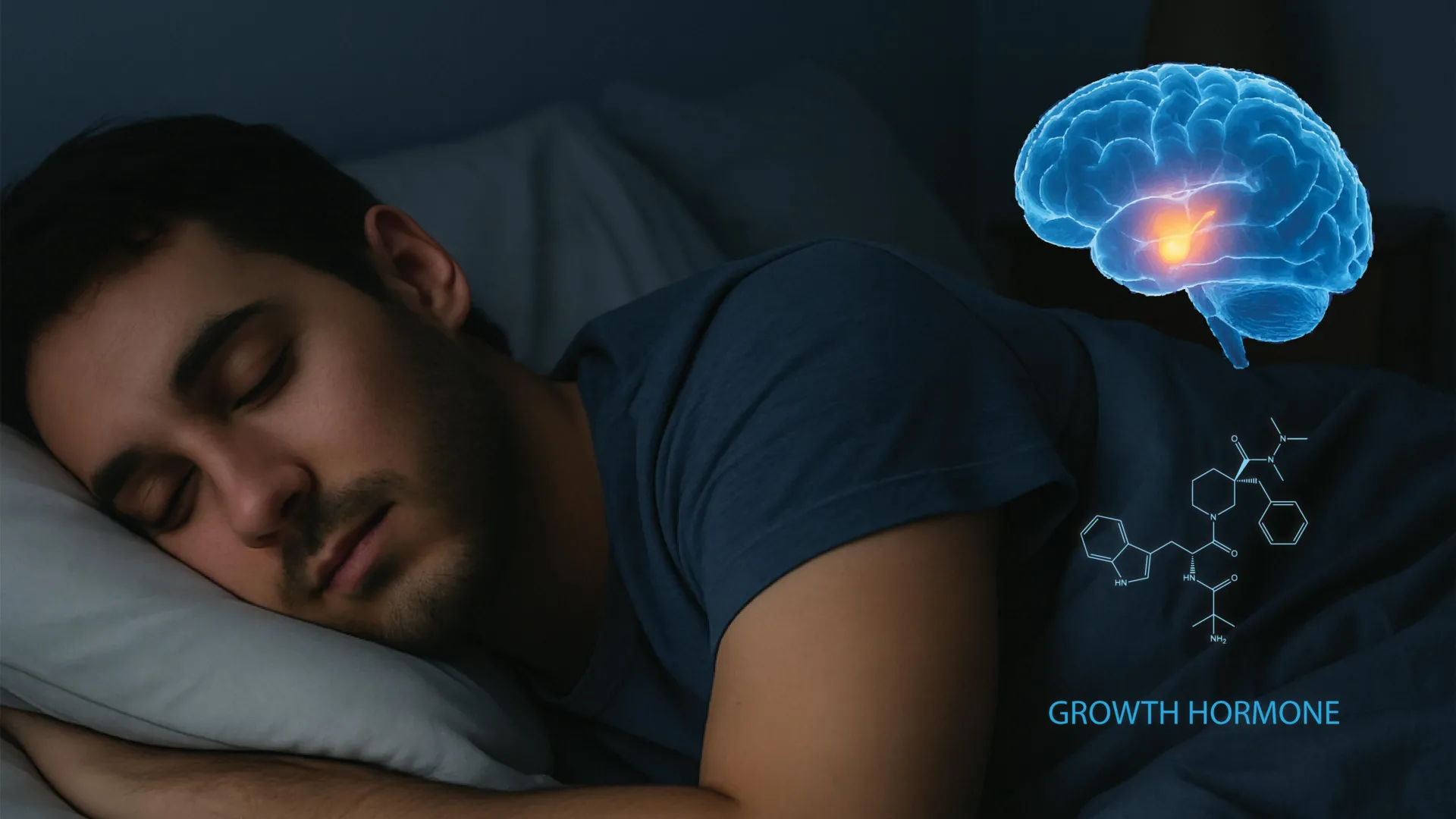
    Good sleep doesn’t just refresh your mood. It also triggers the release of growth hormone, an important hormone that supports muscle and bone building, fat burning, and healthy growth. That’s why athletes value quality sleep for recovery, and why teens need enough sleep to reach their full height potential.

    Scientists have long known that growth hormone levels increase during sleep, especially during deep non-REM stages. What is not clear is how the brain controls this process.

    Now, researchers at the University of California, Berkeley have uncovered the brain circuits involved in regulating growth hormone during sleep. Their research was published in the journal cella previously unknown feedback system that helps keep growth hormone levels in balance has also been uncovered.

    This discovery provides new insight into the close relationship between sleep and hormonal regulation. Ultimately, this could lead to new treatments for sleep disorders associated with metabolic diseases such as diabetes and neurodegenerative diseases such as Parkinson’s disease and Alzheimer’s disease.

    “People know that growth hormone release is closely related to sleep, but only by taking blood samples during sleep and checking growth hormone levels,” said Xinlu Ding, lead author of the study and a postdoctoral fellow in the Department of Neuroscience and Helen Wills Neuroscience Institute at the University of California, Berkeley. “We’re actually directly recording neural activity in mice to see what’s going on. We’re providing the basic circuitry that we can work towards developing a variety of treatments in the future.”

    Growth hormone also helps regulate glucose and fat metabolism, so continued lack of sleep can increase your risk of obesity, diabetes, and cardiovascular disease.

    How the brain controls growth hormone during sleep

    The nerve cells that coordinate the release of growth hormone are located deep in the hypothalamus, an ancient brain region found throughout mammals. These include growth hormone-releasing hormone (GHRH) neurons and two different types of somatostatin neurons.

    When growth hormone is released, it activates neurons in the locus coeruleus, a brainstem region involved in arousal, attention, thinking, and responding to new experiences. Problems affecting the locus coeruleus are associated with a number of neurological and psychiatric disorders.

    “Understanding the neural circuitry of growth hormone release may ultimately lead to new hormonal therapies that improve sleep quality and restore normal growth hormone balance,” said study co-author Daniel Silverman, a postdoctoral fellow at the University of California, Berkeley. “There are several experimental gene therapies that target specific cell types. This circuit could be a new handle for reducing excitability in the locus coeruleus, which has not been talked about until now.”

    Mapping the sleep growth hormone circuit

    A research team working in the lab of Yang Dan, a professor of neuroscience and molecular cell biology at the University of California, Berkeley, studied brain circuits in mice by placing electrodes in their brains and recording neural activity as they stimulated hypothalamic neurons with light.

    Mice naturally sleep for short periods throughout the day and night, lasting only a few minutes. This pattern allowed researchers to repeatedly observe changes in growth hormone activity over many sleep-wake cycles.

    Using advanced circuit tracing techniques, the research team discovered that two peptide hormones involved in regulating growth hormone release behave differently depending on sleep stage. GHRH promotes growth hormone release, while somatostatin inhibits growth hormone release.

    During REM sleep, both GHRH and somatostatin increase, leading to increased growth hormone release. However, during NREM sleep, somatostatin levels decrease while GHRH increases only moderately, resulting in a different pattern of hormonal regulation.

    Feedback loop that balances sleep and wakefulness

    The researchers also identified a previously unknown feedback mechanism involving the locus coeruleus.

    Growth hormone gradually increases during sleep, stimulating the locus coeruleus and promoting wakefulness. However, earlier this year, Silverman reported that when locus coeruleus activity becomes too high, it unexpectedly starts to promote sleepiness.

    “This suggests that sleep and growth hormone form a tightly balanced system. Too little sleep can reduce the release of growth hormone, and too much growth hormone can conversely push the brain toward a state of wakefulness,” Silverman said. “Sleep promotes the release of growth hormone, which feeds back to regulate wakefulness. This balance is essential for growth, repair, and metabolic health.”

    Because growth hormone affects the locus coeruleus, which plays a central role in maintaining alertness during the day, this newly identified system may also influence other aspects of attention and cognitive function.

    “Growth hormone not only helps build muscle and bone and reduce fat tissue, but it also promotes your overall level of alertness when you wake up and may have benefits for cognitive function,” Ding said.

    This research was supported by the Howard Hughes Medical Institute (HHMI) and the Pivotal Life Sciences Chancellor’s Chair Fund, which supported Dunn as an HHMI investigator until this year. Dan holds the pivotal Life Sciences Dean’s Chair in Neuroscience. Other co-authors include Peng Zhong, Bing Li, Chenyan Ma, Lihui Lu, Grace Jiang, Zhe Zhang, Xiaolin Huang, Xun Tu, Zhiyu Melissa Tian of the University of California, Berkeley, and Fuu-Jiun Hwang and Jun Ding of Stanford University.


    Source link

    Visited 2 times, 2 visit(s) today
    Share. Facebook Twitter Pinterest LinkedIn Telegram Reddit Email
    Previous ArticleNASA’s Hubble captures a crimson stellar nursery with sparkling blue and white stars
    Next Article Classic psychedelics are associated with long-term increases in openness and decreases in neuroticism
    healthadmin

    Related Posts

    A light switch wakes up sleeping cancer cells, making them vulnerable again.

    July 5, 2026

    NASA’s Hubble captures a crimson stellar nursery with sparkling blue and white stars

    July 5, 2026

    NASA’s Hubble captures an ocean studded with 500,000 stars

    July 5, 2026

    NASA’s Hubble discovers sparklers sparkling on Independence Day

    July 5, 2026

    Scientists may have finally solved the black hole information paradox

    July 5, 2026

    The secret to healthy aging may be hidden in your blood

    July 5, 2026
    Add A Comment
    Leave A Reply Cancel Reply

    Categories

    • Daily Health Tips
    • Discover
    • Environmental Health
    • Exercise & Fitness
    • Featured
    • Featured Videos
    • Financial Health & Stability
    • Fitness
    • Fitness Updates
    • Health
    • Health Technology
    • Healthy Aging
    • Healthy Living
    • Holistic Healing
    • Holistic Health & Wellness
    • Medical Research
    • Medical Research & Insights
    • Mental Health
    • Mental Wellness
    • Natural Remedies
    • New Workouts
    • Nutrition
    • Nutrition & Dietary Trends
    • Nutrition & Superfoods
    • Nutrition Science
    • Pharma
    • Preventive Healthcare
    • Professional & Personal Growth
    • Public Health
    • Public Health & Awareness
    • Selected
    • Sleep & Recovery
    • Top Programs
    • Weight Management
    • Workouts
    Popular Posts
    • 1773313737_bacteria_-_Sebastian_Kaulitzki_46826fb7971649bfaca04a9b4cef3309-620x480.jpgHow Sino Biological ProPure™ redefines ultra-low… March 12, 2026
    • pexels-david-bartus-442116The food industry needs to act now to cut greenhouse… January 2, 2022
    • 1773729862_TagImage-3347-458389964760995353448-620x480.jpgDespite safety concerns, parents underestimate the… March 17, 2026
    • 1773209206_futuristic_techno_design_on_background_of_supercomputer_data_center_-_Image_-_Timofeev_Vladimir_M1_4.jpegMulti-agent AI systems outperform single models… March 11, 2026
    • 1774403998_image_28620e4b6b0047f7ab9154b41d739db1-620x480.jpgGait pattern helps distinguish between Lewy body… March 24, 2026
    • Leukemia-620x480.jpgBiomimetic platform powers CAR T therapy for… March 9, 2026

    Demo
    Stay In Touch
    • Facebook
    • Twitter
    • Pinterest
    • Instagram
    • YouTube
    • Vimeo
    Don't Miss

    Study finds that Democrats are disproportionately driving an increase in angry tweets in Congress

    By healthadminJuly 5, 2026

    Recent research published in American political research It suggests that U.S. members of Congress are…

    A light switch wakes up sleeping cancer cells, making them vulnerable again.

    July 5, 2026

    Classic psychedelics are associated with long-term increases in openness and decreases in neuroticism

    July 5, 2026

    Scientists discover deep sleep circuits that build muscle, burn fat and revitalize the brain

    July 5, 2026

    Subscribe to Updates

    Get the latest creative news from SmartMag about art & design.

    HealthxMagazine
    HealthxMagazine

    At HealthX Magazine, we are dedicated to empowering entrepreneurs, doctors, chiropractors, healthcare professionals, personal trainers, executives, thought leaders, and anyone striving for optimal health.

    Our Picks

    Scientists discover deep sleep circuits that build muscle, burn fat and revitalize the brain

    July 5, 2026

    NASA’s Hubble captures a crimson stellar nursery with sparkling blue and white stars

    July 5, 2026

    NASA’s Hubble captures an ocean studded with 500,000 stars

    July 5, 2026
    New Comments
      Facebook X (Twitter) Instagram Pinterest
      • Home
      • Privacy Policy
      • Our Mission
      © 2026 ThemeSphere. Designed by ThemeSphere.

      Type above and press Enter to search. Press Esc to cancel.