


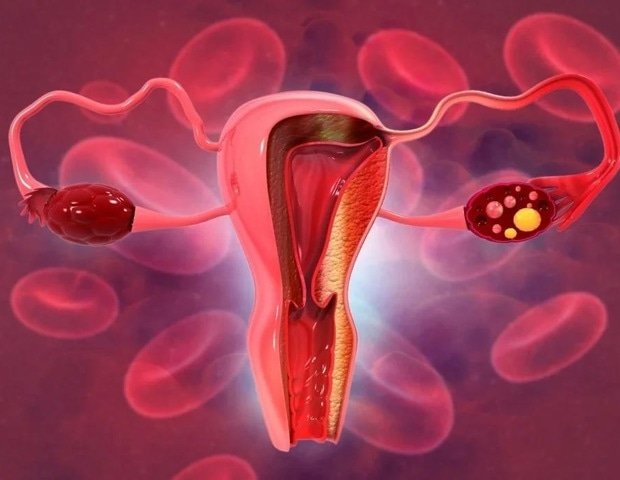
New research from the Liverpool School of Tropical Medicine (LSTM) has highlighted the need to test millions of women and girls for female genital schistosomiasis (FGS), a neglected disease that can increase the risk of chronic disease, HIV and cervical cancer.
In a new paper published in lancet microorganismsLSTM, Malawi-Liverpool Welcome Program (MLW) and London School of Hygiene and Tropical Medicine (LSHTM) researchers are calling for the urgent integration of FGS into sexual and reproductive health services to improve diagnosis and treatment.
FGS is caused by a parasitic infection Schistosomatransmitted by contact with infested freshwater. Parasite eggs become trapped in reproductive tissue, causing inflammation, lesions, and scarring. The disease affects at least 40 million women worldwide, primarily in sub-Saharan Africa, but reproductive health services remain largely unreachable.
This study investigated how FGS interacts with other gynecological infections and found evidence that chronic inflammation and tissue damage caused by the disease may increase vulnerability to infections such as HIV and human papillomavirus (HPV), the leading causes of cervical cancer.
Researchers claim that incorporating FGS screening into existing HIV, cervical cancer, and sexual health programs could improve diagnosis and care for millions of women. Proposed approaches include combining HPV and FGS testing from a single genital sample, improving training of health care workers, and using new molecular and AI-assisted diagnostic tools.
Female genital schistosomiasis is one of the most neglected gynecological diseases affecting women and girls in Africa. Despite the scale of the problem, it remains routinely ignored, both within neglected tropical disease programs and broader sexual and reproductive health services. ”
Professor Amaya Bastinduy, Professor of Global Pediatric and Adolescent Infectious Diseases at LSHTM and senior author of the paper
Professor Russell Stothard, Professor of Medical Parasitology at LSTM and co-author of the paper, said: “This paper highlights the urgent need to move beyond isolated disease-specific approaches to integrated care that recognizes the overlap between FGS, HIV, HPV and other reproductive health conditions.”
This paper is based on the results of the Hybridization in Urogenital Schistosomiasis (HUGS) study in Malawi, which identified high levels of co-infection between FGS and other genital infections.
This study also highlights the emerging role of zoonotic and hybrid schistosome species, including parasites typically associated with livestock, detected in genital samples of women with FGS. Researchers say these findings raise important questions regarding diagnosis, treatment efficacy, and disease management.
Professor Stothard added: “The emergence of zoonotic and hybrid Schistosoma species also reinforces the importance of a One Health approach that considers human, animal and environmental health together.”
The authors warn that fragmented, disease-specific programs are not helping women living in endemic areas, and say that continuing to ignore FGS risks undermining broader global health goals.
sauce:
Liverpool School of Tropical Medicine
Reference magazines:
Lamberti, O. Others. (2026) Female genital schistosomiasis (including zoonotic and hybrid schistosomiasis) and other cervicovaginal co-infections. lancet microorganisms. DOI: 10.1016/j.lanmic.2026.101425. https://www.thelancet.com/journals/lanmic/article/PIIS2666-5247(26)00080-7/fulltext
