


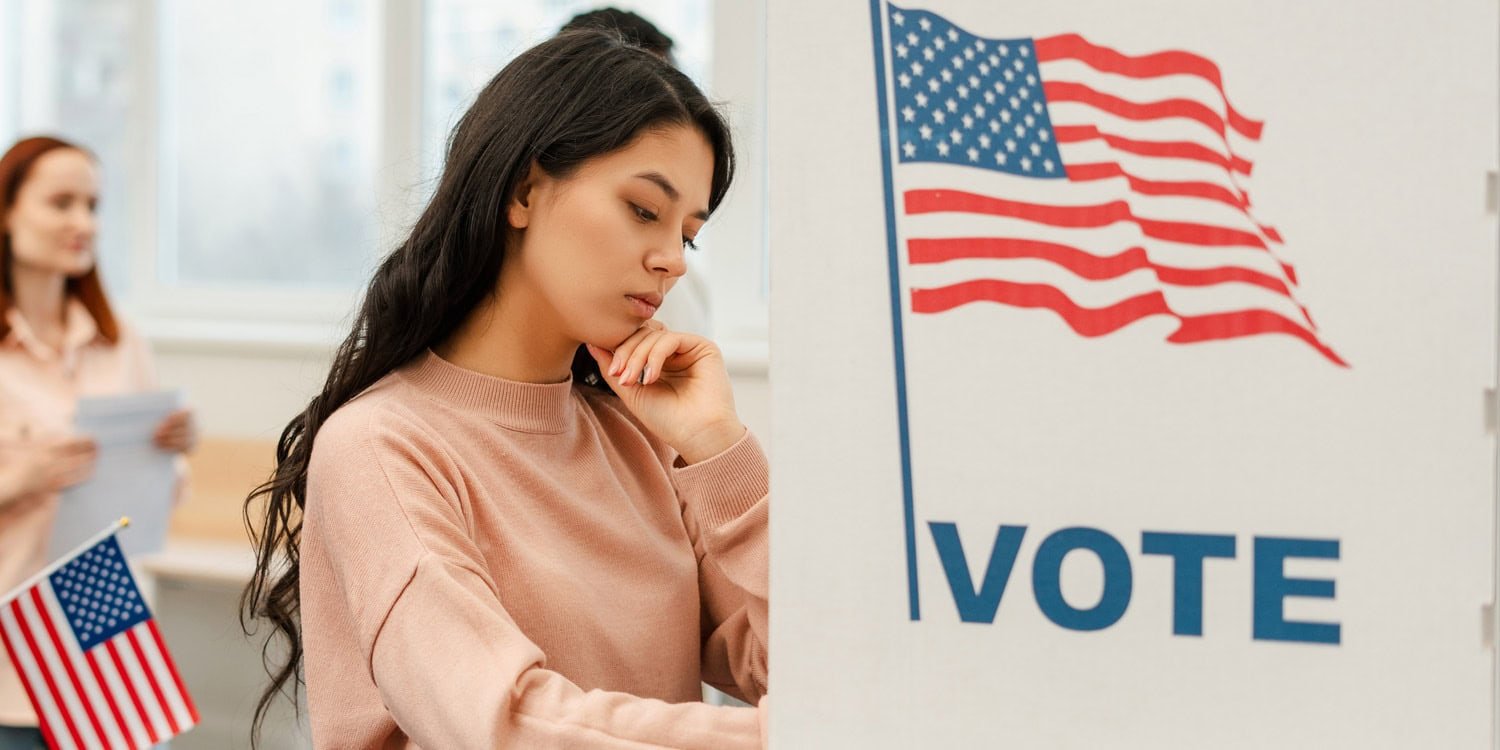
Voters with neither Democratic nor Republican affiliations make up a large portion of the American electorate, but their actual political views are often misunderstood. According to a study published in American Politics Research, most independent voters hold moderate ideologies and want a system that focuses on open-mindedness rather than rigid political labels. This finding suggests that these people are not simply apathetic citizens or disguised partisans, but an active and articulate segment of voters who want better representation.
Political polarization between the two major parties has led to an increasing number of Americans who identify as independents. Recent polls show that more than 40% of Americans would prefer not to be affiliated with any of America’s major political parties. Many of these voters would be blocked from basic steps in the political process, such as closed primary elections. In nearly half the country, residents who refuse to choose a party are legally barred from voting in these early elections.
Scholars debate what it actually means to be independent in modern politics. Some early political theories treated independent individuals as voters who lacked political knowledge and simply ignored national issues. Under this historical framework, the independent label suggested a lack of civic participation rather than a meaningful personal ideology.
Other experts argue that independents are essentially partisan voters who hide their actual party affiliation. Under this perspective, individuals hide their political leanings to avoid the social stigma associated with harmful political discussions. These voters quietly vote along strict party lines on Election Day, maintaining a neutral public image through secrecy.
A third perspective views independent registration as a choice based on organizational frustration. This framework argues that voters reject party labels because they do not actively trust the two-party system itself. These people may have different personal beliefs, but they are united by a common opposition to the current institutional structure of American voting.
To examine these competing ideas, political scientists Evelyn Dowling of the University of California, Davis, Nathan K. Mikatka of the University of South Alabama, and Caroline Tolbert of the University of Iowa conducted a two-part study. They sought to find out whether independents are truly moderate in their political beliefs. They also wanted to know how the broader public perceived these voters.
The researchers first mapped the demographics of independent voters by analyzing information from an administrative voter database known as Catalyst. They surveyed a random sample of the total U.S. adult population in 2020, 2022, and 2023. This large-scale study included over 7.5 million individual data points. The file combined the state’s official voting records with commercial information and campaign estimates to get a picture of the entire adult population.
This approach allowed the team to avoid common problems with standard polls. Telephone polls often overrepresent the most active and engaged citizens and ignore the quiet middle of voters. The researchers used a composite partisanship score provided by a database vendor to identify individuals who fall between the strong Democratic and strong Republican sides of the spectrum.
Catalyst data revealed that independent voters differ from the general population in notable ways. Those classified as independent were consistently younger than those affiliated with major political parties. Specifically, people between the ages of 25 and 39 were the most likely to avoid political party labels. Independent adults were also significantly less likely to have a college degree than the general population.
The most defining feature from the voter file concerned their political ideology. Across the three time periods assessed, well over half of independent individuals registered as centrist in their political beliefs. In both 2020 and 2022, modeled data showed that more than 9 in 10 independent voters were ideologically moderate. This finding challenges the notion that most independents are simply secretive extremists or highly partisan voters.
For the second part of the project, the scientists analyzed the results of the 2022 joint interim survey. This large-scale study included approximately 19,500 valid responses from adults across the country. Participants answered questions about how they view people who are not affiliated with either of the two major political parties.
The survey found that a majority of Americans believe that independents are committed to working across party lines. The public also tended to view these discordant voters as people willing to consider opposing views. When asked about independent voters, both Democrats and Republicans responded with generally favorable attributes, indicating that mainstream partisans do not view independent voters entirely negatively. Highly educated citizens were especially likely to attribute positive characteristics to independents.
Powerful parties often viewed independents as strategic go-betweens who could help politicians reach compromises. They saw independents as a potential mediating force that could defuse political conflicts. However, independent voters themselves were more focused on the specific value of open-mindedness compared to rank-and-file party members. These individual voters valued representation that accurately reflected their unique perspectives.
Independents strongly supported the statement that independent voters represent voices ignored by the two major organizations. They placed great importance on having a flexible political identity that avoided rigid partisan labels. Many felt that no individual should be forced to wear a political party label just to vote in the United States.
Independents who identify as independents but tend to vote for a particular camp were significantly more likely to support an open-ended political system. These learners consistently rate the ability to consider opposing viewpoints as a characteristic of independence. This desire for perspective was especially strong among those who lean lightly toward the Democratic Party.
The authors note that their study has several limitations. The Administrative Voter File uses a probabilistic model created by a vendor. That is, ideology scores are estimates rather than direct self-report surveys. Additionally, checking a box as an independent voter on a state registration form may involve different psychological motivations than telling pollsters that you are independent. These measures do not fully capture the emotional intensity involved in making that choice.
The statements evaluated in the national survey also provide a limited view of human psychology. While the data captured identity and social dimensions, the survey omitted questions about broader political trust and a desire for fundamental institutional reform. The authors suggest that exploring these missing elements would be a productive avenue for future research. Follow-up surveys could assess how these independent voters view ranked-choice voting and nonpartisan redistricting.
Despite these boundaries, the combined results show clear demographic contours of a misunderstood group. Independents typically participate in national elections at lower rates than partisans. Recognizing that this low turnout may stem from a genuine desire for moderate and flexible politics could influence how local primaries work. Better rules could bring millions of these quiet moderates back to the ballot box.
If independent voters are truly moderate and strongly support compromise, expanding their legal right to vote in primaries could change the entire political landscape. Institutional reforms that give independent individuals better access to voting could theoretically reward more moderate politicians. Understanding exactly who these nonaligned voters are will form the basis for future efforts aimed at reducing hostility in American politics.
The study, “Who are Independents? Are they moderate in their political ideology?” was authored by Evelyn Dowling, Nathan K. Mikatka, and Caroline Tolbert.
