


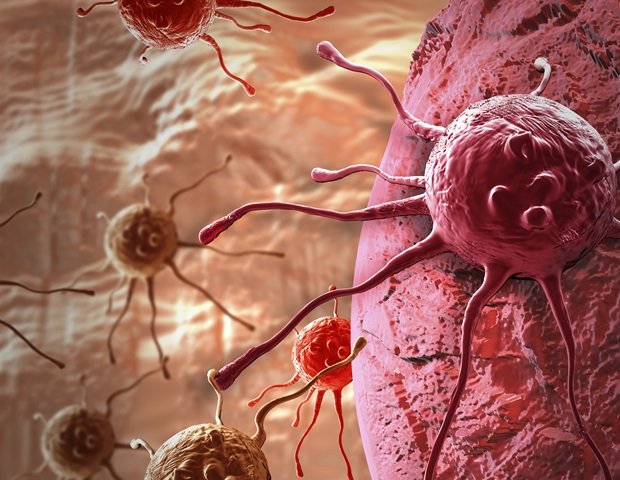
A team led by researchers from the German Cancer Research Center (DKFZ) and the HI-STEM Stem Cell Institute has discovered a promising new approach to treating advanced colorectal cancer. This study natureidentifying key markers for particularly aggressive and treatment-resistant colorectal cancer cells. At the same time, researchers used mini-tumours and mouse models to demonstrate that already approved drugs targeting this marker can specifically attack cells that initiate metastases, and that their efficacy is significantly increased when combined with standard treatments.
Colorectal cancer is one of the leading causes of cancer-related deaths worldwide. The situation is particularly critical in the case of metastatic tumors. As soon as cancer cells spread to other organs, the chances of recovery are significantly reduced. One of the reasons for the poor prognosis is the enormous adaptive capacity of tumor cells, which often change their biological state during treatment and thereby acquire resistance. This so-called cellular plasticity is considered one of the biggest challenges in cancer medicine.
TROP2 marks colorectal cancer cells for dangerous metastasis
A team led by HI-STEM and DKFZ principal investigator René Jackstadt has demonstrated that the cell membrane protein TROP2 (trophoblast cell surface antigen 2) is predominantly present in tumor cells, which is particularly associated with poor prognosis. To achieve this goal, the researchers analyzed sequence data from a large patient cohort.
Tumors with high TROP2 expression were more likely to develop metastases, and affected patients had a significantly increased risk of recurrence. Laboratory experiments showed that TROP2-positive cells displayed features reminiscent of early stages of intestinal development. This so-called “fetal” cell state has been considered for several years as an important mechanism of metastasis and therapeutic resistance.
TROP2 specifically marks colorectal cancer cells that most strongly contribute to metastasis, disease recurrence, and poor prognosis. ”
René Jackstadt, HI-STEM, DKFZ
Researchers were surprised when they investigated the function of TROP2 in colorectal cancer cells. TROP2-positive cells can play the role of cancer stem cells. In certain tumors, they form alternative stem cell populations that can initiate new tumors and establish metastases.
Clinically approved TROP2 therapy is effective
TROP2-targeted drugs have already been approved for clinical use in other cancer types, particularly breast cancer. These are antibody-drug conjugates that deliver active ingredients specifically to TROP2-expressing tumor cells.
Jackstadt’s team tested these drugs in small tumors grown in culture dishes from colorectal cancer cells taken from individual patients. The results were clear. Tumors with high TROP2 expression responded particularly well to treatment in laboratory experiments. In animal models, this therapy also specifically reduced the dangerous TROP2-positive cell population and significantly prolonged survival of tumor-bearing mice.
Combination therapy particularly effective in clinical trials
Using small tumors in culture dishes, DKFZ researchers demonstrated that standard chemotherapy used for colorectal cancer promotes the development of TROP2-expressing tumor cells.
However, Jackstadt et al. viewed this effect as a therapeutic opportunity. The idea was that by combining chemotherapy with TROP2-targeted therapy, more target cells for TROP2 therapy could first be created, which could then be specifically removed by an antibody-drug conjugate.
The research team was able to confirm this hypothesis experimentally. The combination of standard chemotherapy and TROP2-targeted therapy proved particularly effective in both tumor organoids and mouse models. The combination therapy significantly reduced tumor growth and metastasis than each therapy alone.
TROP2: Biomarkers and the Achilles heel
Researchers consider TROP2 both as a biomarker for identifying particularly aggressive tumors and as a promising therapeutic target. “We have demonstrated for the first time that tumor cell plasticity can be exploited therapeutically in colorectal cancer,” said study leader Jacquestadt. “By combining chemotherapy with TROP2 blockade, we can specifically target cells that are primarily responsible for recurrence and metastasis,” adding, “Because drugs targeting TROP2 are already approved, we were able to translate our test results into clinical trials relatively quickly.” DKFZ researchers, in collaboration with doctors from Heidelberg University Hospital and NCT Heidelberg, are already testing an antibody-drug conjugate against TROP2 in a phase 2/3 trial in patients with advanced colorectal cancer.
sauce:
German Cancer Research Center (German Cancer Research Center, DKFZ)
Reference magazines:
Baquero Shiguero, N., others. (2026). TROP2 targeting reveals therapy-driven cell state dynamics in colorectal cancer. nature. DOI: 10.1038/s41586-026-10705-2. https://www.nature.com/articles/s41586-026-10705-2
