


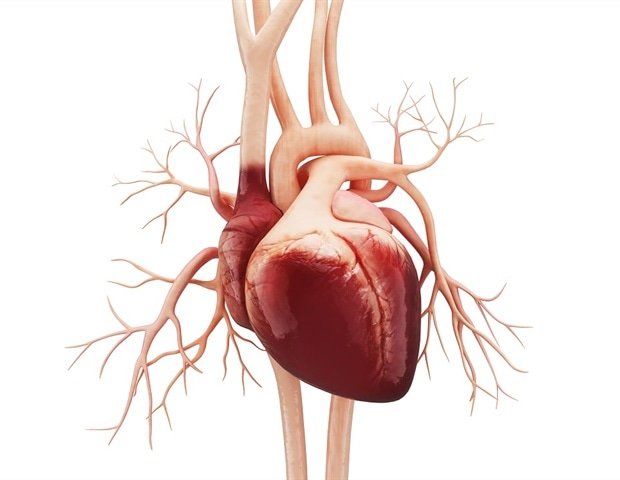
UNSW Sydney researchers have developed a fully synthetic soft robotic heart that replicates the complex movements and internal structures of the human heart, opening the door to better treatments, safer medical devices and more personalized care.
Published in nature communications and cutting edge scienceThis study introduces a left-sided beating model of the heart, including an artificial valve, papillary muscles, and chordae tendineae. These structures are essential for healthy heart function and are often affected by disease.
The device can accurately replicate the process in a real heart where heart valves leak and blood flows backwards, increasing the risk of heart failure and other life-threatening complications.
In this way, the research team says, the new soft robot could ultimately help provide a deeper understanding of heart conditions, reduce reliance on animal experiments, and provide a patient-specific model for doctors to plan treatment before performing the procedure.
Team leader Thanh Nho Do, Associate Professor of Scientia in UNSW’s School of Biomedical Engineering and the UNSW Medical Robotics Institute, said the study was important as cardiovascular disease remains the leading cause of death worldwide.
Heart failure with preserved ejection fraction (HFpEF) is a complex heart disease that often occurs alongside other health problems such as high blood pressure, arrhythmia, kidney disease, obesity, and diabetes. ”
Thanh Nho Do, Scientia Associate Professor, School of Biomedical Engineering, University of New South Wales
“Developing medical devices to improve heart function is difficult because it affects people in so many different ways.
“The heart’s valves are important for the heart’s efficiency, but disease can cause them to leak or become stiff, which increases the workload on the heart and can lead to heart failure.
“Our broader goal is to build realistic artificial heart models that will help researchers understand the disease and develop safer and more effective devices before they are tested on animals or reach patients.”
Reproducing a beating heart
The model developed at UNSW is a soft, flexible replica of the left side of the heart. A silicone membrane forms the internal chamber, and soft robotic artificial muscles wrapped around the structure mimic the way the heart naturally contracts and twists.
Unlike traditional laboratory models, the soft robotic heart contains structures responsible for controlling the mitral valve, which in real life acts like a pair of swinging doors that open and close with each heartbeat, allowing oxygen-rich blood to flow into the body while preventing back leakage.
Including this particular physiological feature of the heart in the model allows researchers to recreate the disease in which valves leak and blood begins to flow backwards.
“The model is made of flexible material and powered by artificial muscles arranged to mimic the layered musculature of the human heart,” said Dr. James Davies, a postdoctoral fellow in Do’s group.
“We discovered a way to model this muscle fiber structure using soft robotic artificial muscle fibers, which are hydraulically driven and controlled to move the ventricular muscle model in a lifelike manner.
“This artificial muscle tissue is then wrapped around a silicone membrane that models the inner surface of a human left heart to form a model of the left atrium. These membranes contain simulated blood in the left heart, allowing us to simulate the flow of blood into and out of the model.”
This system allows researchers to actively adjust the tension of the artificial papillary muscles that support the mitral valve.
In doing so, the researchers were able to recreate conditions similar to diseases such as mitral valve prolapse and regurgitation, where blood flows backwards rather than efficiently through the heart.
mimic human heart disease
Using ultrasound imaging and measurements of pressure and blood flow, researchers showed that the artificial heart behaves very similarly to the human heart.
Healthy valve function produces normal pressure and flow patterns, but when disease is introduced characteristic changes occur that are seen in patients.
“In our first study that recreated the internal valve mechanism of the human heart, we were able to generate pressure and flow waveforms similar to the real thing,” said Scientia A/Professor. Do says.
“Importantly, we were able to tune the function of the mitral valve by controlling the length of the papillary muscles.
“We validated this using invasive pressure and flow measurements inside and outside the heart, but we were also able to demonstrate the compatibility of our model with non-invasive clinical measurements of cardiac function, such as ultrasound imaging and echocardiography.
“Simulated healthy mitral valve function followed physiological expectations in cardiac pressure and flow, but inducing disease showed increased regurgitation or regurgitation and decreased outlet pressure and flow, also consistent with heart valve disease in humans.”
Scientia’s Professor Nigel Lovell, Dean of the School of Biomedical Engineering and Director of Tiley IHealthE, added: “The ultrasound imaging also resembled human heart imaging due to the model’s biomimetic shape and function. We were able to observe human-like movement of the valve leaflets and visualize blood flow across the valve, including the formation of a regurgitant jet leaking from the disease-induced valve.”
The researchers also used this system to test a newly developed soft robotic cardiac catheter in a pulsatile model.
The catheter was able to travel within the artificial heart and detect contact with moving cardiac structures, demonstrating how the platform can accelerate the development of future surgical tools.
Reduce reliance on animal models
Because the simulator provides a controllable and reproducible environment, researchers believe it could help reduce the need for animal testing in the early stages of medical device development.
“We want to enable a platform for comprehensively modeling heart disease and simulating various treatments, including cardiac implants and surgical instruments,” says Do.
“Especially in the early stages of cardiac device development, such platforms provide control of cardiac function while maintaining anatomical and physiological relevance, reducing reliance on animal models and associated costs and ethical concerns.
“With the ability to induce a wide range of specific heart diseases, such as HFpEF, which remains one of the least understood and most difficult forms of heart failure to treat, we hope to support the development of new specialized implants and devices that will save and improve lives and reduce the burden of cardiovascular disease on healthcare systems.”
“HFpEF disease, which accounts for 50% of heart failure cases, requires unique mechanical treatment options.”
More importantly, this model successfully reproduced many of the changes seen in HFpEF, including changes in heart function and blood flow.
When researchers simulated one of the early signs of HFpEF, a reduced ability of the heart to relax between heartbeats, the model showed that blood flows into the heart more slowly and less efficiently. This delay in filling increases pressure within the heart, which is broadly consistent with what is commonly observed in patients with HFpEF.
The researchers also envision a future where medical imaging data can be used to create patient-specific versions of the model.
These personalized models can help clinicians evaluate different devices and treatment approaches before surgery, improving surgical planning and potentially leading to better outcomes.
“With the rise of personalized medicine, we also hope to enable better patient-specific cardiovascular modeling that can aid surgical planning and inform decisions regarding implant type, size, and functional parameters,” says Do.
“We look forward to validating these concepts and advancing them toward future clinical adoption.”
Future verification
Although the study shows the potential of the technology, the researchers stress that the current model is still a proof of concept rather than a complete clinical tool.
Several challenges remain, including improved materials, improved control systems, and greater compatibility with medical imaging. Future versions should also better reproduce certain aspects of cardiac function and use patient-specific geometries rather than simplified structures.
Most importantly, the platform needs to be validated against real patient data.
“The most important next step is deeper validation of the clinical data,” said Professor Scientia A. Do says.
“The current study demonstrates strong proof-of-concept performance.
“This model can reproduce key pressure, flow, motion, valve, and imaging features consistent with the behavior of the human heart. However, before this platform can be used for clinical decision-making, it must be systematically compared with patient data across a wide range of cardiac anatomy and disease severity.”
The team, which also includes heart failure and transplant cardiologist Professor Christopher Hayward from St Vincent’s Hospital in Sydney, Professor Elena Lungjak Kovacina from New South Wales and Associate Professor Hoang Huong Phan from Scientia, hopes further development of the technology will allow it to be adopted in clinical practice.
“Rather than looking at the current model as a completed clinical tool, we are thinking of it as an enabling platform,” Dr. Davis added.
“This demonstrates that soft robotic artificial hearts can reproduce disease mechanisms in a way that is not possible with traditional benchtop models, providing a clear path to patient-specific modeling, device testing, and ultimately treatment planning.”
source:
University of New South Wales
Reference magazines:
Davis, J. others. (2026) Compliance regulation of a soft robotic atrioventricular model of heart failure with preserved ejection fraction. nature communications. DOI: 10.1038/s41467-026-73791-w. https://www.nature.com/articles/s41467-026-73791-w.
