

Close Menu

    Subscribe to Updates

    Get the latest creative news from FooBar about art, design and business.

    What's Hot

    Overcoming Information Overload in 2026 Medical Research

    August 14, 2026

    The Urgent Gaps in Population Health: What Leaders Must Fix Now

    August 13, 2026

    The Growing Challenge of Treatment-Resistant Depression for Clinicians and Policymakers

    August 12, 2026
    Facebook X (Twitter) Instagram
    Facebook X (Twitter) Instagram
    Health Magazine
    • Home
    • Environmental Health
    • Health Technology
    • Medical Research
    • Mental Health
    • Nutrition Science
    • Pharma
    • Public Health
    • Discover
      • Daily Health Tips
      • Financial Health & Stability
      • Holistic Health & Wellness
      • Mental Health
      • Nutrition & Dietary Trends
      • Professional & Personal Growth
    • Our Mission
    Health Magazine
    Home » News » Tubulin prevents toxic brain protein clumps associated with Alzheimer’s and Parkinson’s disease
    Nutrition Science

    Tubulin prevents toxic brain protein clumps associated with Alzheimer’s and Parkinson’s disease

    healthadminBy healthadminJune 21, 2026No Comments4 Mins Read
    Tubulin prevents toxic brain protein clumps associated with Alzheimer’s and Parkinson’s disease
    Share
    Facebook Twitter Reddit Telegram Pinterest Email


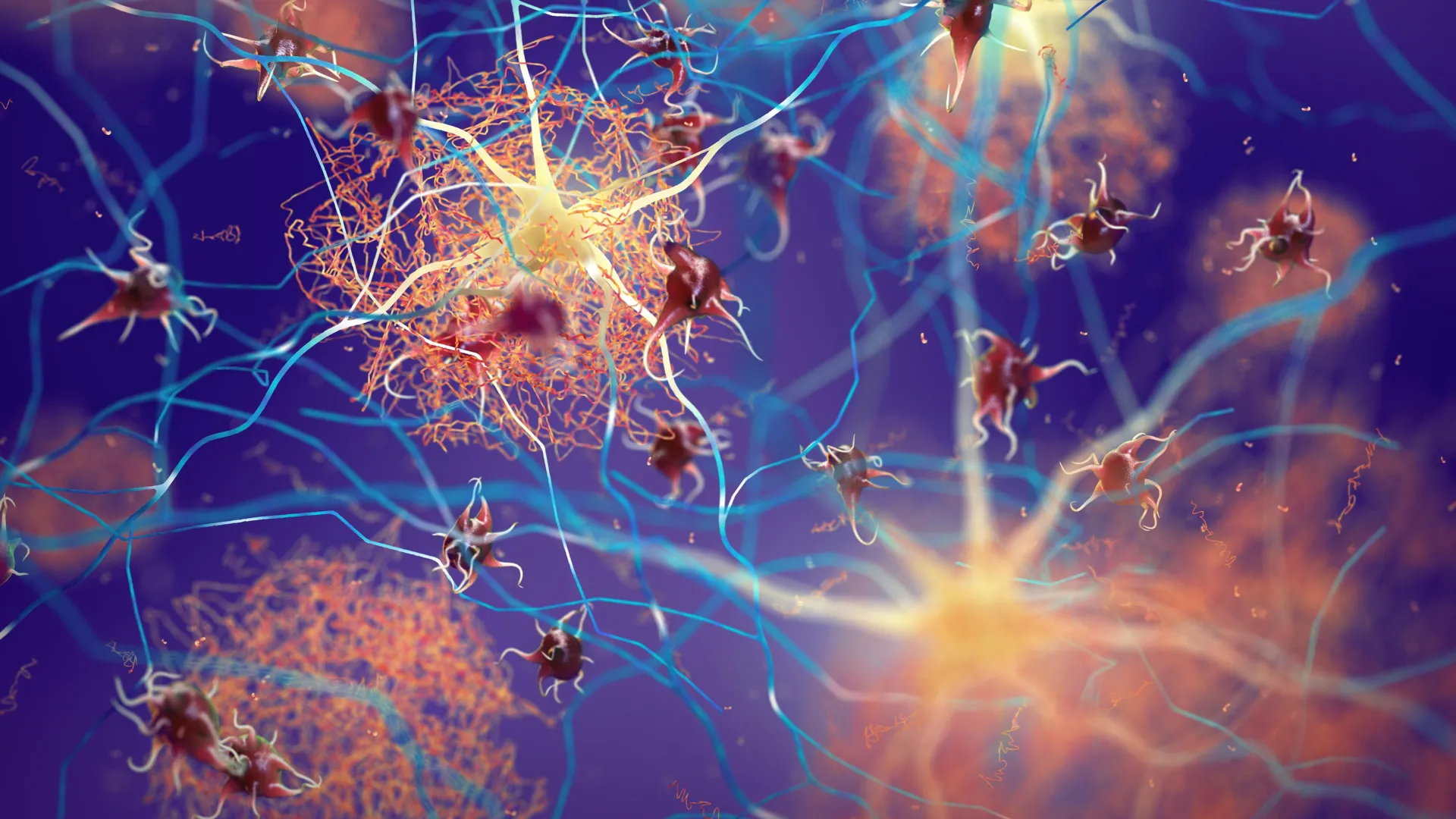
    Scientists at Baylor College of Medicine have identified a potential new approach to tackling Alzheimer’s and Parkinson’s diseases. Both conditions are associated with the accumulation of harmful clumps formed by the proteins tau and alpha-synuclein in the brain.

    In a study published in nature communicationsResearchers have discovered that tubulin, a protein that functions as a component of microtubules, may help prevent the buildup of these toxic substances. Microtubules act as “railroads” inside cells, helping to transport materials and maintain structure. The findings show that tubulin can prevent tau and alpha-synuclein from forming damaging aggregates and instead encourage them to perform their normal functions in healthy neurons.

    Toxic protein clumps and brain disease

    “Tau and alpha-synuclein are well known for their role in neurodegenerative diseases such as Alzheimer’s disease and Parkinson’s disease. In these diseases, these proteins can misfold and stick together to form harmful aggregates, damaging neurons and causing memory loss, movement disorders, and other symptoms,” said first author Dr. Lathan Lucas, a postdoctoral fellow in biochemistry and molecular pharmacology in the lab of Dr. Alan Ferreon.

    “However, tau and alpha-synuclein also perform essential functions in healthy neurons. They interact with tubulin and contribute to the assembly and stabilization of microtubules, thereby helping maintain cell structure and supporting communication.”

    Tau and alpha-synuclein carry out both beneficial and harmful activities within small cellular droplets known as condensates. Because these droplets are involved in disease-related processes, scientists have considered preventing their formation as a possible treatment strategy. However, condensates also play an important role in normal brain function, raising concerns that removing them could interfere with healthy neural activity.

    Redirect protein toward a healthy role

    “This led us to think: What if, instead of preventing the droplets from forming, we created conditions that moved the tau and alpha-synuclein within the droplets in a healthy direction and stopped them from moving toward disease?” says Ferreon, associate professor of biochemistry and molecular pharmacology and co-corresponding author of the paper.

    Mr. Lucas used an analogy to explain this concept.

    “I think tau and alpha-synuclein are the kids who get into trouble at school. We can keep them in the classroom and do little and act out, or we can keep them busy with schoolwork, sports, and theater so they don’t get in trouble,” Lucas said. “We discovered that tubulin can steer tau and alpha-synuclein troublemakers in a healthy direction.”

    To investigate this idea, the researchers combined biochemical and biophysical techniques with high-resolution microscopy and neuron-based assays. Their goal was to determine whether tubulin can influence the behavior of tau and alpha-synuclein and prevent the formation of toxic aggregates within condensates.

    Tubulin functions as a protective factor

    “Low tubulin levels, as seen in Alzheimer’s disease, can reduce the amount of microtubules and allow tau and alpha-synuclein to form toxic aggregates,” Professor Lucas said.

    “However, in the presence of tubulin, tau and alpha-synuclein move away from harmful aggregates and instead promote healthy microtubule assembly,” Lucas says. “Tubulin redirects the activity of these proteins by giving them productive activity.”

    The findings suggest that tubulin may play a much more active role in brain protection than previously appreciated.

    “Our findings significantly shift the role of tubulin in neurodegeneration from passive disease-induced damage to an active protector against toxic protein aggregation,” said Professor Ferreon. “Rather than blocking droplet formation, enhancing the tubulin pool can suppress toxic aggregation while preserving the healthy role of tau and alpha-synuclein, offering the potential for a selective therapeutic strategy.”

    Other contributors to the study include co-first authors Phoebe S. Tsoi, Mai Diem Quang and Kyung-Jae Choi, and co-corresponding author Josephine C. Fereon, all of Baylor College of Medicine.

    This research was supported by NINDS-NIH grant R01 NS105874, Welch Foundation grant Q-2097-20220331, and NIGMS-NIH grant R01 GM122763.


    Source link

    Visited 8 times, 1 visit(s) today
    Share. Facebook Twitter Pinterest LinkedIn Telegram Reddit Email
    Previous ArticleHumans actively undermine AI lie detectors because they don’t want to accuse people of lying
    Next Article The human brain unconsciously filters out negative spoken language when distracted.
    healthadmin

    Related Posts

    The Core Problem with 2025-2030 DGAs for Clinical Practice

    August 11, 2026

    Addressing Challenges in Applying 2025-2030 Dietary Guidelines for Metabolic Health

    August 3, 2026

    This 4,000-year-old city defied the rules of history

    July 30, 2026

    Rice Bran Compounds May Relieve Irritable Bowel Symptoms

    July 30, 2026

    What would happen if the brain did not generate consciousness?

    July 30, 2026

    Scientists discover that evolution repeats itself in the Galapagos Islands

    July 30, 2026
    Add A Comment

    Comments are closed.

    Categories

    • Daily Health Tips
    • Discover
    • Environmental Health
    • Exercise & Fitness
    • Featured
    • Featured Videos
    • Financial Health & Stability
    • Fitness
    • Fitness Updates
    • Health
    • Health Technology
    • Healthy Aging
    • Healthy Living
    • Holistic Healing
    • Holistic Health & Wellness
    • Medical Research
    • Medical Research & Insights
    • Mental Health
    • Mental Wellness
    • Natural Remedies
    • New Workouts
    • Nutrition
    • Nutrition & Dietary Trends
    • Nutrition & Superfoods
    • Nutrition Science
    • Pharma
    • Preventive Healthcare
    • Professional & Personal Growth
    • Public Health
    • Public Health & Awareness
    • Selected
    • Sleep & Recovery
    • Top Programs
    • Weight Management
    • Workouts
    Popular Posts
    • 1773313737_bacteria_-_Sebastian_Kaulitzki_46826fb7971649bfaca04a9b4cef3309-620x480.jpgHow Sino Biological ProPure™ redefines ultra-low… March 12, 2026
    • pexels-david-bartus-442116The food industry needs to act now to cut greenhouse… January 2, 2022
    • 1773729862_TagImage-3347-458389964760995353448-620x480.jpgDespite safety concerns, parents underestimate the… March 17, 2026
    • 1774403998_image_28620e4b6b0047f7ab9154b41d739db1-620x480.jpgGait pattern helps distinguish between Lewy body… March 24, 2026
    • 1773209206_futuristic_techno_design_on_background_of_supercomputer_data_center_-_Image_-_Timofeev_Vladimir_M1_4.jpegMulti-agent AI systems outperform single models… March 11, 2026
    • Leukemia-620x480.jpgBiomimetic platform powers CAR T therapy for… March 9, 2026

    Demo
    Stay In Touch
    • Facebook
    • Twitter
    • Pinterest
    • Instagram
    • YouTube
    • Vimeo
    Don't Miss

    Overcoming Information Overload in 2026 Medical Research

    By healthadminAugust 14, 2026

    Strategies for clinical researchers and medical professionals to navigate the surge of 2026 medical research breakthroughs, including cancer vaccines, GLP-1 therapies, and AI adoption in trials.

    The Urgent Gaps in Population Health: What Leaders Must Fix Now

    August 13, 2026

    The Growing Challenge of Treatment-Resistant Depression for Clinicians and Policymakers

    August 12, 2026

    The Core Problem with 2025-2030 DGAs for Clinical Practice

    August 11, 2026

    Subscribe to Updates

    Get the latest creative news from SmartMag about art & design.

    HealthxMagazine
    HealthxMagazine

    At HealthX Magazine, we are dedicated to empowering entrepreneurs, doctors, chiropractors, healthcare professionals, personal trainers, executives, thought leaders, and anyone striving for optimal health.

    Our Picks

    The Core Problem with 2025-2030 DGAs for Clinical Practice

    August 11, 2026

    The Urgent Health Risks from Climate Change and Pollution

    August 10, 2026

    AI-Powered Wearables and Telemedicine Trends Driving Adoption

    August 9, 2026
    New Comments
      Facebook X (Twitter) Instagram Pinterest
      • Home
      • Privacy Policy
      • Our Mission
      © 2026 ThemeSphere. Designed by ThemeSphere.

      Type above and press Enter to search. Press Esc to cancel.