


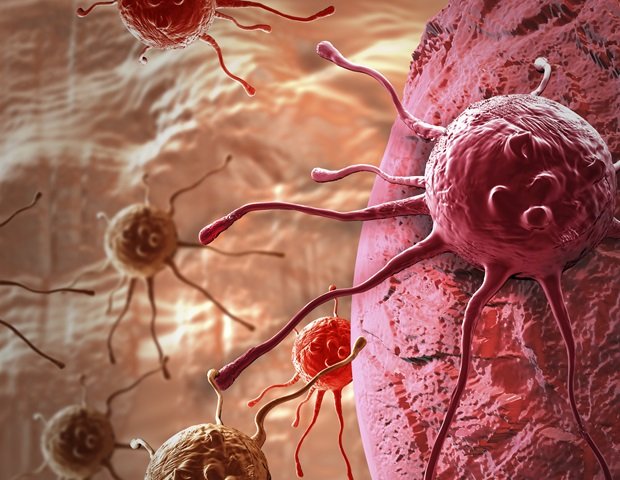
Traditional cancer treatments, such as chemotherapy, often lack specificity and can damage both cancer cells and healthy cells, causing serious side effects. With this in mind, researchers at the Indian Institute of Technology Gandhinagar (IITGN) developed DNA nanostructures called tetrahedra and modified them by attaching a molecule derived from vitamin E called alpha-tocopherol succinate (αT). This molecule can interfere with important functions within cancer cells while acting protectively in healthy cells. By incorporating αT into DNA tetrahedra, researchers were able to significantly enhance cellular uptake, improve anticancer efficacy, and eliminate cancer cells more selectively and effectively.
At the heart of this research is the promising approach of DNA nanotechnology. This includes highly controlled nanoscale structures that can manipulate DNA to deliver drugs, contrast agents, or therapeutic molecules. By harnessing the programmable self-assembly of DNA, researchers can construct nanoscale architectures with well-defined size, shape, and functionality. Among these nanostructures, DNA tetrahedra have attracted considerable attention as drug delivery platforms due to their structural stability, biocompatibility, low immunogenicity, and ease of functionalization. However, despite these advantages, researchers often find that their therapeutic potential is limited by relatively inefficient cellular internalization and limited intracellular delivery.
Research results that address these limitations include: ACS Applied Biomaterials In a paper titled “Alpha-tocopherol-conjugated DNA tetrahedra with enhanced cellular uptake and cytotoxicity for cancer therapy.” Explaining the broader implications of this study, corresponding author Professor Dheeraj Bhatia from IITGN’s Department of Biosciences and Engineering said, “What makes this research exciting is how intentional molecular design can impact biological behavior in a very controlled way. “Even subtle changes at the surface level can shape how these nanostructures interact with biological systems, which opens up interesting possibilities for how to design future treatments.”
To assess whether the αT modification changed the physicochemical properties of the DNA tetrahedra, the researchers used dynamic light scattering (DLS). The technique involves passing a laser beam through a liquid sample containing nanoparticles and analyzing the fluctuations in scattered light as the particles move randomly through the solution. This allowed researchers to measure the size and surface properties of nanoparticles in solution, providing insight into their stability, aggregation behavior, and potential interactions with biological systems.
Through cell culture experiments measuring cellular uptake and cytotoxicity and other mechanistic studies, the researchers discovered that attaching αT significantly enhanced the uptake of DNA tetrahedra into cells. This is probably due to improved interaction with the fatty outer layer of the cell membrane. This was further supported by fluorescence imaging, which visually confirmed higher accumulation of modified nanostructures in cancer cells than in healthy cells, indicating preferential uptake by the former. Once αT-functionalized DNA tetrahedra are internalized, they trigger the generation of reactive oxygen species (ROS), causing oxidative stress and damage to DNA, proteins, and mitochondria. This ultimately led to programmed cell death, a controlled process in which damaged or unhealthy cells shut down themselves to prevent further harm to the body.
Ms. P Chithra, first author and MTech student in the Department of Biosciences and Engineering, said, “We are very excited to be working with the Department of Biosciences and Engineering.What we found particularly encouraging was the consistency of the results across multiple experiments. Seeing conceptual designs translated into measurable biological results is extremely rewarding and motivates us to continue developing more effective nanomedicine-based therapeutic strategies.. ”
Reflecting on the broader significance of this study, Raghu Solanki, Ph.D., postdoctoral fellow in the Department of Biosciences and Engineering and co-corresponding author of the study, commented:One of the most exciting aspects of this work was observing how simple design changes can have a profound impact on cell behavior and therapeutic efficacy. Such studies highlight the immense potential of DNA nanotechnology and demonstrate how fundamental insights into cell-nanomaterial interactions can guide the development of safer and more effective cancer-targeted therapies.. ”
Although these findings demonstrate the potential of αT-functionalized DNA tetrahedra as targeted anticancer nanocarriers, this work is currently limited to laboratory-based studies. Further studies including animal models, comprehensive safety assessments, and clinical studies are required to establish therapeutic efficacy and translational potential. Nevertheless, by revealing how nanoscale surface modifications affect cellular uptake and biological responses, this study provides valuable insights for the rational design of next-generation DNA nanomedicines and targeted cancer treatments.
sauce:
Indian Institute of Technology Gandhinagar
Reference magazines:
Chitra, P. others. (2026). α-Tocopherol-conjugated DNA tetrahedra with enhanced cellular uptake and cytotoxicity for cancer therapy. ACS Applied Biomaterials. DOI: 10.1021/acsabm.5c02525. https://pubs.acs.org/doi/10.1021/acsabm.5c02525
