

Close Menu

    Subscribe to Updates

    Get the latest creative news from FooBar about art, design and business.

    What's Hot

    Good members go to Congress because they choose to run, not because voters value their skills.

    May 31, 2026

    Research reveals that chimpanzees and bonobos have human-like friend circles

    May 31, 2026

    Scientists have discovered a hidden switch that promotes brain inflammation in Alzheimer’s disease

    May 31, 2026
    Facebook X (Twitter) Instagram
    Facebook X (Twitter) Instagram
    Health Magazine
    • Home
    • Environmental Health
    • Health Technology
    • Medical Research
    • Mental Health
    • Nutrition Science
    • Pharma
    • Public Health
    • Discover
      • Daily Health Tips
      • Financial Health & Stability
      • Holistic Health & Wellness
      • Mental Health
      • Nutrition & Dietary Trends
      • Professional & Personal Growth
    • Our Mission
    Health Magazine
    Home » News » The secret to pigeons’ amazing navigation is hidden in their liver
    Nutrition Science

    The secret to pigeons’ amazing navigation is hidden in their liver

    healthadminBy healthadminMay 31, 2026No Comments5 Mins Read
    The secret to pigeons’ amazing navigation is hidden in their liver
    Share
    Facebook Twitter Reddit Telegram Pinterest Email


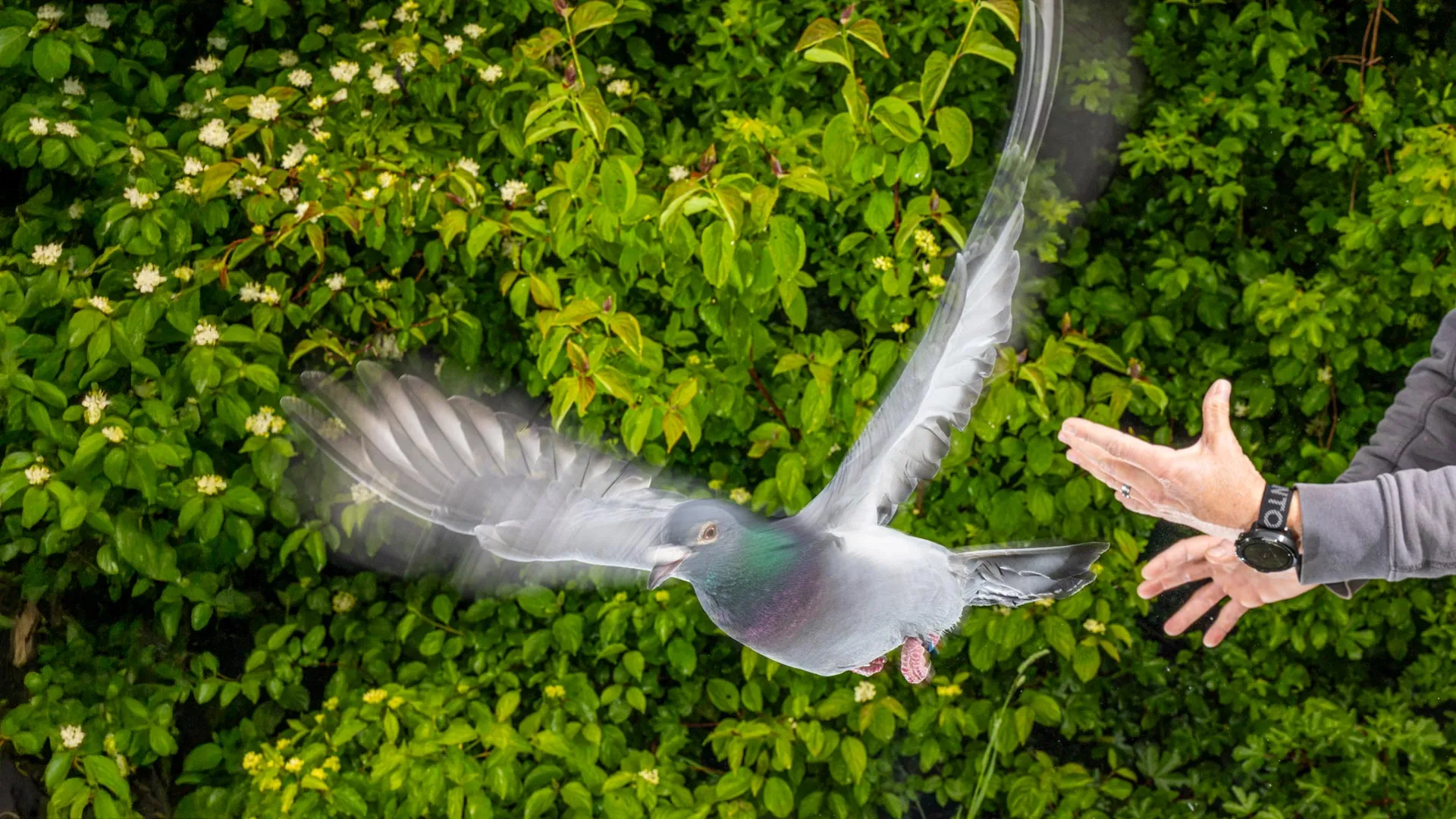
    How pigeons are able to find their way home while traveling hundreds of miles has puzzled scientists for decades. A new study suggests the answer may lie in an unexpected place: the liver.

    According to a study published in sciencepigeons use specialized immune cells in their livers to detect the Earth’s magnetic field, which may provide an internal navigation system.

    Researchers discovered that these cells, called macrophages, accumulate iron while breaking down old red blood cells. Iron may give cells a unique magnetic property, allowing them to respond to the planet’s magnetic field. Once the cells were removed, the pigeons struggled to find their way home, suggesting a previously unknown role in navigation.

    “We never expected that immune cells could act like sensors for magnetic fields. These results reveal a previously unknown mechanism of magnetic perception in animals,” says Professor Christian Kurz, director of the Institute of Molecular Medicine and Experimental Immunology at the University Hospital Bonn and co-senior author of the study.

    “What appears to be a ‘gut feeling’ in bird navigation may actually have a physical basis,” added Professor Martin Wikelski, director of the Max Planck Institute for Animal Behavior and another co-senior author of the study.

    The long exploration of birds’ magnetic senses

    Scientists have long known that homing pigeons and migratory birds use the Earth’s magnetic field as one of several tools for navigation. But how exactly animals detect the scene remains one of biology’s greatest mysteries.

    Over the years, researchers have proposed several possibilities. Some theories suggest that birds may be able to sense magnetic fields through light-sensitive molecules in their eyes. Some pointed to tiny magnetic particles in its beak. Despite years of research, neither idea has received strong experimental support.

    New research combines expertise in immunology, physics and animal behavior to offer a different explanation. The research team included scientists from the University of Bonn, the University Hospital Bonn, the University of Duisburg-Essen, and the Max Planck Institute for Animal Behavior (MPI-AB).

    Iron-rich liver cells exhibit strong magnetic properties

    To determine where magnetic sensing occurs, the researchers examined several organs previously associated with magnetoreception, including the eyes, beaks, and brain. They also analyzed the liver and spleen using techniques known as “vibrating sample magnetometry” and “magnetic cell separation.”

    “We have a clue that the liver and spleen are magnetic because they break down red blood cells and store a lot of iron in the body,” said lead author Dr. Klivia Lisowski of the University of Bonn and University Hospital Bonn, who led the immunology study.

    The results were amazing. Of all the tissues studied, the liver contained the highest concentration of iron and caused the strongest magnetic response.

    “Iron is crystallized in oxide nanoparticles, making cells superparamagnetic and highly responsive to magnetic fields. We found the strongest magnetic response in liver tissue,” added Professor Wolf Wiedwald of the University of Duisburg-Essen.

    Further studies revealed that liver macrophages are responsible for these magnetic properties.

    Navigation experiment reveals important role

    The researchers then tested whether macrophages actually affected navigation.

    At MPI-AB in Konstanz, Germany, pigeons were trained to return to their aviaries from more than 20 kilometers away. Scientists removed macrophages in the liver and observed how the birds behaved.

    The results were dependent on the weather. On cloudy days when the sun was hidden, pigeons without macrophages became disoriented and had difficulty finding their way home. However, on clear days, it probably relied on the sun instead of the Earth’s magnetic field as a navigational cue to successfully return home.

    These findings suggest that birds use magnetic information, along with solar cues, to orient themselves during flight.

    How magnetic signals reach the brain

    After establishing the link between liver cells and navigation, the researchers looked for ways to get information to the brain.

    Using electron microscopy, they found that iron-rich macrophages were located near nerve fibers. This arrangement suggests a possible pathway for magnetic information to be transmitted from the liver to the nervous system and ultimately the brain.

    Professor Lisofsky said: “These findings provide the first concrete evidence of how the Earth’s magnetic field is perceived within the body and communicated to the brain to guide movement.”

    The study brings together several well-established biological processes, including iron metabolism and communication between the immune and nervous systems, to help explain how animals sense magnetic fields.

    “Animal navigation is one of the most fascinating phenomena in nature,” Wikelski says. “If immune cells are part of direction sensing in birds, it would fundamentally change the way we understand navigation.”

    Impact beyond birds

    Although the findings answer important questions, many questions remain. Researchers need to figure out exactly how the brain processes signals from these cells.

    This discovery could have far-reaching implications beyond pigeons. Animals such as sharks are known to effectively navigate without relying on light, raising the possibility that similar mechanisms exist in other species.

    Researchers suggest that many animals, and perhaps even humans, may respond to magnetic fields in ways that are not yet fully understood.


    Source link

    Visited 5 times, 5 visit(s) today
    Share. Facebook Twitter Pinterest LinkedIn Telegram Reddit Email
    Previous ArticleContrary to stereotypes, study finds gamers tend to be more inclusive than the general population
    Next Article ‘Surprising results’ for Revolution Medicine’s pancreatic cancer drug
    healthadmin

    Related Posts

    Research reveals that chimpanzees and bonobos have human-like friend circles

    May 31, 2026

    Scientists have discovered a hidden switch that promotes brain inflammation in Alzheimer’s disease

    May 31, 2026

    Ocean health may depend on tiny microbes inside fish

    May 31, 2026

    Quantum metasurface breakthrough could finally close the terahertz gap

    May 31, 2026

    Navigating the 2025–2030 Dietary Guidelines: Resolving Confusion for Clinical Practice

    May 31, 2026

    Intermittent fasting causes surprising changes in the brain

    May 31, 2026
    Add A Comment
    Leave A Reply Cancel Reply

    Categories

    • Daily Health Tips
    • Discover
    • Environmental Health
    • Exercise & Fitness
    • Featured
    • Featured Videos
    • Financial Health & Stability
    • Fitness
    • Fitness Updates
    • Health
    • Health Technology
    • Healthy Aging
    • Healthy Living
    • Holistic Healing
    • Holistic Health & Wellness
    • Medical Research
    • Medical Research & Insights
    • Mental Health
    • Mental Wellness
    • Natural Remedies
    • New Workouts
    • Nutrition
    • Nutrition & Dietary Trends
    • Nutrition & Superfoods
    • Nutrition Science
    • Pharma
    • Preventive Healthcare
    • Professional & Personal Growth
    • Public Health
    • Public Health & Awareness
    • Selected
    • Sleep & Recovery
    • Top Programs
    • Weight Management
    • Workouts
    Popular Posts
    • 1773313737_bacteria_-_Sebastian_Kaulitzki_46826fb7971649bfaca04a9b4cef3309-620x480.jpgHow Sino Biological ProPure™ redefines ultra-low… March 12, 2026
    • pexels-david-bartus-442116The food industry needs to act now to cut greenhouse… January 2, 2022
    • the-pros-and-cons-of-paleo-dietsThe Pros and Cons of Paleo Diets: What Science Really Says April 16, 2025
    • 1773729862_TagImage-3347-458389964760995353448-620x480.jpgDespite safety concerns, parents underestimate the… March 17, 2026
    • 1773209206_futuristic_techno_design_on_background_of_supercomputer_data_center_-_Image_-_Timofeev_Vladimir_M1_4.jpegMulti-agent AI systems outperform single models… March 11, 2026
    • 1774403998_image_28620e4b6b0047f7ab9154b41d739db1-620x480.jpgGait pattern helps distinguish between Lewy body… March 24, 2026

    Demo
    Stay In Touch
    • Facebook
    • Twitter
    • Pinterest
    • Instagram
    • YouTube
    • Vimeo
    Don't Miss

    Good members go to Congress because they choose to run, not because voters value their skills.

    By healthadminMay 31, 2026

    Recent research provides evidence that state legislators who are highly effective at passing laws are…

    Research reveals that chimpanzees and bonobos have human-like friend circles

    May 31, 2026

    Scientists have discovered a hidden switch that promotes brain inflammation in Alzheimer’s disease

    May 31, 2026

    Predictive models help tailor PSMA treatment for prostate cancer patients

    May 31, 2026

    Subscribe to Updates

    Get the latest creative news from SmartMag about art & design.

    HealthxMagazine
    HealthxMagazine

    At HealthX Magazine, we are dedicated to empowering entrepreneurs, doctors, chiropractors, healthcare professionals, personal trainers, executives, thought leaders, and anyone striving for optimal health.

    Our Picks

    Predictive models help tailor PSMA treatment for prostate cancer patients

    May 31, 2026

    High-risk prostate cancer patients benefit from perioperative apalutamide therapy

    May 31, 2026

    Little-known cannabis compound holds promise for treating alcoholism in rats

    May 31, 2026
    New Comments
      Facebook X (Twitter) Instagram Pinterest
      • Home
      • Privacy Policy
      • Our Mission
      © 2026 ThemeSphere. Designed by ThemeSphere.

      Type above and press Enter to search. Press Esc to cancel.