

Close Menu

    Subscribe to Updates

    Get the latest creative news from FooBar about art, design and business.

    What's Hot

    Forget LASIK: Safer, cheaper vision correction without lasers or surgery

    May 28, 2026

    Self-identifying as a feminist can increase materialism and inadvertently increase body image concerns.

    May 28, 2026

    Rice and Baylor join Braingate to develop brain-computer interface for people with paralysis

    May 28, 2026
    Facebook X (Twitter) Instagram
    Facebook X (Twitter) Instagram
    Health Magazine
    • Home
    • Environmental Health
    • Health Technology
    • Medical Research
    • Mental Health
    • Nutrition Science
    • Pharma
    • Public Health
    • Discover
      • Daily Health Tips
      • Financial Health & Stability
      • Holistic Health & Wellness
      • Mental Health
      • Nutrition & Dietary Trends
      • Professional & Personal Growth
    • Our Mission
    Health Magazine
    Home » News » The Arctic Ocean has passed a tipping point and scientists say it may never recover.
    Nutrition Science

    The Arctic Ocean has passed a tipping point and scientists say it may never recover.

    healthadminBy healthadminMay 28, 2026No Comments4 Mins Read
    The Arctic Ocean has passed a tipping point and scientists say it may never recover.
    Share
    Facebook Twitter Reddit Telegram Pinterest Email


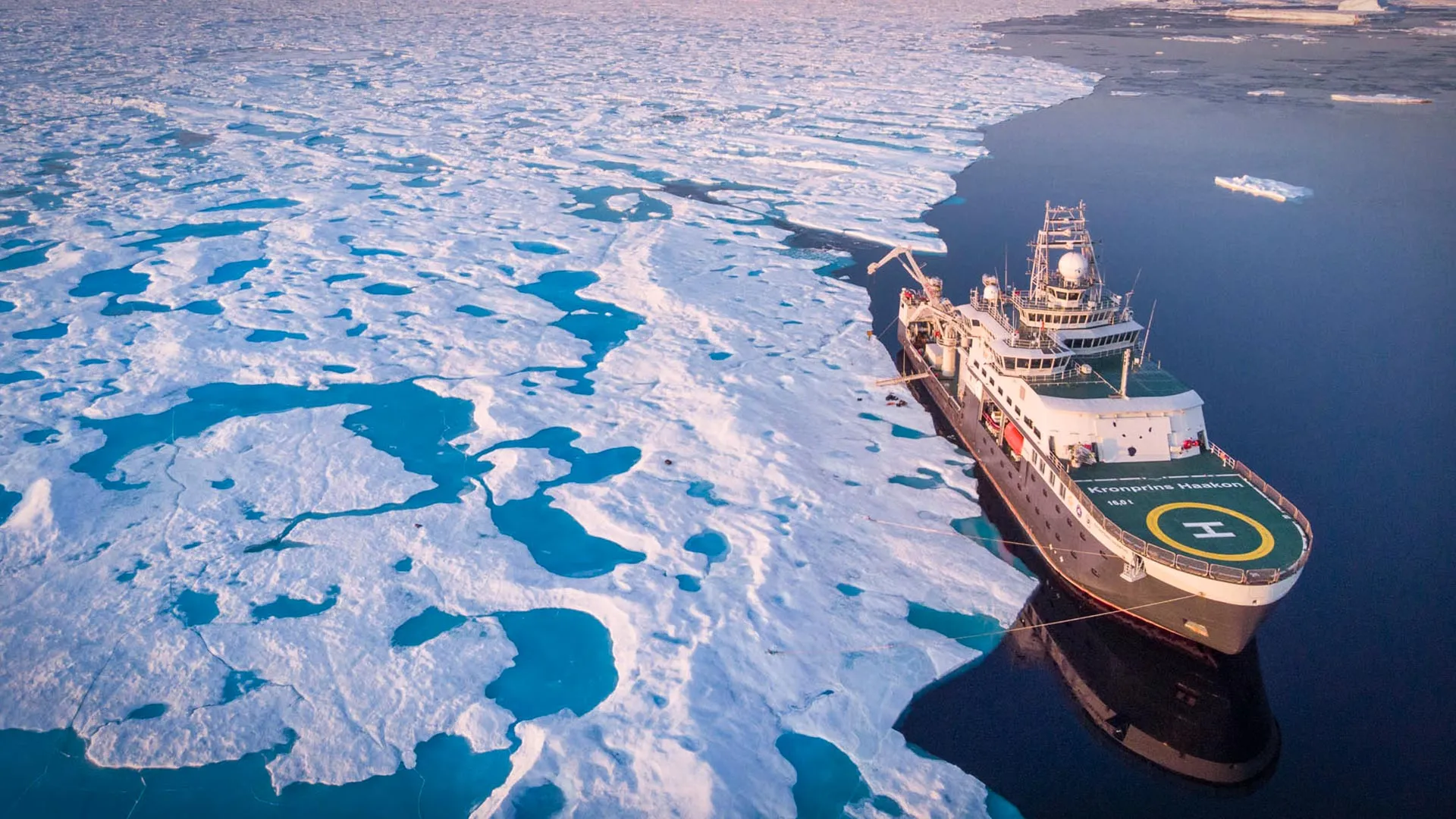
    Scientists say climate change is causing large-scale and permanent changes in the Arctic Ocean, fundamentally disrupting the marine food chain.

    The rapid decline in Arctic sea ice is sharply reducing levels of nitrate, a nutrient essential for the growth of plankton that forms the basis of the region’s ecosystems, according to a new study. Researchers warn that this change could affect everything from fish and seabirds to marine mammals, while also weakening the Arctic Ocean’s ability to absorb carbon from the atmosphere.

    The study found that large areas of the Arctic’s shallow waters that were once protected by sea ice are now exposed to more sunlight. This increased exposure appears to accelerate the natural processes that remove nitrate from seawater.

    Because plankton relies on nitrate to grow, lower nutrient levels can reduce the amount of life that arctic ecosystems can support.

    Declining nitrate levels in the Arctic Ocean

    Scientists have observed major changes in Arctic wildlife populations in recent years, but the underlying causes were not fully understood. Researchers at the University of Edinburgh sought answers by examining more than 20 years of ocean sampling data collected from the Fram Strait, a key passageway for the Arctic Ocean to flow into the Atlantic Ocean.

    Their analysis revealed a clear turning point starting around 2009. Since that period, nitrate levels in water exiting the Arctic have steadily decreased. Researchers say this timing roughly coincides with a dramatic acceleration in Arctic sea ice loss.

    The researchers concluded that shrinking sea ice has intensified a process known as benthic denitrification. During this process, nitrate is converted to nitrogen gas within the shallow seafloor region. These continental shelf areas cover almost half of the Arctic Ocean.

    Scientists say this will result in major changes in the nutritional balance of the Arctic.

    Plankton becomes smaller and the food chain becomes weaker.

    Researchers warn that low nitrate conditions may favor smaller plankton species in the future. This is important because small plankton typically support less productive food chains, leaving less energy and food available to larger marine animals up the chain.

    The impact could extend beyond the Arctic itself. Plankton also help remove carbon dioxide from the atmosphere through photosynthesis. In other words, reduced plankton growth could weaken the ocean’s role in storing carbon.

    Because this change is associated with ongoing sea ice loss, researchers believe it is unlikely that the Arctic Ocean will return to its previous state.

    The researchers say more research is needed to understand how these changes will affect marine ecosystems in other regions, including the North Atlantic and important commercial fishing areas.

    The research results were published in a magazine Communication Earth and Environment. This research was supported by the Natural Environment Research Council’s (NERC) ‘Changing Arctic Ocean’ project.

    Researchers from the Norwegian Polar Institute, the Scottish Marine Science Society, the Technical University of Denmark and the Alfred Wegener Institute in Germany also contributed to the study.

    Marta Santos García, a PhD student at the University of Edinburgh’s School of Geosciences who co-led the study, said: ‘For years, the decline in Arctic sea ice was expected to increase phytoplankton growth as more sunlight reaches surface waters. “Our findings suggest that this relationship has changed. The Arctic Ocean appears to be moving from a system primarily limited by light to one increasingly limited by nitrate availability, with far-reaching implications.” The role of the Arctic in marine ecosystems, food chains, and Earth’s climate. ”

    Professor Raja Ganeshram, from the University of Edinburgh’s School of Geosciences, who led the study over the past 20 years, said: “The changes we report suggest that the Arctic ecosystem crossed a tipping point around 2009. How this change cascades through the food chain has important implications for us, including commercial fishing in the North Atlantic, and needs to be closely monitored.”


    Source link

    Visited 3 times, 3 visit(s) today
    Share. Facebook Twitter Pinterest LinkedIn Telegram Reddit Email
    Previous ArticleMental health diagnostic interviews are less consistent than expected
    Next Article Rice and Baylor join Braingate to develop brain-computer interface for people with paralysis
    healthadmin

    Related Posts

    Forget LASIK: Safer, cheaper vision correction without lasers or surgery

    May 28, 2026

    Scottish wrens may have evolved into a new species after growing to giant islands

    May 28, 2026

    DNA reveals 250-year mystery of Seychelles’ lost crocodile

    May 28, 2026

    5.5 million bees hidden underground in New York cemetery

    May 28, 2026

    A 100-year-old piano mystery has finally been solved

    May 28, 2026

    Researchers block key protein that helps Parkinson’s disease spread to the brain

    May 28, 2026
    Add A Comment
    Leave A Reply Cancel Reply

    Categories

    • Daily Health Tips
    • Discover
    • Environmental Health
    • Exercise & Fitness
    • Featured
    • Featured Videos
    • Financial Health & Stability
    • Fitness
    • Fitness Updates
    • Health
    • Health Technology
    • Healthy Aging
    • Healthy Living
    • Holistic Healing
    • Holistic Health & Wellness
    • Medical Research
    • Medical Research & Insights
    • Mental Health
    • Mental Wellness
    • Natural Remedies
    • New Workouts
    • Nutrition
    • Nutrition & Dietary Trends
    • Nutrition & Superfoods
    • Nutrition Science
    • Pharma
    • Preventive Healthcare
    • Professional & Personal Growth
    • Public Health
    • Public Health & Awareness
    • Selected
    • Sleep & Recovery
    • Top Programs
    • Weight Management
    • Workouts
    Popular Posts
    • 1773313737_bacteria_-_Sebastian_Kaulitzki_46826fb7971649bfaca04a9b4cef3309-620x480.jpgHow Sino Biological ProPure™ redefines ultra-low… March 12, 2026
    • pexels-david-bartus-442116The food industry needs to act now to cut greenhouse… January 2, 2022
    • the-pros-and-cons-of-paleo-dietsThe Pros and Cons of Paleo Diets: What Science Really Says April 16, 2025
    • 1773729862_TagImage-3347-458389964760995353448-620x480.jpgDespite safety concerns, parents underestimate the… March 17, 2026
    • 1773209206_futuristic_techno_design_on_background_of_supercomputer_data_center_-_Image_-_Timofeev_Vladimir_M1_4.jpegMulti-agent AI systems outperform single models… March 11, 2026
    • 1774403998_image_28620e4b6b0047f7ab9154b41d739db1-620x480.jpgGait pattern helps distinguish between Lewy body… March 24, 2026

    Demo
    Stay In Touch
    • Facebook
    • Twitter
    • Pinterest
    • Instagram
    • YouTube
    • Vimeo
    Don't Miss

    Forget LASIK: Safer, cheaper vision correction without lasers or surgery

    By healthadminMay 28, 2026

    Millions of Americans live with blurred vision, nearsightedness, or more severe vision problems. While glasses…

    Self-identifying as a feminist can increase materialism and inadvertently increase body image concerns.

    May 28, 2026

    Rice and Baylor join Braingate to develop brain-computer interface for people with paralysis

    May 28, 2026

    The Arctic Ocean has passed a tipping point and scientists say it may never recover.

    May 28, 2026

    Subscribe to Updates

    Get the latest creative news from SmartMag about art & design.

    HealthxMagazine
    HealthxMagazine

    At HealthX Magazine, we are dedicated to empowering entrepreneurs, doctors, chiropractors, healthcare professionals, personal trainers, executives, thought leaders, and anyone striving for optimal health.

    Our Picks

    The Arctic Ocean has passed a tipping point and scientists say it may never recover.

    May 28, 2026

    Mental health diagnostic interviews are less consistent than expected

    May 28, 2026

    Scottish wrens may have evolved into a new species after growing to giant islands

    May 28, 2026
    New Comments
      Facebook X (Twitter) Instagram Pinterest
      • Home
      • Privacy Policy
      • Our Mission
      © 2026 ThemeSphere. Designed by ThemeSphere.

      Type above and press Enter to search. Press Esc to cancel.