


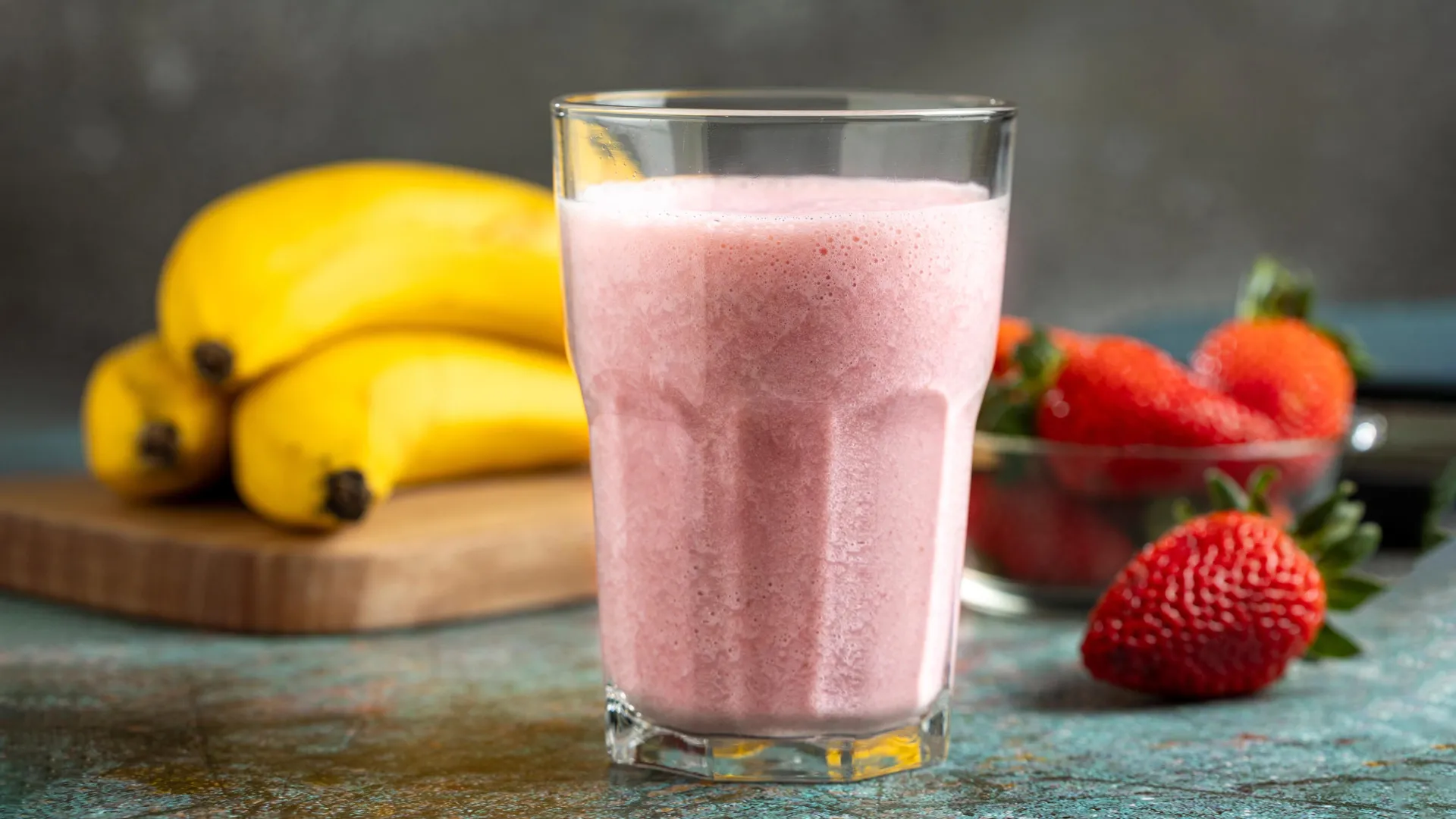
Smoothies are one of the easiest ways to get more fruit into your day. Throw in some bananas, add some berries and mix it up and it looks like a perfectly healthy drink. But research from the University of California, Davis suggests that this popular combination may have an unexpected downside.
The problem isn’t that bananas are unhealthy. Rather, it’s about how certain ingredients interact once they’re blended. In a study published in the Journal of the Royal Society of Chemistry Food & FunctionResearchers have found that fruits high in an enzyme called polyphenol oxidase (PPO) can significantly reduce the amount of flavanols your body absorbs from smoothies.
Flavanols are natural plant compounds associated with heart and cognitive health. These are found in foods such as apples, pears, blueberries, blackberries, grapes, cocoa, and other common smoothie ingredients.
The enzyme behind fruit browning
“We sought to understand at a very practical level how food preparation methods, such as common foods and banana-based smoothies, can affect the availability of flavanols absorbed after ingestion,” said lead author Javier Ottaviani, director of the Core Research Institute at Mars Edge, part of Mars Inc., and an adjunct research fellow in the Department of Nutrition at the University of California, Davis.
If you’ve ever sliced an apple or peeled a banana, you’ve seen PPO in action. When fruit is cut, bruised, or exposed to air, enzymes help trigger a browning reaction. The team at the University of California, Davis, wanted to know whether the same process could also affect the nutrients people want to get from smoothies.
To test this idea, the researchers used freshly prepared smoothies made with ingredients that naturally contained varying amounts of PPO. Bananas have high PPO activity, while mixed berries have low PPO activity.
banana and berries
Participants drank a banana-based smoothie, a mixed berry smoothie, and flavanol capsules, which served as a control. The researchers then analyzed blood and urine samples to see how much flavanols were made available to the body.
The difference was noticeable. Flavanol levels were 84% lower in people who drank banana smoothies compared to controls. In contrast, the low PPO mixed berry smoothie produced flavanol levels similar to the capsule control.
“We were really surprised to see how quickly adding just one banana reduced the level of flavanols in a smoothie and the level of flavanols absorbed into the body,” Ottaviani said. “This highlights how food preparation and combination can affect the absorption of food compounds in foods.”
The study also included a second test in which participants ingested the flavanols along with a high-PPO banana drink, but ensured that the ingredients did not come into contact with each other before consumption. Flavanol levels were still decreased, suggesting that PPO activity may continue to be important after ingestion, perhaps in the stomach.
What this means for your smoothies
This finding doesn’t mean bananas are bad for you. Bananas provide fiber, potassium, and other nutrients, making them a useful part of a healthy diet. The more specific lesson is that if your goal is to get the most flavanols from berries, grapes, cocoa, or other flavanol-rich foods, bananas may not be the best choice.
The Academy of Nutrition and Dietetics has issued dietary recommendations suggesting consuming 400 to 600 milligrams of flavanols per day for cardiometabolic health. These compounds are found in foods such as tea, apples, berries, grapes, and cocoa.
For those looking to boost flavanols through smoothies, Ottaviani recommends pairing flavanol-rich fruits, such as berries, with foods that have low PPO activity. Recommended foods include pineapple, orange, mango, and yogurt.
Bananas can be eaten on their own or used in smoothies where flavanol intake is not the primary goal. However, if your smoothie is built around berries, grapes, or cocoa, leaving out the banana or enjoying it separately may be a better strategy.
A small study with a practical message
Although the original study was controlled and carefully designed, it was also small. The first test involved eight healthy men, and the second included 11 participants. In short, while the results are informative and interesting, they should not be treated as the final word for all people or all diets.
Nutrition experts commenting on the study also urged people not to overreact. Smoothies with bananas are highly nutritious, especially as part of a varied diet. Personal digestion, eating patterns, and overall nutrient intake are all important.
The most important point is simple. This means that the combination of ingredients can change what your body gets from food. Smoothies are more than just a bunch of nutrients in a glass. How ingredients interact can influence the final nutritional value.
Why flavanols remain a hot research topic
The smoothie findings fit into the broader field of nutritional research focused on flavanols and other plant bioactive compounds. These compounds are being studied for possible benefits related to blood flow, blood pressure, cholesterol, glucose regulation, and brain health. The Academy of Nutrition and Dietetics guidelines list moderate evidence for 400 to 600 milligrams of flavanols per day to support cardiometabolic health, but emphasize food sources over supplements.
Recent research on cocoa flavanols has revealed a more nuanced picture regarding cognition. In a COSMOS-related research program, cocoa extract containing 500 milligrams of flavanols per day did not show widespread cognitive benefits for all people, although some analyzes suggested potential benefits among older adults with lower habitual dietary quality.
That makes smoothie research especially practical. If you’re choosing berries, cacao, or grapes to get your flavanols, preparation and combination can be important. Although more research is still needed, this idea can easily be applied at home.
Better smoothie combinations for flavanols
If you’re looking for a flavanol-friendly smoothie, try combining berries with low-PPO ingredients like mango, pineapple, orange, and yogurt. These options keep your drink sweet and creamy without adding the high PPO activity found in bananas.
For banana lovers, there’s no need to give up bananas. Consider separating your smoothie goals. Use bananas if you want creaminess, potassium, and sweetness. If you want to retain more flavanols, use berries, cocoa, grapes, or apples that have fewer PPO partners.
This study may also suggest something beyond smoothies. Ottaviani said tea, another major source of flavanols, can be affected by preparation methods that alter the amount of flavanols available for absorption.
“This is certainly an area that deserves more attention in the field of polyphenols and bioactive compounds in general,” Ottaviani said.
Jodi Ensunsa, Reedmond Fong, Jennifer Kimball, and Alan Crozier are all in the UC Davis Department of Nutrition, and researchers from the UC Davis Department of Internal Medicine, the University of Reading, King Saud University, and Mars Inc. also contributed to the study.
This study was funded by a research grant from Mars, Inc., which is collaborating with researchers to study the potential benefits of cocoa flavanols for human health.
