

Close Menu

    Subscribe to Updates

    Get the latest creative news from FooBar about art, design and business.

    What's Hot

    Navigating Evidence Gaps in the 2025-2030 Dietary Guidelines

    October 11, 2026

    Navigating Conflicting 2025 Dietary Guidelines for Metabolic Health

    October 10, 2026

    2025 Clinical Trials Breakthroughs: Key Insights for Medical Researchers

    October 9, 2026
    Facebook X (Twitter) Instagram
    Facebook X (Twitter) Instagram
    Health Magazine
    • Home
    • Environmental Health
    • Health Technology
    • Medical Research
    • Mental Health
    • Nutrition Science
    • Pharma
    • Public Health
    • Discover
      • Daily Health Tips
      • Financial Health & Stability
      • Holistic Health & Wellness
      • Mental Health
      • Nutrition & Dietary Trends
      • Professional & Personal Growth
    • Our Mission
    Health Magazine
    Home » News » Researchers discover unexpected cellular trigger of precancerous pancreatic lesions
    Discover

    Researchers discover unexpected cellular trigger of precancerous pancreatic lesions

    healthadminBy healthadminMay 21, 2026No Comments4 Mins Read
    Researchers discover unexpected cellular trigger of precancerous pancreatic lesions
    Share
    Facebook Twitter Reddit Telegram Pinterest Email


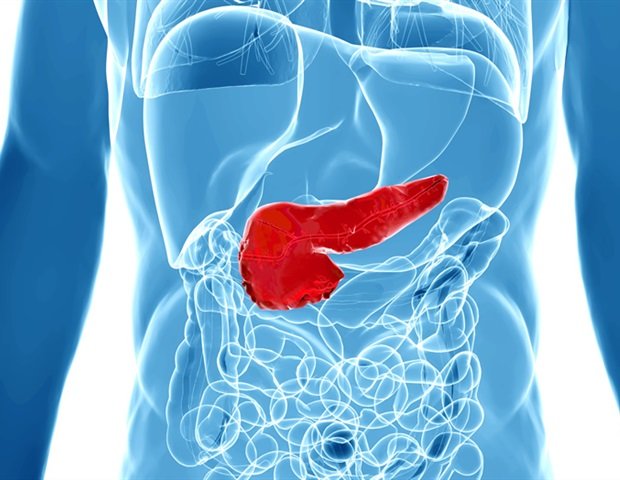
    An unexpected discovery leads a new study to upend the lead researcher’s understanding of how precancerous pancreatic lesions develop into pancreatic cancer. This paradigm-changing discovery has profound implications for identifying people at high risk of cancer and even stopping malignant metastasis.

    In tumors, cancer cells induce surrounding non-malignant cells to act as “helpers” and promote tumor growth. This is called the microenvironment. A precursor lesion called a pancreatic intraepithelial neoplasia (PanIN) is similarly surrounded by a collection of other cells.

    Precursor lesions express a similar set of genes as cancer cells, but not as strongly. So when the researchers looked at cells in the environment around the lesion, they expected to see the same “tumor light” signature. Remarkably, the microenvironment of the precursor lesions was quite different.

    The microenvironment of these precursor lesions was found to be similar to that of the normal pancreas. I am not convinced that the lesion changes the surrounding cells. It wasn’t what we expected. We expected that the two components, cells and microenvironment, would evolve in tandem. they didn’t. ”


    Dr. Marina Pasca Di Mariano, co-senior study author, Maude T. Lane Professor of Surgical Immunology, and co-director of the University of Michigan Rogel Blondie Pancreatic Cancer Center

    This research cancer discoveryJournal of the American Association for Cancer Research;

    This finding may explain previous research by the team that showed that while pancreatic cancer remains relatively rare, precursor lesions are common, including in younger people.

    It has been difficult to study the transformation of normal pancreatic cells into pancreatic cancer in humans. Microscopic precursor lesions are very difficult to isolate within the pancreas and usually resolve when nearby tumors are removed during surgery. At this point, the PanIN microenvironment may be influenced by nearby tumors.

    The research team benefited from a unique collaboration with UM Rogel Cancer Center and Gift of Life Michigan. This allows UM researchers to obtain healthy donor pancreases for research. Through this partnership, researchers isolated PanIN lesions from more than 150 donated pancreases from individuals aged 20 to 70 years.

    In this study, we used multiple cutting-edge research techniques, including single-cell RNA-seq and spatial transcriptomics, to isolate single cells, examine them in two dimensions, and map gene expression in specific tissue sections.

    “These lesions are like needles in a haystack. The previous way to look at this was to look at the whole haystack. You get a lot of information about the hay, but very little about the needles. With these new technologies, we can find the needles. “We can examine multiple needles using the same amount of computing power and resources,” said co-senior author Timothy Frankel, MD, Maud T. Lane Professor of Surgical Oncology and co-director. of UM’s Rogel and Blondie Pancreatic Cancer Center.

    Pancreatic cancer has an extensive tumor microenvironment that includes fibroblasts and immune cells that play complex roles in tumor biology. If the precursor lesions are not surrounded by the same microenvironment, it suggests that something else needs to happen to trigger cancer growth, such as inflammation, pancreatitis, smoking, aging, obesity, or other stressors associated with pancreatic cancer. Future research will need to understand what factors are involved.

    The hope is that if researchers can understand how these stressors affect the microenvironment and cause precancerous lesions to turn into cancer, they may be able to target and interrupt the cells involved in the process and halt the transformation.

    This study reflects the important role of interdisciplinary team science in pancreatic cancer research. In this case, the strong team at UM’s Rogel and Blondie Pancreatic Cancer Centers leveraged their unique relationship with Gift of Life, their expertise in pancreatic cancer and its microenvironment, and partnered with additional experts in bioinformatics and pathology at the University of Maryland School of Medicine and New York University.

    “It’s incredible to see how the fusion of new computational methods and state-of-the-art spatial transcriptomics techniques can reveal fundamental cellular mechanisms of disease pathogenesis. Through careful study design, we can use spatial information to begin to delve into the unknown dynamics of pancreatic tumor evolution,” said co-corresponding author Elana J. Fertig, Ph.D., director of the University of Maryland School of Medicine’s Genome Sciences Institute and director of the Institute for Genome Sciences. in Quantitative Science from the University of Maryland Marine College and the Stewart Greenbaum Comprehensive Cancer Center.

    sauce:

    Michigan Medicine – University of Michigan

    Reference magazines:

    El Hossini, A.M. others. (2026). Asynchronous evolution of epithelium and stroma distinguishes precursor lesions from pancreatic cancer. cancer discovery. https://aacrjournals.org/cancerdiscovery/article/doi/10.1158/2159-8290.CD-25-2001/785296/Asynchronous-evolution-of-epithelium-and-stroma


    Source link

    Visited 11 times, 1 visit(s) today
    Share. Facebook Twitter Pinterest LinkedIn Telegram Reddit Email
    Previous ArticlePopular GLP-1 weight loss drugs such as Ozempic reduce risk of heart attack and stroke
    Next Article Vitamin B12 analog targets deadly brain tumor cells
    healthadmin

    Related Posts

    Texas A&M researchers build AI tool for tuberculosis drug discovery

    July 30, 2026

    New ultrasound technology breaks blood-brain barrier to treat gliomas

    July 30, 2026

    Omalizumab wins multi-allergen oral immunotherapy in multi-food allergy trial

    July 30, 2026

    MAGFLO™ NGS beads: cost-effective nucleic acid purification

    July 30, 2026

    Qureight completes $20 million Series B funding

    July 30, 2026

    Cigarette smoke extract stimulates airway cells and increases nanoplastic damage

    July 30, 2026
    Add A Comment

    Comments are closed.

    Categories

    • Daily Health Tips
    • Discover
    • Environmental Health
    • Exercise & Fitness
    • Featured
    • Featured Videos
    • Financial Health & Stability
    • Fitness
    • Fitness Updates
    • Health
    • Health Technology
    • Healthy Aging
    • Healthy Living
    • Holistic Healing
    • Holistic Health & Wellness
    • Medical Research
    • Medical Research & Insights
    • Mental Health
    • Mental Wellness
    • Natural Remedies
    • New Workouts
    • Nutrition
    • Nutrition & Dietary Trends
    • Nutrition & Superfoods
    • Nutrition Science
    • Pharma
    • Preventive Healthcare
    • Professional & Personal Growth
    • Public Health
    • Public Health & Awareness
    • Selected
    • Sleep & Recovery
    • Top Programs
    • Weight Management
    • Workouts
    Popular Posts
    • 1773313737_bacteria_-_Sebastian_Kaulitzki_46826fb7971649bfaca04a9b4cef3309-620x480.jpgHow Sino Biological ProPure™ redefines ultra-low… March 12, 2026
    • pexels-david-bartus-442116The food industry needs to act now to cut greenhouse… January 2, 2022
    • 1773729862_TagImage-3347-458389964760995353448-620x480.jpgDespite safety concerns, parents underestimate the… March 17, 2026
    • 1774403998_image_28620e4b6b0047f7ab9154b41d739db1-620x480.jpgGait pattern helps distinguish between Lewy body… March 24, 2026
    • 1773209206_futuristic_techno_design_on_background_of_supercomputer_data_center_-_Image_-_Timofeev_Vladimir_M1_4.jpegMulti-agent AI systems outperform single models… March 11, 2026
    • Leukemia-620x480.jpgBiomimetic platform powers CAR T therapy for… March 9, 2026

    Demo
    Stay In Touch
    • Facebook
    • Twitter
    • Pinterest
    • Instagram
    • YouTube
    • Vimeo
    Don't Miss

    Navigating Evidence Gaps in the 2025-2030 Dietary Guidelines

    By healthadminOctober 11, 2026

    An analysis of evidence gaps in the 2025-2030 dietary guidelines, focusing on protein recommendations, metabolic health, and clinical applications for dietitians and researchers.

    Navigating Conflicting 2025 Dietary Guidelines for Metabolic Health

    October 10, 2026

    2025 Clinical Trials Breakthroughs: Key Insights for Medical Researchers

    October 9, 2026

    Navigating the 2025-2030 Dietary Guidelines for Cardiometabolic Prevention

    October 8, 2026

    Subscribe to Updates

    Get the latest creative news from SmartMag about art & design.

    HealthxMagazine
    HealthxMagazine

    At HealthX Magazine, we are dedicated to empowering entrepreneurs, doctors, chiropractors, healthcare professionals, personal trainers, executives, thought leaders, and anyone striving for optimal health.

    Our Picks

    Navigating the 2025-2030 Dietary Guidelines for Cardiometabolic Prevention

    October 8, 2026

    The Digital Health Challenge Facing Founders and Engineers in 2026

    October 7, 2026

    The Mental Health Crisis: What Psychiatrists and Policymakers Must Address Now

    October 6, 2026
    New Comments
      Facebook X (Twitter) Instagram Pinterest
      • Home
      • Privacy Policy
      • Our Mission
      © 2026 ThemeSphere. Designed by ThemeSphere.

      Type above and press Enter to search. Press Esc to cancel.