


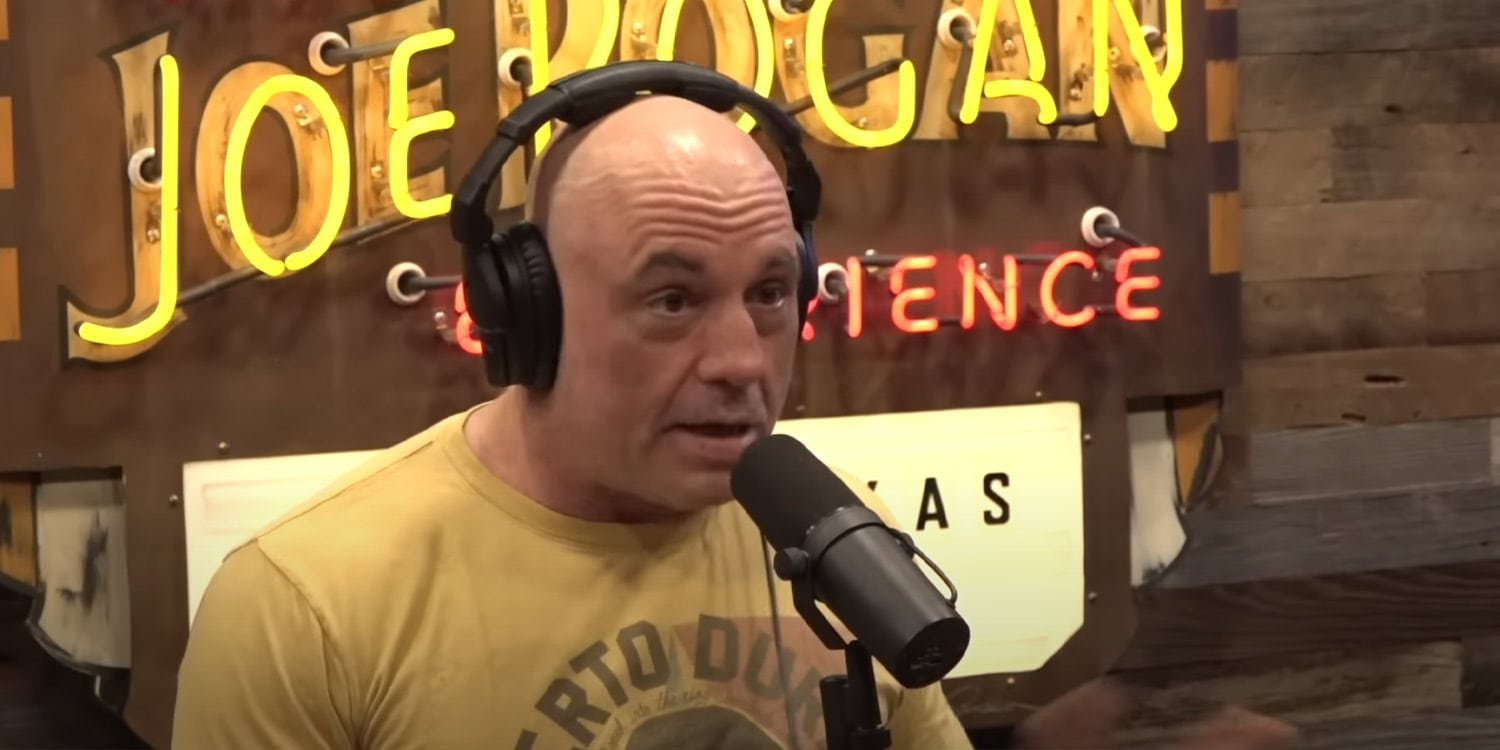
The popular show “The Joe Rogan Experience” has gradually transformed from a comedy podcast to a highly influential platform with real-world political weight. Two new studies reveal that show viewership strongly predicts voting for Donald Trump in the 2024 presidential election, even after accounting for past voting habits. These results were recently published as a preprint. APSA Preprint.
The media landscape has been fractured over the past two decades in the shadow of the modern Internet. Viewers now have a huge variety of channels to choose from, and entertainment programming has emerged as a prominent vehicle for political messages. Programs that traditionally focused on comedy and culture now routinely incorporate policy issues into their scripts, blurring the line between standard news and entertainment content.
By incorporating political concepts into casual conversations, these hybrid programs reach people who might otherwise ignore civic engagement. Researchers refer to the expansion of politics into everyday culture as a state of total politics. When policy messages flood apolitical spaces, audiences encounter civil discourse without actively seeking it out.
Modern podcasts work differently than traditional television and print media. This format allows hosts to foster a strong, one-sided relationship with their audience through informal storytelling and an unscripted sense of authenticity. Because listeners feel a personal connection to the host, they often develop deep trust and reduce their natural skepticism about persuasive messages.
Huma Rasheed, a communication researcher at the University of Pennsylvania, and her team of researchers wanted to investigate how this politicization plays out within major cultural assets. They decided to study “The Joe Rogan Experience,” a podcast listened to by tens of millions of listeners. The show started out as a lighthearted comedy podcast, but eventually became a daily topic in the context of national elections.
The podcast revolves around unscripted interviews in which the host speaks with guests, ranging from tech billionaires like Elon Musk to astrophysicists to heavyweight boxers. In late 2024, the host interviewed Donald Trump and publicly supported him on the eve of the election. Political commentators suggested the appearance gave momentum to political campaigns and helped draw in young and undecided voters in battleground states.
To map the evolution of the program’s themes, Rasheed and her team collected a nearly complete collection of episode recordings. They collected text from 2,175 episodes that aired from December 2009 to December 2024. Since it would be impossible to manually analyze such huge amounts of text, the researchers applied computational text models to identify repeating patterns.
Using an algorithm that groups words into semantic themes, the researchers found 45 different topics throughout the show’s history. The researchers then mapped the relationships between these topics to see which subjects often appeared together in the same conversation. This structural mapping allowed us to identify six major thematic domains within the podcast.
A computational approach categorized the program’s content into clusters related to personal stories, social and political issues, comedy, fitness and martial arts, conspiracy theories, and wildlife. Looking at how these themes influenced each other, personal storytelling served as the core of the program’s structure. Intimate accounts of family life, childhood experiences, and career trajectories served as narrative bridges connecting widely disparate subject areas.
This narrative anchor helps facilitate smooth transitions between unscripted conversations that routinely last well over two hours. The researchers then tracked how the prevalence of these themes changed over the show’s 15 years. Topics related to vulgar humor and sexual jokes steadily decreased.
Alternatively, debates about social and political issues have steadily gained prominence over the years. Conversations centered around elections, foreign policy, and free speech have increased significantly since around 2016. This change changed the tone of the show from typical locker room talk to substantive discussion of current events.
In the field of health and medicine, an algorithm inductively grouped conversations about vaccines into fitness clusters. This placement suggests that the podcast was framing the medical discussion in terms of athletic performance and physical fitness rather than public health policy. This framework was consistent with the organizers’ previous comments suggesting that very healthy people do not need specific medical interventions.
The researchers also identified clusters associated with altered states and speculative science. This area included discussions of psychedelics, theoretical physics, ancient civilizations, and space exploration. Conversations about fringe theories and extraterrestrial life were initially stagnant, but have steadily increased in popularity on the show since 2016.
After establishing this thematic shift to serious civic issues, the research team wanted to see if listening to the show correlated with real-world political behavior. They used data from a nationally representative survey of 1,600 U.S. adults conducted in early 2025. The survey asked participants about their media consumption habits, demographic background, political leanings, and past voting choices.
Almost 10% of the sample reported listening to podcasts at least sometimes. The listenership was heavily male-skewed, with over 70% of the audience identifying as male. To isolate the specific correlation with podcasting, the researchers mathematically controlled for a variety of alternative factors.
They considered age, income, education, and general interest in government matters. We also took into account whether participants regularly consume certain media, such as Fox News Channel, CNN, MSNBC, national newspapers, or social media platforms. The researchers also controlled for party identification and whether the individual voted for Trump in the 2020 election.
Even with these extensive regulations in place, podcast listening emerged as a strong predictor of voting for Trump in the 2024 election. Listening habits stood out as the second strongest numerical predictor in their model, behind past votes for the same candidate in 2020. Podcasts proved to be exceptionally predictive compared to traditional political variables such as basic party affiliation.
The researchers noted that qualitative anecdotes mirror quantitative findings. After the election, focus groups with young voters highlighted how the unscripted audio format shaped perceptions of candidates. Several undecided participants told reporters that the candidates seemed normal and genuine during the three-hour informal interview.
Please note that this study was published as a preprint. This means that the paper has not yet undergone formal peer review (a rigorous process in which independent experts evaluate the methodology and conclusions before formal publication), so the results should be considered preliminary.
The study authors also note some limitations in the study design. This data cannot prove that listening to podcasts directly caused a change in an individual’s voting habits. Unmeasured cultural or psychological factors may cause someone to listen to a podcast or vote conservative.
Establishing a direct chain of effect requires either special experimental settings or following the exact same individuals over several years. Future research may elucidate the psychological mechanisms that make long audio interviews more persuasive. Identifying specific audio characteristics that foster trust may explain how nontraditional media circumvents typical audience skepticism.
These findings suggest that large cultural platforms now define their own terms of citizen participation. In the past, politicians shaped traditional journalism simply by acting in public. Politicians are now increasingly embracing the informal style and rules of popular entertainment programs in order to access broad disinterested segments of the electorate.
This research was presented by Huma Rasheed, Liam Cuddy, Brooke Molokach, Jiwon Nam, Scarlett Feuerstein, R. Lance Holbert, and Dannagal G. Young.
