


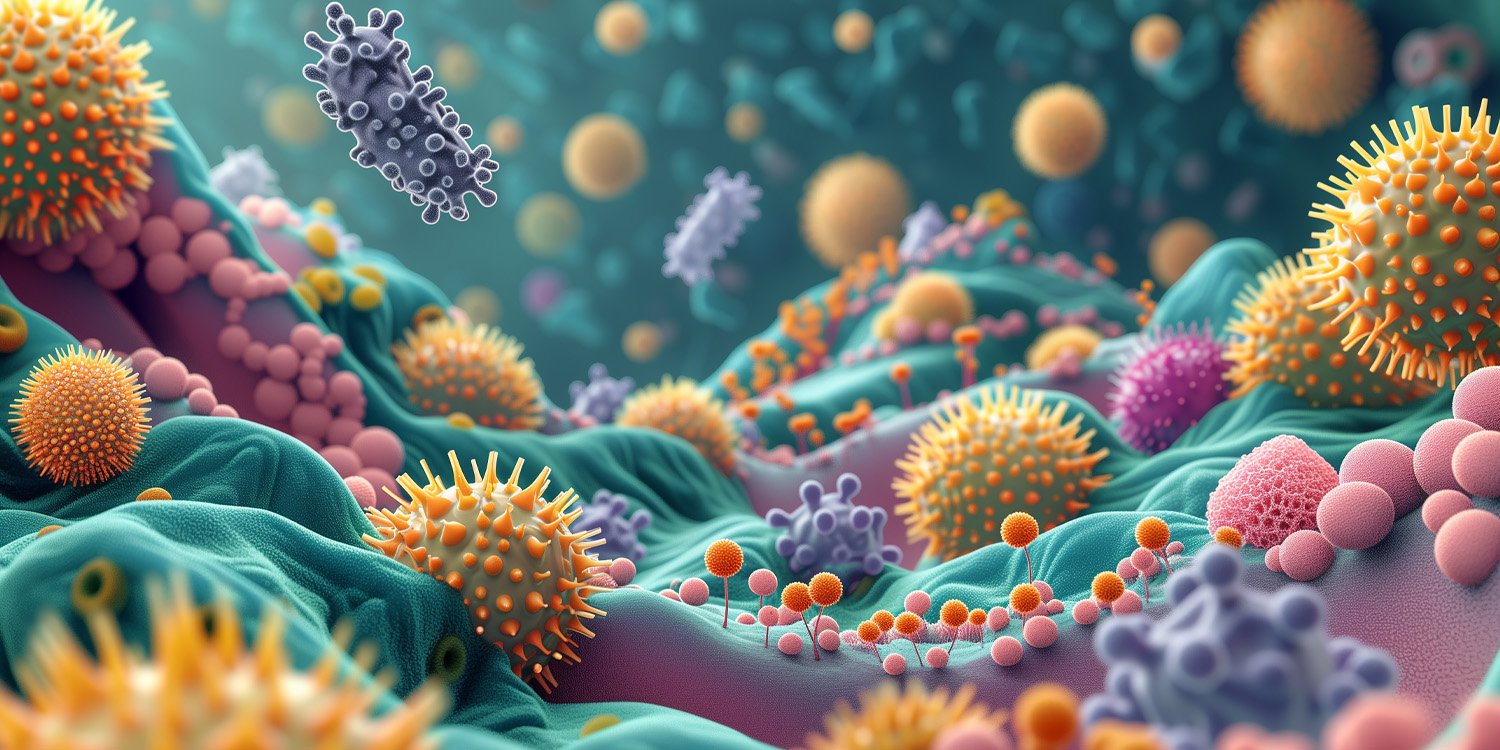
Recent research suggests a potential causal relationship between certain gut bacteria, blood metabolism, and the development of postpartum depression. By analyzing large genetic databases, scientists mapped how microbial communities change gene switches and cholesterol levels, which in turn affects mothers’ mental health. The study results were published in the Journal of Affective Disorders.
Postpartum depression affects approximately 14% of people after giving birth. This condition affects the mother’s quality of life and the infant’s attachment. Currently, the biological mechanisms that cause this disease are not fully understood, and treatments remain limited. By the time symptoms appear, doctors have few options to improve the condition.
Emerging evidence shows that the gut microbiome is a key factor in mood and brain health. The trillions of bacteria that live in your digestive tract produce chemicals that communicate with your brain. This connection is often referred to as the gut-brain axis. It regulates everything from immune responses to maintaining the blood-brain barrier.
Under normal conditions, gut microbes also promote the production of neurotransmitters such as serotonin and essential energy sources called short-chain fatty acids. During pregnancy and after childbirth, the mother’s digestive system undergoes significant remodeling. Researchers believe that this change in the bacterial environment may change the way the body processes hormones, steroids, and energy.
Researchers Zhiyuan Zhang and colleagues at Tongji University in Shanghai sought to map how these gut microbes interact with host metabolism. They wanted to see if certain bacteria cause postpartum depression through blood metabolites or genetic switches.
To investigate this sequence of events without the confounding factors of clinical trials, Zhang and colleagues used a technique known as Mendelian randomization. This approach relies on the natural, random combination of genetic variations that are inherited during conception. Scientists use these genetic differences as proxies to test whether a particular exposure actually causes a disease, rather than just appearing in parallel with the disease.
Because genes are inherited randomly and cannot be changed by diet or environment later in life, they serve as objective anchors for observing biological cause and effect. This allows researchers to avoid lifestyle differences that typically obscure nutritional and microbial studies.
The team pulled information from multiple large global databases. They integrated genetic details from the MiBioGen consortium, a large database covering tens of thousands of individuals, and examined genetic variations associated with the abundance of specific gut bacteria. They then cross-referenced these mutations with genetic data from the FinnGen consortium, which includes more than 13,000 women who have experienced postpartum depression.
In another phase of the study, the researchers looked for biological mediators in the blood. They looked at the UK Biobank dataset to look for circulating molecules that might carry signals from the gut to the brain. In total, they tested 249 different measurements of small molecules such as lipids, fatty acids, and amino acids.
Finally, they evaluated epigenetic factors. Epigenetic factors are chemical tags on DNA that increase or decrease the activity of genes without changing the genetic code itself. Specifically, the researchers looked at DNA methylation. This is a process in which small chemical clusters attach to genes to change the amount of a particular protein produced in the body. They analyzed whether variations in these methylation patterns in blood tissues overlap with genetic risks for postpartum depression and gut bacteria levels.
Researchers have identified very different roles for different bacterial groups. Six bacterial groups were associated with an increased risk of developing postpartum depression. These included some specific genera such as the Clostridiales, Bifidobacteriales, and Eggerthera. Conversely, a group known as the phylum Verrucomicrobia appears to exert a protective effect against this disorder.
The researchers then tracked how some of these bacteria affected mental health by looking at blood chemistry. They discovered that certain fats that are bound to high-density lipoproteins, commonly known as good cholesterol, act as mediators. Higher levels of bifidobacteria reduced the presence of these cholesterol-related fats in the bloodstream, which correlated with an increased risk of postpartum depression.
Epigenetic analysis revealed seven specific genes involved in metabolism that appear to be regulated by DNA methylation in the context of this disease. One of the main focuses was the gene that produces an enzyme called ferredoxin reductase. This enzyme helps the body manufacture steroid hormones and other cellular compounds.
The results showed that lower levels of DNA methylation near this gene led to increased enzyme production. Increases in this enzyme actually appear to protect against postpartum depression. The researchers found that genetic variations that affect this enzyme also affect the abundance of Bifidobacteria in the gut.
Other identified genes control various cellular networks, such as creatine synthesis and amino acid transport for brain energy. For example, the analysis suggested that increased activity of a gene responsible for transporting the amino acid cysteine increases susceptibility to postpartum depression. Other genes that initiate signaling pathways for cell survival also appear to increase disease risk when highly active.
Enzymes involved in creatine synthesis emerged as another important factor. Increased expression of the gene responsible for this enzyme showed a protective effect against postpartum depression. This analysis showed that epigenetic methylation likely suppresses this gene, thereby increasing maternal vulnerability to mood disorders.
Despite the vast amount of data, this study relies on observational genetic statistics rather than direct experiments. Although Mendelian randomization methods provide mathematically robust hypotheses, they cannot fully confirm direct biochemical reactions in the human body. Actual confirmation requires physical laboratory examination and clinical testing.
The researchers noted that the genetic database is primarily derived from populations of European descent. This lack of diversity limits the ability to generalize the results to other ethnic groups that may have different genetic and microbial profiles. The gut microbiota dataset was not limited to postpartum individuals, but also included data from the general population.
The researchers acknowledged that database limitations meant they could only classify bacteria at the broader genus level. Different individual species within a single genus can sometimes have opposing biological effects. Future studies should use more precise sequencing tools to identify the precise bacterial strains involved in maternal health.
Currently, conventional antidepressant treatments for postpartum depression have limitations. These drugs can take several weeks to take effect and often cause harmful side effects that may worry breastfeeding parents. In the future, scientists hope to recreate these microbial frameworks in animal models and observe biological processes in real time.
Mapping these specific bacteria and lipid pathways opens the door to targeted therapies. Specialized probiotics and dietary interventions may one day help balance the gut and prevent postpartum depression without relying entirely on traditional medicine.
The study, “Host-gut microbiome metabolic crosstalk in postpartum depression: multi-omic insights linking blood metabolites and epigenetic regulation,” was authored by Zhiyuan Zhang, Xiaobing Hu, Weimin Tao, Ruijing Ma, Yuhan Zheng, Xin Fang, Jiameng Gao, and Zhendong Xu.
