


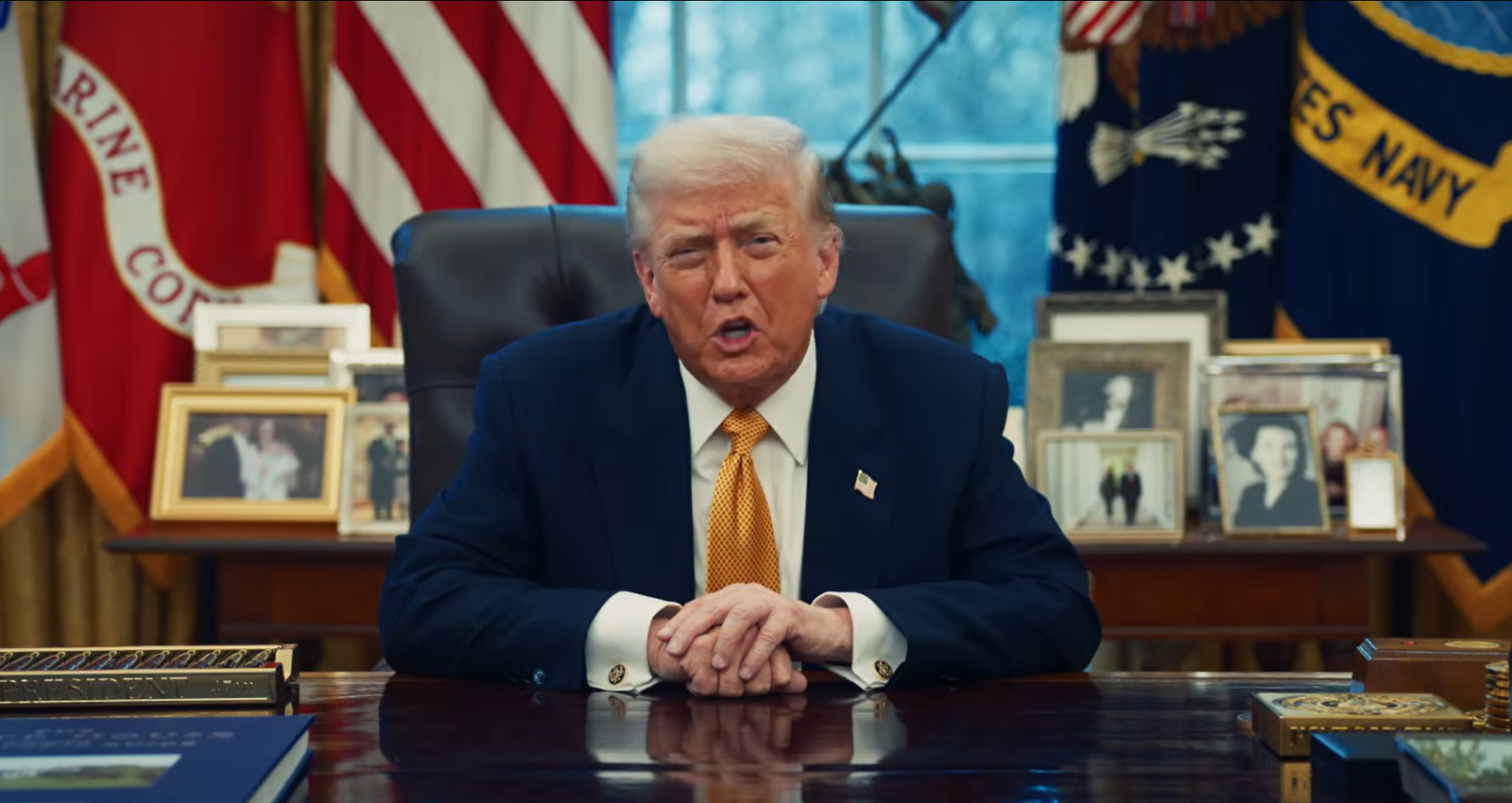
President Donald Trump bought $680,000 in stock in Eli Lilly and Co., the maker of the hit obesity drug, earlier this year as the agency he oversees embarked on an agenda that greatly benefited the company.
On May 14, the federal government released an ethics disclosure revealing a list of stock and bond transactions made on behalf of President Trump between January and March of this year. These included a wide range of deals across the economy, including investments in tech giants like Microsoft and Nvidia, aerospace companies like Boeing, and big-name companies like Target and Chipotle.
But in the health care industry, Lilly’s deal stands out, with a stock market valuation of just under $1 trillion. That’s because the timing of Trump’s purchase coincides with several favorable government decisions benefiting drugmakers’ GLP-1 businesses, including progress toward the long-held goal of making drugs prescribed for weight loss eligible for reimbursement from Medicare, the government health insurance program primarily for seniors.
The disclosure document, which clearly bears President Trump’s signature, gives the scope of the transaction, but not the exact amount. These represent seven Lilly stock purchases made on behalf of the president through the end of March, with the first purchase occurring on January 6th.
During that period and immediately after, several efforts by the Trump administration ultimately benefited Lilly. Perhaps the biggest initiative was from the Centers for Medicare and Medicaid Services, which proposed a pilot program in which Medicare patients would pay $50 a month for GLP-1 drugs, a temporary “bridge” that could be followed by permanent reimbursement.
The deadline for drug manufacturers to submit applications expressing interest in participating was January 8th. Lilly has since become one of the manufacturers participating in the program, calling it an “important milestone.”
Another purchase of West Pharmaceutical Services stock worth between $250,000 and $500,000 on February 10 was a similar bet on the GLP-1 market. The company, which makes pharmaceutical injection devices, credited growth in its GLP-1 business with driving revenue up in the most recent quarter.
Lily declined to comment. West Pharmaceutical Services did not respond to requests for comment.
A spokesperson for the Department of Health and Human Services declined to comment and referred KFF Health News to the White House. A White House press secretary referred questions to the Trump Organization, the holding company for most of the president’s businesses, which did not immediately respond to a request for comment.
In response to questions from other news outlets about Trump’s stock trades, the Trump Organization said the investments were managed by independent brokers.
It is unclear from the disclosure whether Mr. Trump personally directed the trade. Four of the Lilly stock purchases were marked “unsolicited,” but the Office of Government Ethics did not immediately respond to a request for clarification on its use of that term.
Mr. Trump’s assets are held in trust by his children, and a Trump Organization spokesperson has said in the past that neither the president nor his children have a role in “selecting, directing, or approving” specific investments.
Eric Trump, the president’s son and a Trump Organization executive, told X on May 15 that “any suggestion that individual stocks are being bought and sold at the discretion of members of the Trump family is false and patently false.”
He claimed that buying index funds made up the majority of his investments. Disclosures record purchases of funds and individual stocks.
Lilly had a strong 2025, ending the year with sales of $65 billion, up $20 billion from the previous year. GLP-1 drugs accounted for a significant portion of that total.
In early 2026, the company said it expected its revenue to jump even further this year, topping $80 billion. Citibank analysts said this was a “surprising” prediction.
Analysts at financial services firm TD Cowen said the Medicare and Medicaid markets will be critical to making this happen. “Guidance anticipates a positive impact from Medicare coverage of obesity drugs by July 1, 2026,” the analyst noted.
Historically, Medicare did not cover obesity drugs. In a May 2025 open letter, Lilly pointed to adverse reimbursement decisions across government and private insurance, saying, “This is not about one drug, formulation, or insurance plan. It is about a system that limits the ability of patients and health care providers to choose the obesity management treatment plan that is best for them.”
Key to this market was a pilot program rolled out by CMS called BALANCE aimed at helping Medicare and Medicaid beneficiaries improve their health. Last fall, 12% of U.S. adults reported currently using GLP-1, and 56% of those who had used GLP-1 found it difficult to afford the drug prescribed to treat diabetes or help with weight loss, according to a KFF poll.
The emergence of potential conflicts of interest is enough to worry ethics experts.
Kathleen Clark, a legal ethicist at Washington University in St. Louis, said, “When a president buys or sells stocks in companies whose value is influenced by the actions of the administration, he is doubly undermining public trust.”
First, she said, the public should believe that government actions are motivated by the public good, not personal gain. And second, the public should trust that those in government are not profiting from inside information.
Banning the president from stock trading would require a vote of Congress, but some lawmakers are resisting such legislation. Members of Congress are also allowed to buy and sell stocks.
President Trump’s White House and HHS strengthened GLP-1 throughout the first few months of this year. In February, the government announced TrumpRx, a web portal that offers patients access to lower-cost versions of some medicines, with some conditions.
The website offers Zepbound for the low price of $299 per month and refers patients to LillyDirect, the drug company’s telemedicine service, which prescribes the drug. Company executives have not commented specifically about TrumpRx, but they have touted its telemedicine services. Lilly’s 2025 annual report filed with the Securities and Exchange Commission states that Lilly Direct is a “growth part of our business.”
Also in February, the FDA stepped up a broad crackdown on “compounded” GLP-1, drugs made by pharmacies that critics accuse of being often cheaper and unsafe alternatives to Lilly’s brand products.
The agency also ruled in Lilly’s favor in April, approving the company’s weight loss drug Foundayo under the Secretary’s National Priority Voucher Program. The program was launched by FDA Commissioner Marty McCulley, who had promised to approve high-priority drugs in record time. Foundayo was approved 50 days after application.
“This approval shows what FDA can accomplish if we eliminate delays and prioritize swift and thorough work from FDA and our industry partners,” McCurry, who resigned last week, said in an April news release.
Not all government agency decisions were favorable. The FDA has asked Lilly to provide additional safety data on Foundayo’s liver toxicity, but analysts don’t seem to have any particular concerns. The company told the press that no negative safety symptoms were observed.
KFF Health News is a national newsroom that produces in-depth journalism on health issues and is one of KFF’s core operating programs and an independent source of health policy research, polling, and journalism. Click here for details KFF.
