


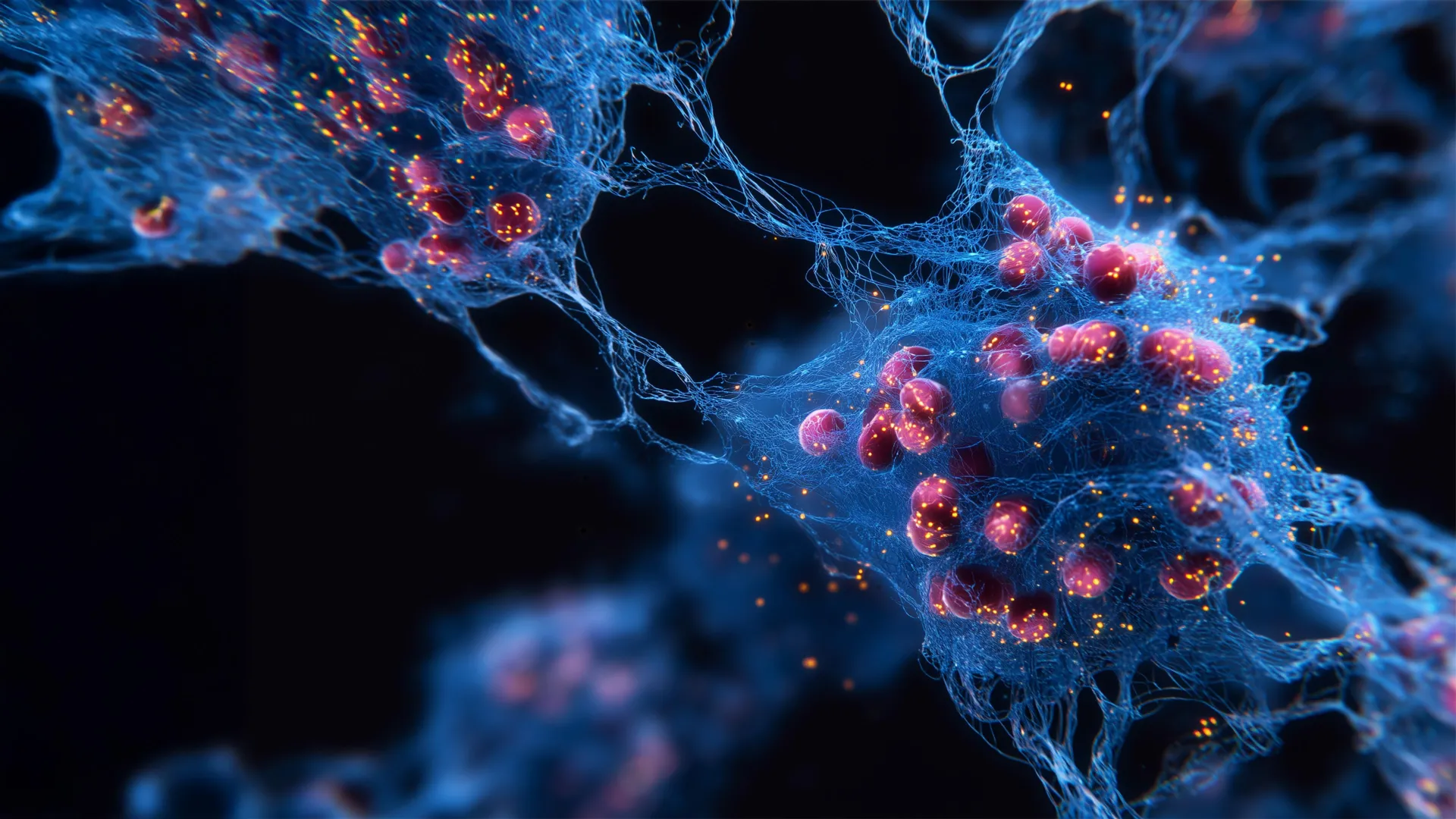
One of the biggest challenges in aging and disease research is tracking senescent cells. These cells, often referred to as “zombie cells,” stop dividing but do not die normally. Over time, they can accumulate in the body and are thought to be linked to conditions such as cancer, Alzheimer’s disease, and the aging process itself.
Scientists have been researching ways to remove or repair these harmful cells, but there have been major hurdles. Researchers have struggled to reliably identify senescent cells hidden among healthy cells in living tissues.
DNA aptamers help researchers identify senescent cells
A Mayo Clinic team now says they have discovered a promising new strategy. Writing in the journal Aging Cell, the researchers describe a technique that uses molecules called “aptamers” to tag aging cells.
Aptamers are short strands of synthetic DNA that naturally fold into complex three-dimensional shapes. These shapes allow them to bind to specific proteins on the surface of cells.
Using mouse cells, researchers screened more than 100 trillion random DNA sequences and identified several rare aptamers that can bind to proteins associated with senescent cells. Once attached, aptamers effectively flag cells for identification.
“This approach established the principle that aptamers are a technology that can be used to distinguish between senescent and healthy cells,” says the study’s principal investigator, biochemist and molecular biologist Jim Maher III, Ph.D. “Although this study is a first step, the results suggest that this approach may eventually be applicable to human cells.”
A chance conversation led to the discovery.
The project began with an unexpected idea shared during a casual conversation between Mayo Clinic graduate students.
Dr. Keenan Pearson, a recent graduate of the Mayo Clinic School of Biomedical Sciences, worked with Dr. Maher to study how aptamers could be used against brain tumors and neurodegenerative diseases.
Elsewhere on campus, Dr. Sarah Jahim, who was also completing her graduate studies at the time, was studying senescent cells and senescent cells in Dr. Nathan LeBrasser’s lab.
The two students passed each other during a science event and began discussing their dissertation projects. Dr. Pearson began thinking about whether aptamer technology could be applied to recognize senescent cells.
“We thought the idea was a good one, but we didn’t know about the process of preparing senescent cells to test them, and that was Sarah’s expertise,” says Dr. Pearson, who was lead author of the publication.
Researchers pursue ‘crazy’ ideas
The students presented their idea to their mentor, Dr. Darren Baker, a researcher who focuses on treatments that target senescent cells.
Dr Maher said the concept seemed “crazy” at first, but was interesting enough to investigate further. The mentors ultimately accepted the collaboration.
“Frankly, I loved that this was a student idea and a real synergy between two fields of research,” Dr. Maher says.
Research progressed rapidly. Early experiments yielded promising discoveries sooner than expected, prompting the team to bring in additional students from several labs.
Then-graduate students Brandon Wilbanks, Ph.D., and Luis Prieto, Ph.D., Ph.D. Student Caroline Doherty provided expertise including advanced microscopy and analysis of a wide variety of tissue samples.
Dr. Yassim said, “It encouraged me to work harder because I knew this was a project that would be successful.”
New clues about zombie cell biology
This study may provide more than just a new way to identify senescent cells. It also revealed information about the cells themselves.
“So far, there are no universal markers to characterize senescent cells,” Dr. Maher says. “Our study was set up to give us free rein to target surface molecules on senescent cells. The advantage of this approach is that we are giving the aptamer the freedom to choose which molecules it binds to.”
Some of the aptamers bound to variations of fibronectin, a protein found on the surface of mouse cells. Although researchers do not yet understand exactly how this fibronectin variant is related to aging, the discovery could help scientists better define the characteristics of aging cells.
Future possibilities in the treatment of aging and disease
The researchers cautioned that additional studies will be needed before aptamers can reliably identify senescent cells in humans.
Still, this technology could eventually become more than a detection tool. Scientists believe that aptamers may one day deliver therapeutic agents directly to senescent cells, enabling highly targeted therapeutic approaches.
Dr. Pearson says aptamers are cheaper and more adaptable than traditional antibodies, which are commonly used to distinguish between different cell types.
“This project demonstrated a new concept,” says Dr. Maher. “Future research may extend the approach to applications related to senescent cells in human disease.”
