


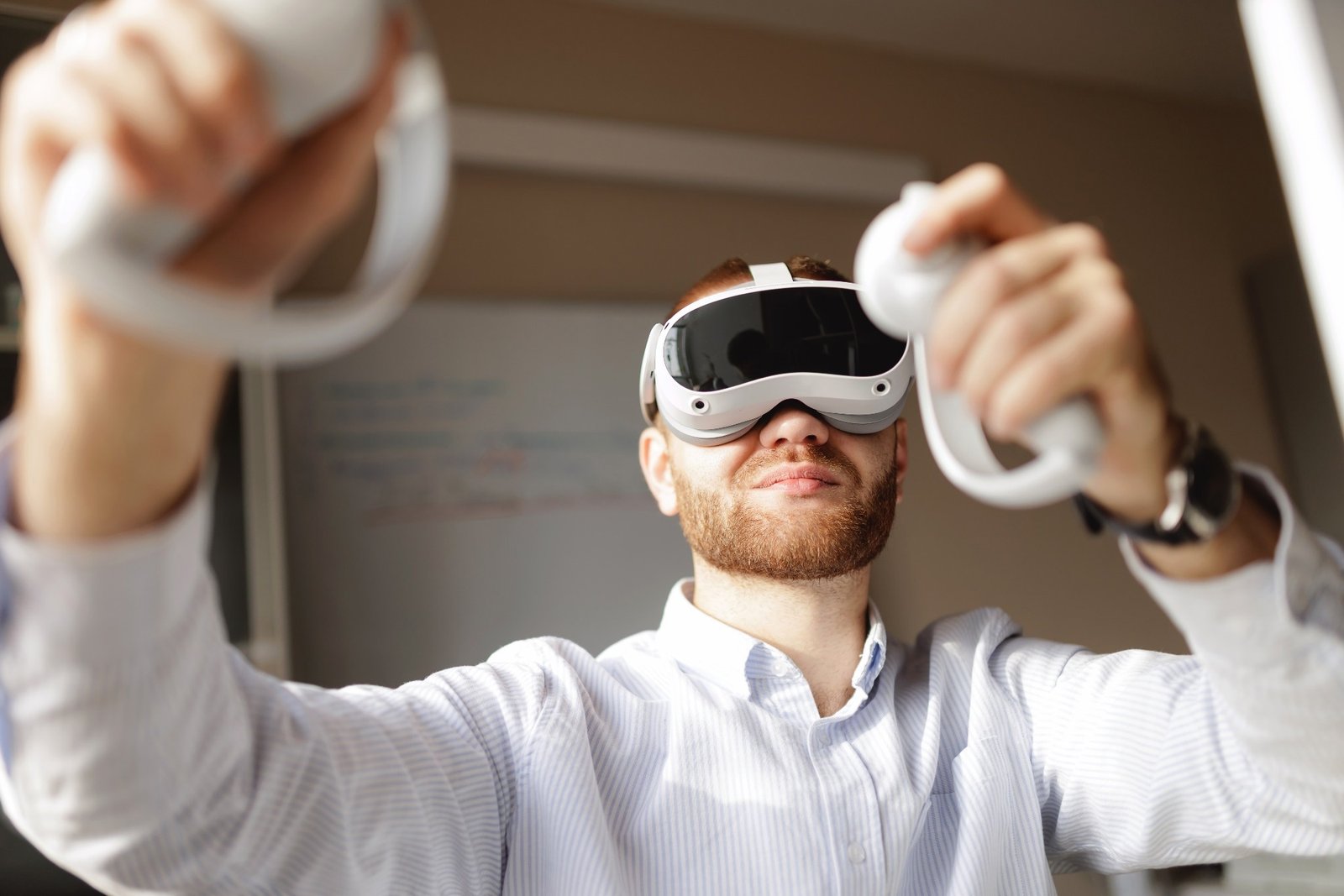
A short VR-based training program helped participants with autism practice interacting with police in realistic scenarios, reducing fidgeting and improving key response behaviors in just three sessions.
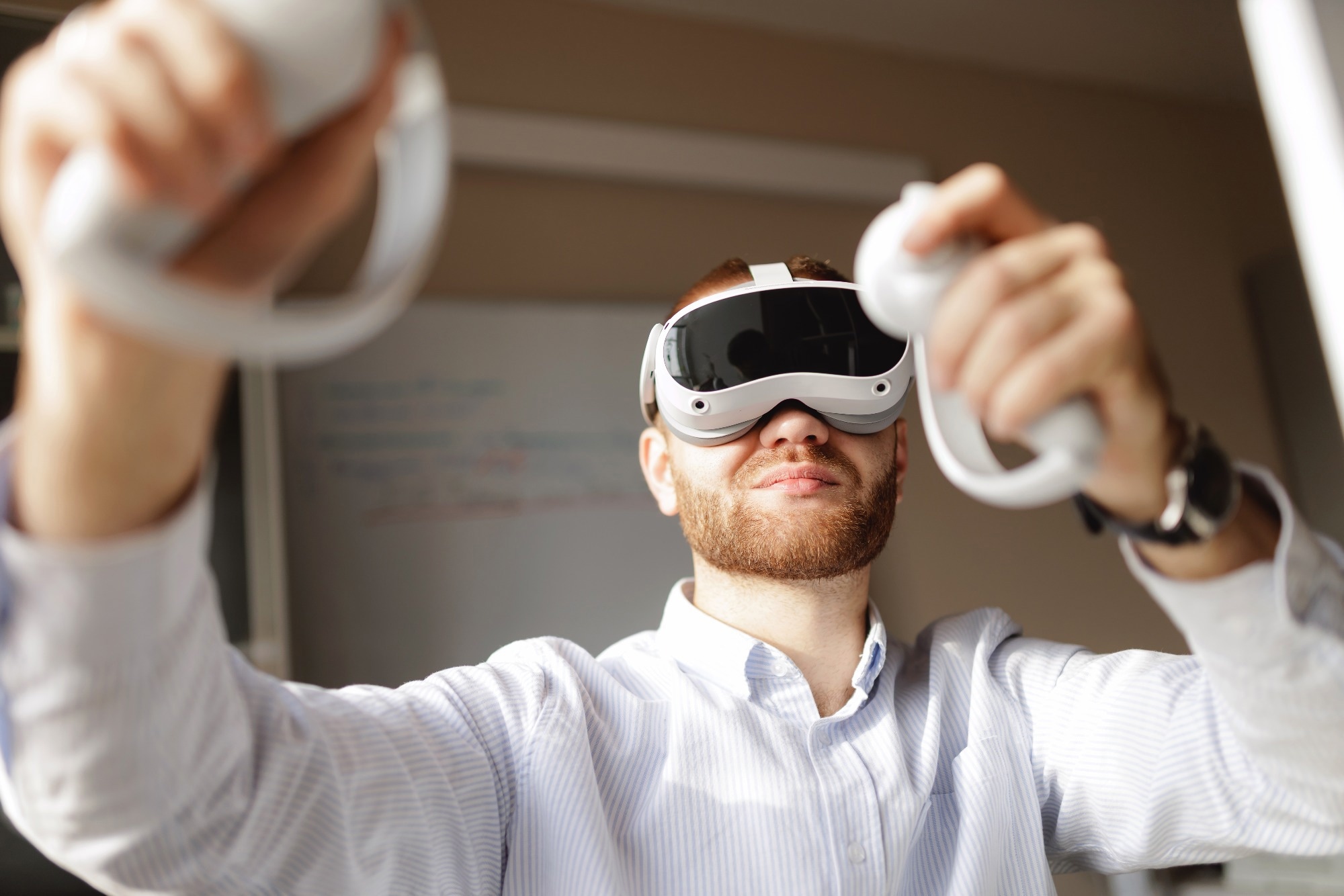
Research: A virtual reality intervention to help autistic people interact with police: A randomized controlled clinical trial with teens and adults with autism. Image credit: Parilov / Shutterstock
Recent randomized controlled trials (RCTs) Journal of Autism and Developmental Disabilities Virtual reality (VR)-based training may help people with autism navigate interactions with police more effectively than video-based education alone, the study suggests.
Participants who used the Floreo Police Safety Module (PSM) demonstrated less fidgeting, improved social responsiveness, and increased performance during live assessment interactions, consistent with reductions in observable anxiety-related behaviors and improved responsiveness in police interactions. Both intervention groups reported feeling more secure and confident when interacting with police officers.
These findings highlight the potential of immersive tools to support safer interactions in high-pressure situations where misunderstandings can escalate rapidly.
Interactions with police can quickly become stressful and dangerous, especially for people with autism who may struggle with unfamiliar social cues, sensory overload, or rapid verbal commands. Research shows that people with autism are at increased risk of facing negative outcomes during encounters with law enforcement, including injury, use of force, and discrimination.
Although autism-focused police training programs are expanding, many police departments in the United States remain poorly equipped to support neurodiverse populations. Existing interventions often rely on role-playing exercises, but these approaches are difficult to scale and rarely capture the unpredictability of police encounters, highlighting the need for accessible practical training tools.
About research
In this RCT, researchers evaluated whether Floreo PSM helps people with autism navigate police encounters more effectively than BeSAFE The Movie, a video-based educational program.
The study involved 47 verbally fluent autistic participants aged 12 to 60 who met Diagnostic and Statistical Manual of Mental Disorders, Fifth Edition (DSM-5) criteria for autism. Participants had an intelligence quotient (IQ) score of at least 75 as measured by the Wechsler Abbreviated Scale of Intelligence (WASI-II). They were randomly assigned to VR or video-based training groups.
Prior to training, participants completed standardized autism assessments, including the Autism Diagnostic Observation Schedule (ADOS-2), Social Communication Questionnaire (SCQ), and Autism Spectrum Quotient (AQ). They also completed a questionnaire assessing their understanding of police encounters and their confidence in communicating with police officers. Participants then completed a recorded mock interaction with a research staff member that simulated an encounter with law enforcement.
Key outcomes include changes in fidgeting, appropriate verbal responses, turning behavior, and overall interaction quality during live assessment interactions with research staff, police officers, or security guards. Participants completed three 45-minute intervention sessions. During the VR session, participants interacted with a virtual police officer while trained staff provided real-time feedback. The comparison group completed a BeSAFE lesson that included videos, worksheets, and role-playing activities.
To assess whether the effects of the training carried over to real-life encounters, participants then participated in another interaction with a real police officer or security guard. The researchers then assessed secondary outcomes such as self-reported comfort and knowledge of police encounters. They also used linear mixed-effects statistical models to analyze observations of staff and officer ratings of participants’ anxiety and behavior.
result
Although the most obvious between-group benefit of Floreo PSM was a reduction in fidgeting, other behavioral improvements were primarily supported by planned follow-up analyzes within the VR group. The researchers observed the most obvious changes in live encounters that were videotaped. Participants in the VR group fidgeted significantly less after training, while fidgeting behavior remained largely unchanged in the BeSAFE group. Because fidgeting can reflect anxiety or stress, these findings suggest that immersive VR practices may help some people with autism appear calmer and manage visible stress-related behaviors during police encounters.
Participants in the VR group also demonstrated significant improvements in appropriate verbal responses and overall quality of interactions during face-to-face encounters with police and security personnel. However, the main intervention by time interaction was not statistically significant for these two outcomes, and neither intervention significantly improved directional behavior, which assesses how well participants turned their eyes and bodies toward the officer. Importantly, the behavioral improvements observed after VR training extended beyond the simulated environment and were also evident during encounters with unfamiliar police officers, supporting the practical value of the intervention.
Both intervention groups reported feeling more knowledgeable, confident, calm, and safe during encounters with police after the training. However, only the VR intervention showed clear evidence of measurable behavioral change in coded live interaction evaluations. Participants with higher AQ scores also tended to report lower levels of comfort and confidence in the police, highlighting the greater challenges faced by those with more pronounced autistic traits.
Researchers suggest that VR may have advantages over traditional role-playing because it allows repeated practice in realistic scenarios involving different police officers, environments, stress levels, and sensory conditions. Such immersive and repeatable training could help people with autism better cope with potentially high-risk encounters while reducing fear, misunderstanding, and the potential for harm.
conclusion
The findings suggest that immersive VR training may help people with autism prepare for stressful police encounters, while reducing anxiety-related behaviors that can be misinterpreted during interactions. Compared to traditional video modeling and role-playing, VR provides realistic, customizable, and repeatable practice across a variety of situations and sensory environments.
The effects were modest, but appeared after only a few short sessions, and most clearly outperformed the comparison intervention in terms of fidget reduction. The authors cautioned that the study was small and predominantly white, excluded autistic people with intellectual disabilities, and included researchers with financial or employment ties to Floreo, so the findings need to be replicated independently in a more diverse population.
Future research should evaluate these programs with a more diverse population, such as people of color with autism and people with intellectual disabilities, as well as consider VR-based training for police officers.
Click here to download your PDF copy.
Reference magazines:
- McCleery, J.P., Zitter, A., Cordero, L., et al. (2026). A virtual reality intervention to help autistic people interact with police: A randomized controlled clinical trial with autistic teens and adults. Journal of Autism and Developmental Disabilities. DOI: 10.1007/s10803-026-07339-8, https://link.springer.com/article/10.1007/s10803-026-07339-8
